Category Archives: Uncategorized

Willow (1988). Why did I ever like this?

Another gem from yesteryear best stayed away from, Willow (1988) is embarrassing at times. There’s so much wrong going on, from a village of midgets to Val Kilmer in a dress to the ropy special effects to the overbearing James Horner score which he’s regurgitated for decades. It’s so lethargically paced, badly scripted and ultimately derivative that I’m even questioning the sanity of … myself for once thinking it a decent way to spend two hours.

The characters are some of the most thinly drawn I’ve seen, and so too is the realm or kingdom they inhabit. It’s just lakes and hills and a few castles. Boring. Shockingly, it’s a PG-certificated film. I find this rather beguiling as the violence on display is way too much for the little ones (kids, not midgets). There is one thing to recommend, though: Val Kilmer briefly metamorphoses into a pig.

Tagged , ,

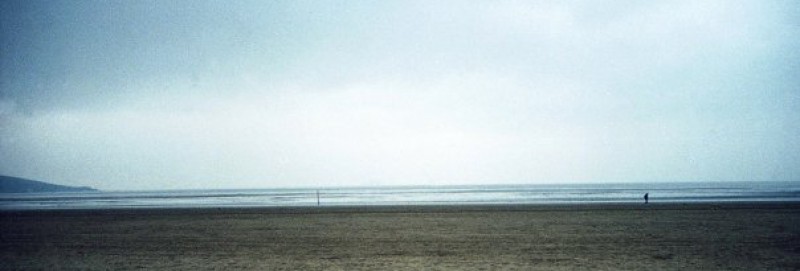
Always scenes here.

This place and I go way back. It’s gone through so many transformations over the years that I wish I had taken a yearly snap just to document the evolution. Highlight? I once saw a bloke in scuba gear doing backstrokes … in February.

Tagged , , , , , ,

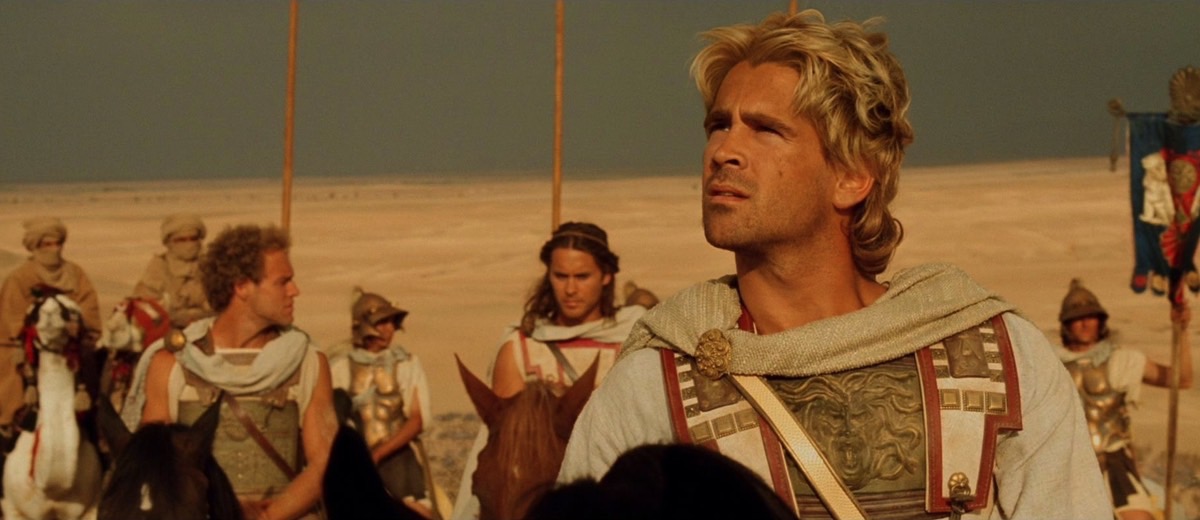
Lawrence of Arabia (1962) on the small screen.

I’ve never seen it in the cinema, which is a personal and public tragedy considering the following have been witnessed to a munching of popcorn and the intake of a sneaked-in batch of Blue WKDs: a Transformers movie, a crime-against-humanity Predator crapper, Cuba Gooding Jr. looking after kids, the list goes on and on.

The weirdest protagonist to ever feature in a movie of this kind. For 1962 it’s crazy the stuff on display – his sadomasochism and homosexual leanings, the rampant ego for a hero, his being a conduit for others’ ambitions, a conflicted symbol of British Imperialism, a puppet and a master. You have to read a bit about the context of the depicted period and ’60s Britain to understand the movie beyond its sheer scope and spectacle, the beauty of every frame. It’s also one of the few examples of the great man theory of history actually being given the full treatment. This bloke was certainly someone special yet David Lean in no way kowtows to the legend.

There is not a single female character because there simply weren’t any in the story. These days you’d have a token love interest or a signposted lesbian (or whatever) operating field artillery from the back of a camel. It’s what separates then from now. The insertion of silly politics into storytelling will be the death knell of this genre. I also imagine today we’d be subjected to a CGI bonanza replete with a script dumber than ….Wait a minute, Peter O’Toole was in Troy (2004) and that horrible film pretty much defines the post-Gladiator (2000) historical epic barren landscape.

This one-of-a-kind experience, though, can’t even be emulated. It’s a journey, a narrative about a hundred different things, even stuff you project onto by convincing yourself that’s what that scene means. For me, it’s always been about losing your marbles in an unfamiliar land and taking it back home with you for the banter and the scrapbook.

My favourite scene: the wondrous Claude Rains running his pinky across the table to inspect the dust on it. It’s so subtle and hilarious and just incredible. I am praying for a cinema release. The intermission, that bonkers sequence of black with Maurice Jarre’s bombastic score from the outer regions of audacity, that’s where I’ll sip my Blue WKD.

The best movie.

Tagged , , , , , , ,

Cobra Kai season three.

The nostalgia trip is strong with this one, and it is done in such an artful way that it builds upon the 1984 … middling flick and goes into new directions that feel organic and … well, correct. It’s such an entertaining show at times and only today would it get made. The wait has been worth it, and I feel there is a benchmark quality here, a premonition of other ’80s movies getting the TV treatment.

I want to see Flashdance (1983) given the treatment.

Tagged , , , , , ,

Spartacus (1960) still works.

It’s still relevant because the story is universal and it’s by far the best directed and scripted of the historical epics, most of which are hackneyed affairs and wholly painful to watch. Aside from the Anthony Mann opening sequence, you can see the emergence of Kubrick’s style all over the picture despite the official record that he was constantly bickering with Kirk Douglas and screenwriter Dalton Trumbo. It also features perhaps the best ensemble of British acting talent from that era, Olivier, Ustinov, and Laughton showing the Americans how it’s done. Indeed, it’s almost a bit embarrassing viewing Douglas and Tony Curtis try and hold their own with the peerless Laurence Olivier; they appear awed by his presence.

His Crassus is a nasty fucker, but as always with Olivier he injects the ‘bad guy’ with layers and you can see where he’s coming from in what he does. His rivalry with Charles Laughton’s Senator Gracchus perfectly parallels the rebellion, and there’s a simple but historical truth to the outcome: order and dictatorship over anarchy every time. Special mention to Peter Ustinov who provides a chuckle in every scene, an obsequious slave-trader character usually bemused by proceedings.

Not bad battle stuff, either.

Tagged , , , , , , ,

A Most Wanted Man (2014). Crikey!

For years, I forgot this existed. Then someone sent me a snap of Hamburg and I remembered a rather excellent wee spy thriller set in the city. Philip Seymour Hoffman, or THE HOFF, was magnetic in everything he did but with The Master (2012), this is his masterpiece. There’s something so sincere and likeable about his ability to get real, and what I mean by that is a gift to portray what one would deem as flawed character traits, warts and all, what humans are actually like.

Hamburg on film is a daunting task. This film really does capture the international feel of the city. I just remember it being absolutely fucking freezing. I went for a jog around the port one afternoon and ended up in a political rally. It was cinematic. Anyway, to Hoffman. You were the best.

Tagged , , , , , ,

Martin Scorsese’s The Big Shave (1967) is quite the thing.

One might deem it ‘the genesis’, a foundation of style and themes. There’s a sacred quality to the pre-digital age and this is why they are better movies – one had to really think about how to construct the visuals and it wasn’t a case of throwing the camera around and waiting for something to happen. It’s a basic non-point to make but films today are beyond pathetic because they are so far from artistry it’s a 1,000-crewed ‘collaborative effort’. There have been several exceptions but almost everything is identical, every film conforming to the same storyboard.

It’s a terrifying experience firing up Netflix.

Tagged , , ,