Tag Archives: Woody Allen

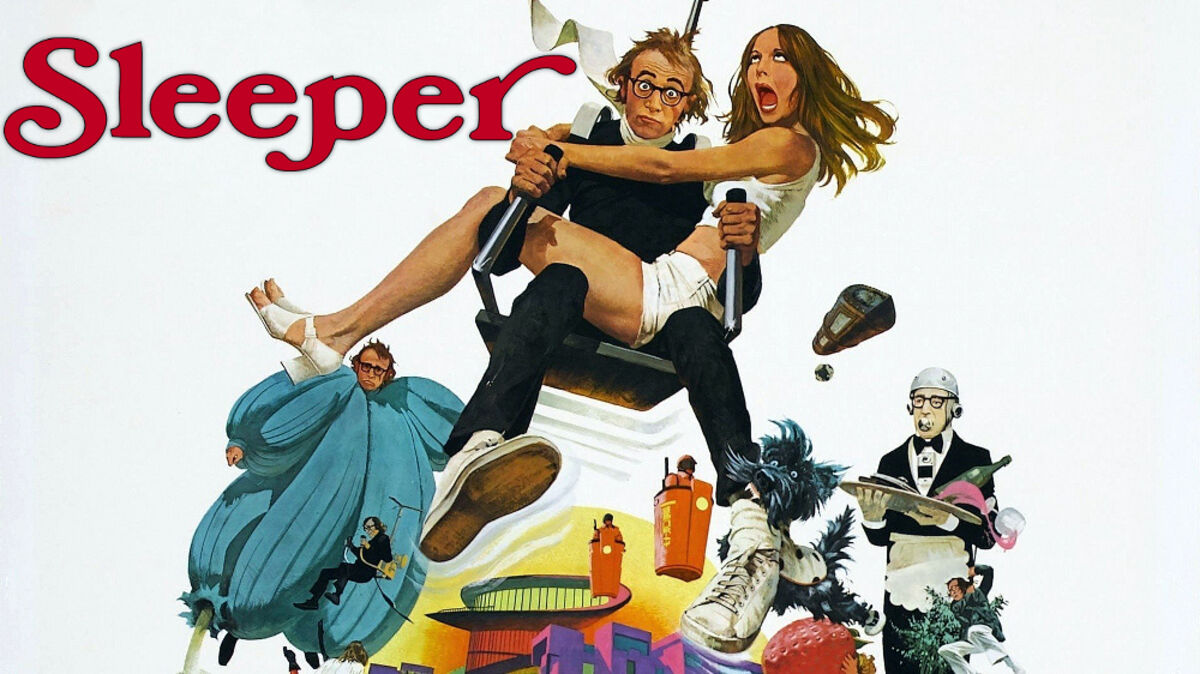
Sleeper (1973).

Woody Allen has eight great films. And double figures in stinkers. I mind Barry Norman listed this picture among his 100 GREATEST MOVIES OF ALL TIME. He was so wrong (with most of his list) and must have lost his mind or been on the gear or something.

It’s okay, but not brilliantly hilarious or breathtakingly original, and often just plain annoying.

Tagged , , , , , ,

Midnight in Paris.

I found Paris to be a grimy, dirty, overpriced and overrated hovel of a city, crawling with street urchins and riff-raff flogging pebbles and other assorted tat. There are esteemed features, but as someone with negligible interest in food, coffee, or fashion, I found it hard to be enamoured with the place. It’s the antithesis of the magical province propagated by such recent luminous movies as Amélie (2001) and Moulin Rouge! (2001). Granted, Montmartre  was splendid, and the Eiffel Tower a must-see cultural landmark, but these aside I reviled the setting; I simply didn’t see a reason for it to exist. It’s ugly, noisy, and boring.
6-8-15-midnight1

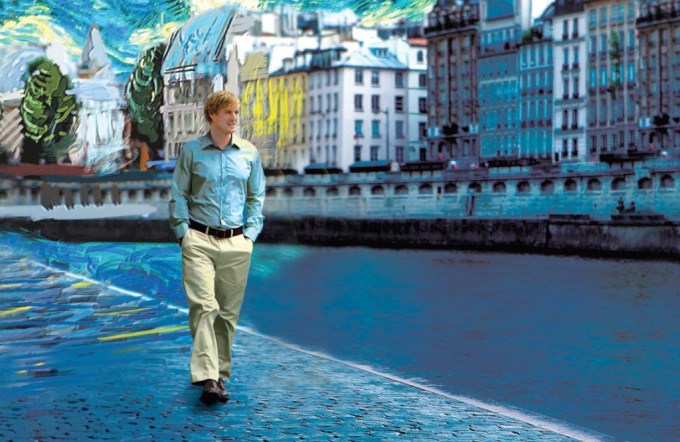
Midnight in Paris (2011), in which Owen Wilson’s successful but unfulfilled Hollywood screenwriter winds up galavanting Zelig-style around the 1920s Paris party scene with the most famous faces of the age, is one of the most … pleasing movies of the past decade. As escapist as Allen has got in recent years, it’s no accident that his late-career resurgance has coincided with him having effectively retired the Allen persona in front of camera.

Rather than gloss over the city’s defects or tackle them, Allen appears to have found a way to plausibly romanticise the city through its time-travel McGuffin – a vintage Peugeot Type 176 this picture’s DeLorean. Why bother essaying social and economic upheaval when you can have your protagonist shoot the shit with Cole Porter, Zelda and Scott Fitzgerald, Ernest Hemingway, and Gertrude Stein?
mp-4

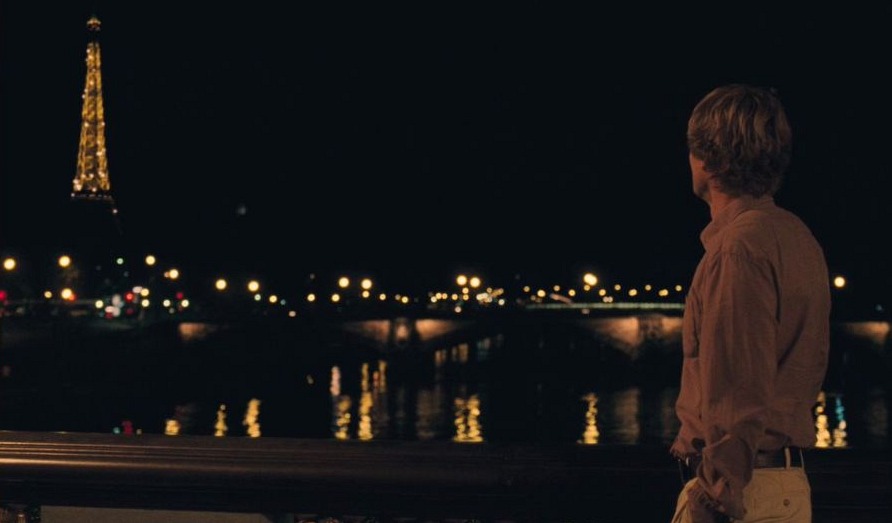
Allen nails the centrifugal appeal of Paris in its most delectable incarnation – that carefree carnival of the Golden Twenties. Our everyman is vaulted seemingly by magic into a smoky conurbation of illustrious writers, poets, and artists, and able to hold his own with these literati. A roaring decade of promise between the wars, the ’20s stand as the most seductive and beguiling of the 20th century, and Paris (with Berlin) its gleeful carousel. ‘Les Années folles’, indeed.

midnight_in_paris_2011_720p_blu_ray_x264_nmd_00_2

With F. Scott and Zelda Fitzgerald.

It’s not so much the topography of the city that captivates the audience, but the freewheeling possibilities of Wilson’s night-time escapades. That was the essence of the ’20s – when ‘isms’ were scrawled on napkins and a trip to a café could be a life-changing experience.

The film is Paris as an ideal, less so reality. It’s how I’d like to regard the City of Lights, this aided by never returning there. It’s easier to empathise with the past than accept the present. The dream has become reality.
 

Tagged , , , , , , ,

New York – Twin Cities.

The Big Apple is venerated as the most filmed city in movies, a hustle-bustle urban jungle of possibilities, both magical and harrowing.

It seems there aren’t films made *about* New York City very much anymore; they merely take place there, the protagonists unaffected by the milieu. Perhaps it’s a post 9/11 reluctance to confront the contentious ‘symbolism’ that the city continues to offer. Only Spike Lee’s 25th Hour (2002) confronts NYC in its role as ‘snapshot city’, and attempts to deconstruct its myths and contradictions.

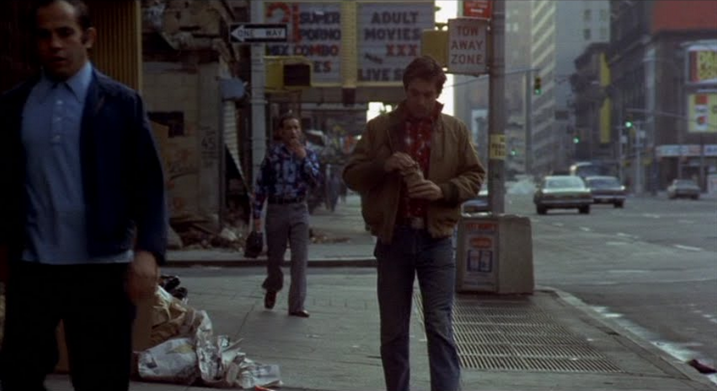
New York is represented in two modes of cinema – it’s a decrepit urban hell or a serene cloud to naval gaze on – guzzle down coffees, discuss Dialectical Materialism, be ‘arty’. The dichotomy is illustrated in two films made three years apart, Taxi Driver (1976) and Manhattan (1979).

Taxi Driver (1976).

If ever the topography of a city mirrored a protagonist’s crumbling psyche it’s Taxi Driver (1976). Travis Bickle here represents purgatory, New York a steaming cesspool of ‘animals’ and ‘filth’. The city is an ill-thought-out maze, a cruel, shallow, uncaring conurbation from gutter to canopy. An utter dump, it’s where people lose their minds.

taxi_driver_gods_lonely_man

Manhattan (1979).

This movie is paradise. I’d love to live like one of these characters. A bloke in it willingly quits his job because he can. He doesn’t worry over council tax or credit card debt or rent or any of that trivial shite – he just spends the remainder of the movie see-sawing between a neurotic journalist and a 17-year-old high school student. The city here black and white, lit up in fireworks and George Gershwin. There is no crime, there are no social problems. There are only parties and conversations. NYC is a lucid dream.

Photography By Brian Hamill

A film-maker from different backgrounds and experiences will of course develop his own vision of metropolis as distinct from another’s, but this city is ridiculous in its contrasting representations to the extent that one wonders if it’s the same place subjected to the camera. The theme goes beyond a depiction of class divide – its wholly disparate districts captured on celluloid – and channels two states of mind. New York is *the* kaleidoscopic dwelling.

Tagged , , , , , , ,