I desperately wanted to like this one and did everything to try and absorb something from it but I was sadly … fucking bored from start to end. It was hard work making it to the finish line and my relief at the concluding credits was not something I was expecting.
I found it all a bit tiresome, safe, unadventurous, and wholly unmemorable. I seeked out indelible shots and sequences but couldn’t find any. The characters were too insipid to care about. The score irritated me. And we then get yet another courtroom closure. I can’t think of anything else to remark upon and doubt I will. I’ll never watch this film again.
‘Scorsese understands that moviegoers are essentially tourists: they want to get a glimpse of depravity but then retreat to the safety of their own humdrum lives. It’s not that Scorsese approves of the toxic masculinity that permeates his films. It’s just that toxic masculinity is a cornerstone of American life – and the public are fascinated by bad behaviour.’
This movie had so much potential; during its production I was sincerely anticipating the greatest motion picture event … ever. Upon first viewing I desperately wanted to love it but couldn’t help but make a mental note of everything about the shitter which vexed me. There was something seriously wrong with this movie.
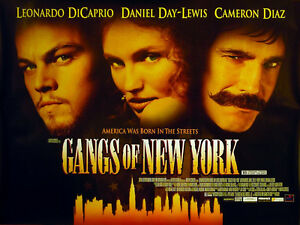
It is pointlessly and relentlessly weird, depicting 1860s New York as something out of a comic book. I’m sure the experience of living in what was by all accounts a cesspit approximating a cartoon strip at times, but it simply can’t have been as baroque as the ludicrous fancy dress show on display in GONY.
The movie has this irritating tendency for revelling in micro details about stuff that has zilch to do with the overall narrative, as if it’s half history lesson and half entertainment. I see no reason for the Manhattan draft riots to be treated with such gravity. This is the only Scorsese film in which he appears overwhelmed by the material, which I find completely baffling as it’s about New York, crime, and religion, his cinema oeuvre.
Weirdly (again), it is bereft of energy. It feels like a painful Baz Luhrmann film, the cinematography and editing just jarring – insert bonkers Speedy Gonzales shot here, a rapid cut there. Even the voice-over is draining. And it ends with a U2 song and a shot of the Twin Towers. Is this MTV?
And why even insert Cameron Diaz in this? Her ‘accent’ (or whatever) is diabolical, as is Leo’s. The latter appears way out of his depth, evidently awed by the full-method Daniel Day-Lewis. I must also confess that I think it’s the great Day-Lewis’ worst ever performance. He’s just comedy, nothing else; I can’t take him seriously any time he gets … serious.
Sadly, I keep giving the film a chance every few years. The only parellel I can think of is when you open the fridge expecting a different result from when you opened it 30 minutes prior.
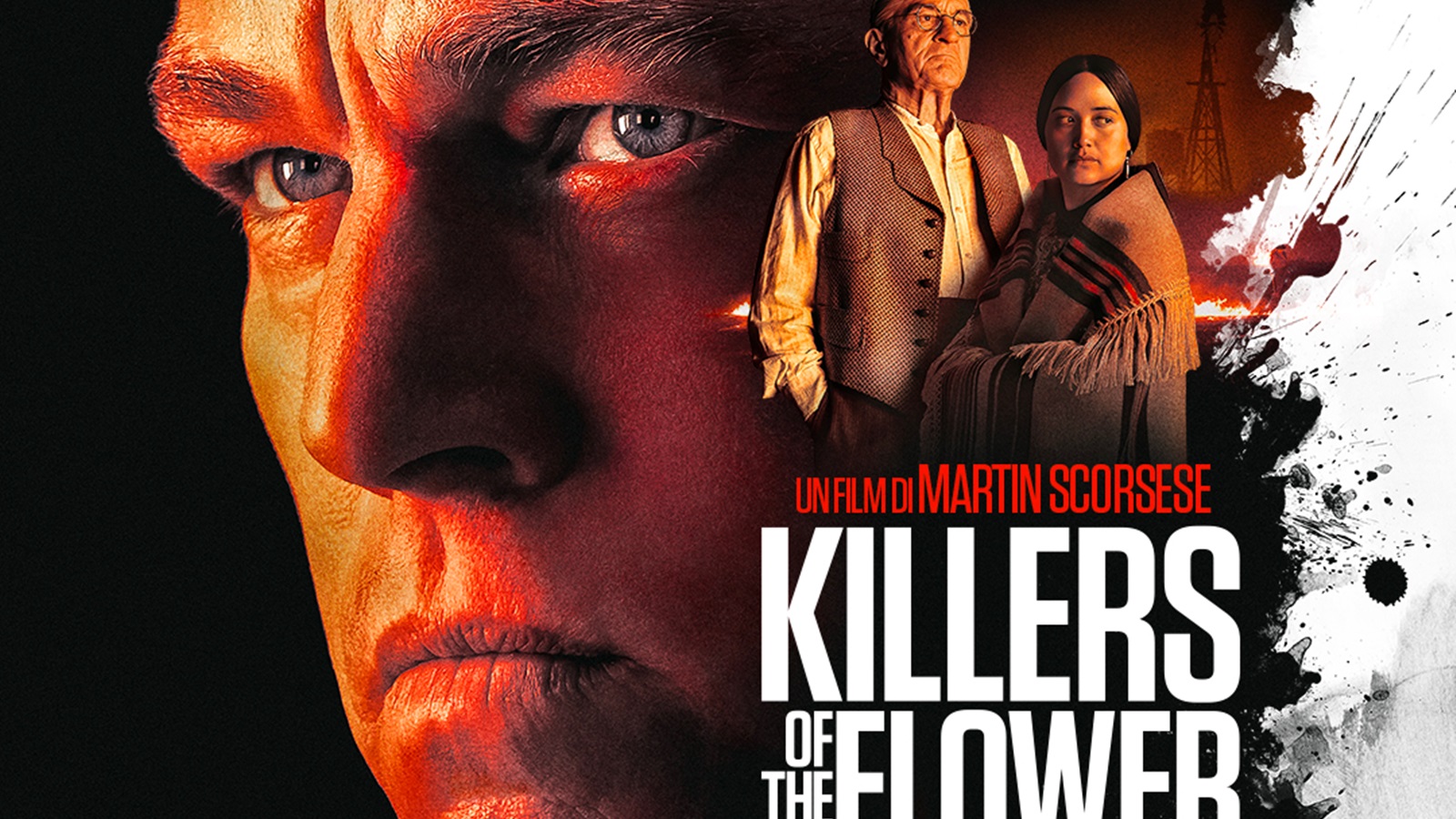
I finally signed up for the Netflix 30-day free trial – just for Scorsese. The three-and-a-half hour running time was well worth the two nauseating minutes it took to register. Bloody hell is it sublime. Scorsese pulls out all the stops in his … Scorseseness, yet the movie is something more than a swansong to the gangster epics that have served him so well.
De-ageing VFX.
Elegiac, somber, the last half-hour is a strong contender for most tragic epilogue of the 2010s. It reminded me a bit of Once Upon a Time in America (1984) but without the sprawling romanticism shaped mainly by Ennio Morricone’s iconic score. De Niro here gives his best performance since Heat (1995), which is understandable since he’s spent two decades being Dirty Grandpa or Paul Vitti or tormenting a pratfalling Ben Stiller.
More importantly, Joe Pesci is back and he is majestic. You need to see him in this. You need to see this film.
Scorsese’s last movie of the ’90s is curiously his weakest work. It’s a lazy narrative that seems enamoured with MTV standards/trends of cinematography. It also suffers from ‘The Affliction’: the liberal use of popular music tracks to paper over deficiencies in the script.
It’s a promising concept: Nicolas Cage’s paramedic, physically and emotionally drained, drives around an early ’90s Manhattan – by all accounts a crack-strewn cesspit at that time – in search of the high of saving a life, and a broader redemption as he’s haunted by those he couldn’t save.
By the one-hour mark the picture sadly has nowhere to go. There are a few moments of transcendence, particularly the final shot, but it’s all rather boring, from the cartoon character supporting roles to Cage’s … bored performance. One suspects it could have worked better as a small-scale picture, Mean Streets (1973) with a defibrillator.
The life of an ambulance driver has never looked so torporific. One of the very few Scorsese pictures I’ll pass on should it ever crop up again.
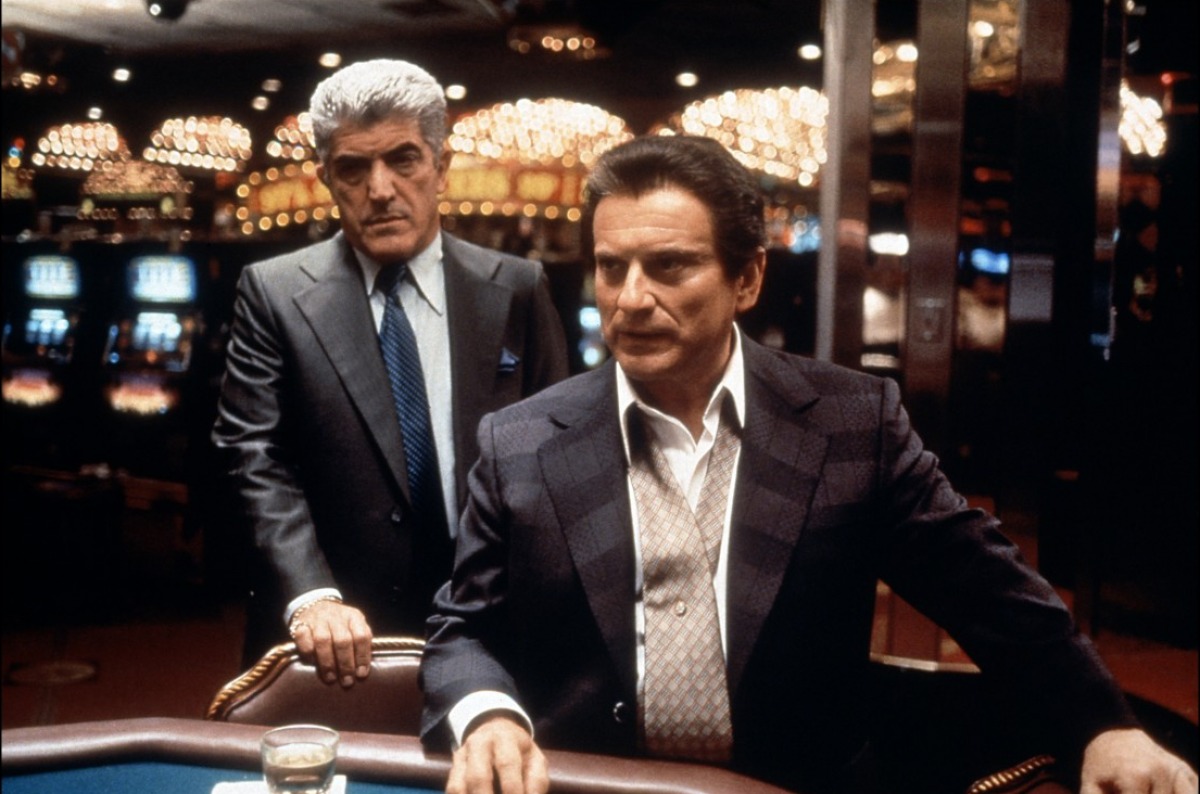
From as far back as I can remember … I always thought highly of Frank Vincent.
He just dominated scenes, even if his appearances in films were fleeting. He was the archetypal ‘heavy’ because he looked the part so well, but he had a gravelly charisma that was so natural it elevated him above his character actor peers. His violent interactions with Joe Pesci are his legacy:
In Raging Bull (1980) Joe Pesci repeatedly slams a car window into his noggin.
In Goodfellas (1990) Joe Pesci doesn’t take kindly to being asked to go home for his shine box.
In Casino (1995) Frank Vincent belatedly enacts revenge by burying Joe Pesci alive in a cornfield.
Such were the charming cinematic highlights of my youth.
It was in the final two seasons of The Sopranos, though, that Frank Vincent’s acting chops were finally rewarded with a meatier role. His antagonist Phil Leotardo was the most complex in the show, a tragic combination of envy, hubris, and self-loathing. He should have got an Emmy for his performance.
/cdn.vox-cdn.com/uploads/chorus_image/image/65778967/607396402.jpg.0.jpg)


 75 years old today. Pioneer, maestro, legend. Keep the masterpieces coming, bro. X.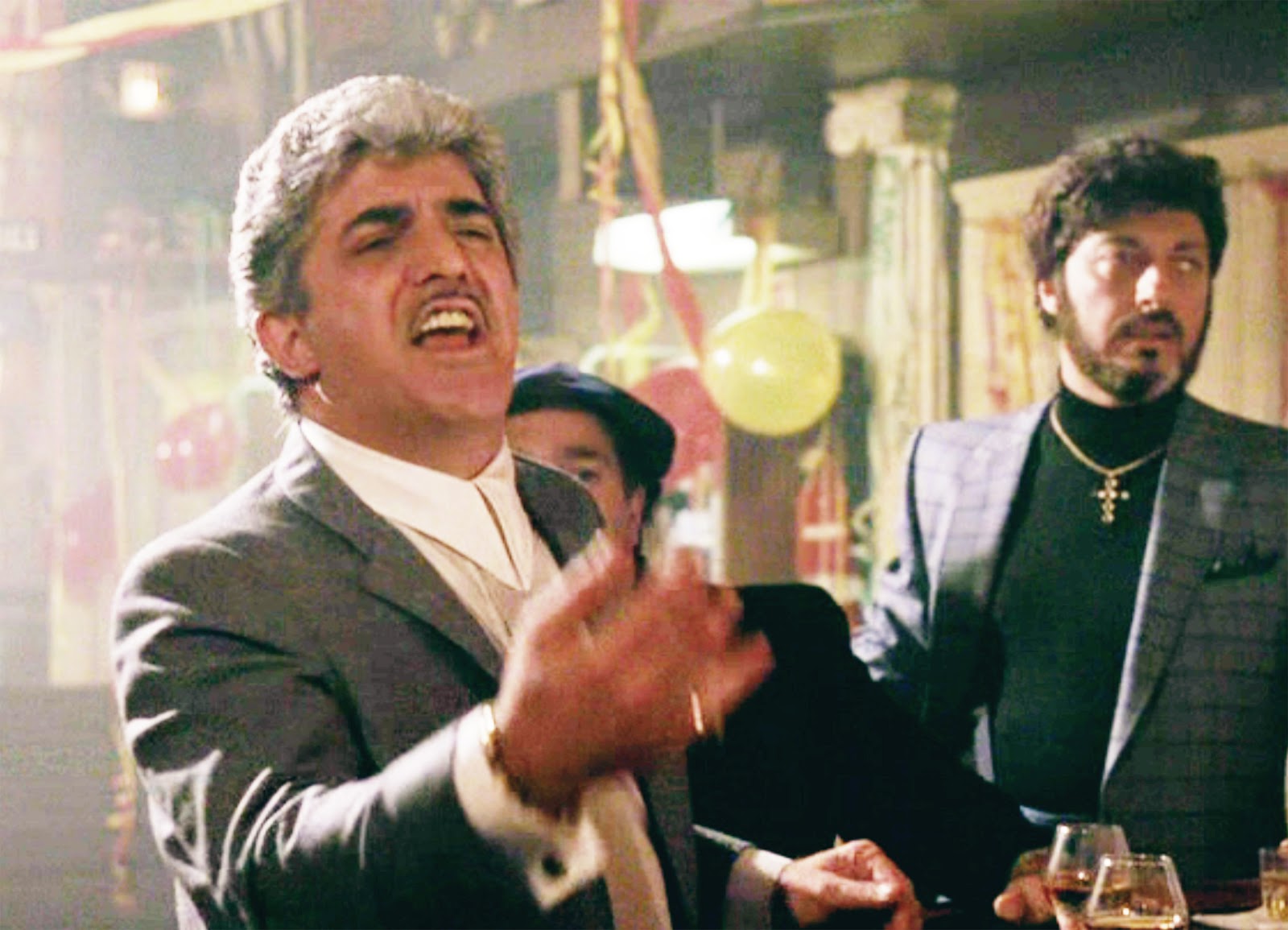
 Wanderings and ... wonderings.