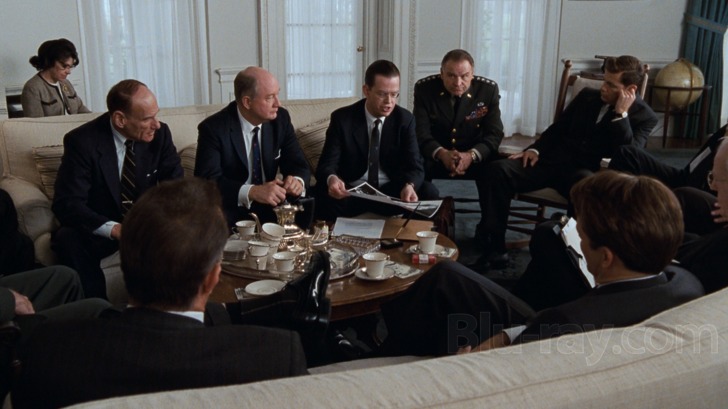
A very weak Costner performance, especially when you consider that the real-life Kenny O’Donnell had little bearing on these events. The role stinks of ego and the movie is better when he doesn’t feature. Sadly, he’s never off the screen.
The actors playing the Kennedy brothers are also fucking dire.
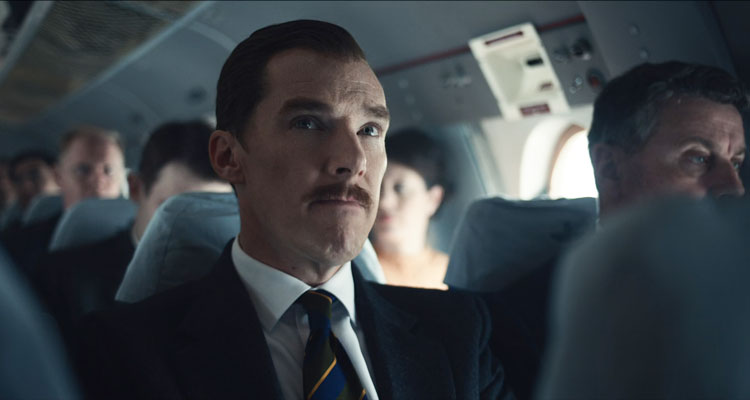
The pull of this being a true story is enough for one to recommend it, but it does have more than that, capturing the fear and suspicion of the time in impressive ways, the claustrophobia seeping from every room. The casting and performances also elevated it above your standard spy fare. The premise appeared ripe for the pedestrian BBC-style treatment, but it was a surprise to see a riskier exercise in the spycraft genre.
The actor Merab Ninidze who plays Oleg Penkovsky. He needs to be in more movies. He’s simply excellent here.
Firstly, let’s get this out of the way: Angelina Jolie should not be in movies. She has no acting ability that has ever been evidenced in anything she has featured in. I mind that Sony Pictures hack years ago when a producer referred to her as a “minimally talented spoiled brat”. Sums the situation up. For some reason she is in movies, and was cast in this to put bums on seats, though I do question the sanity of folks who’d watch it for the delights of Jolie. She’s awful.
Now that’s cleared up, some positives. Like Tinker Tailor Soldier Spy (2001), this was gripping without ever seeming to be about anything; it’s the little details and the intricacies and the things that are easily missed. It’s less a depiction of Cold War espionage and more a portrayal of a bloke operating within a system of double entendres, maintaining the poker face at all times (Damon is a cold fish here but we can see why).
De Niro hasn’t made many films and this one is curious subject matter. Of all the topics and milieus, I’d never imagined he’d be interested in something like this. It’s very well made, a bit of the Michael Mann about it.
I saw this movie many years ago and thought it rather great, but time distorts things. Goodbye Lenin! (2003) is an occasionally semi-funny insight into global changes impacting on the small scale; here, day-to-day life as experienced by an East German family going to increasingly elaborate lengths in maintaining the illusion of the GDR’s omniscience. The director’s stance as to reunification is a bit too ambiguous for me, the movie more concerned with a broad view of how the personal and political interweave, assessing the extent to which the society we live within affects us.
Why bother with such a contentious subject if you sit on the fence? This happens again and again.
It is at times a nauseating watch, almost an apologia for state tyranny. The film’s premise, pure Ostalgie, is that the economic and social constructs of the GDR, because of its restrictions on private wealth and public expression, harnessed a deep sense of togetherness felt by families. Wow. I won’t be watching it again. And all the Kubrick stylistic homages in it irritated me immensely.
If Lenin! refrains from showing the horror of life in East Germany in vivid detail by opting to examine why in recent years it has been de-emphasised, it has paved the way for a more meticulous and exacting probing of the Stasi state in contemporary cinema through devastating films such as The Lives of Others (2007), with all the GDR’s greed, hypocrisy, paranoia, and corruption laid bare.
It is 2020 and some folk (I call them “social spastics”) identify as communists.
They are the walking demonstration of why society is forever crumbling.
Anyway, I fucking despised this movie. HATED it. Stay away.
The Berlin Wall has been down now for longer than it was up (1961-1989). A lot of stuff seemed to happen during that Cold War era but since the wall’s … demise it’s like very little of significance has actually happened, even though it has. When you live through the decades rather than read about them things are less dramatic.
Francis Fukuyama’s ‘The End of History’ is of course absolute pampers but for me at least, it does often feel like history is indeed over, the Manichean structure of it gone, and we are now living in post-historical times. And nothing means anything anymore. Maybe it’s the 24-hour news cycle, the desensitisation to carnage as a result of its hourly reportage.
Anyway, here’s a mediocre snap of the Berlin Wall from my first trip there in 2009. Later that day I went to Checkpoint Charlie with a pal of mine and said to him: “This is fucking shite.” I don’t know why I was expecting something magical.
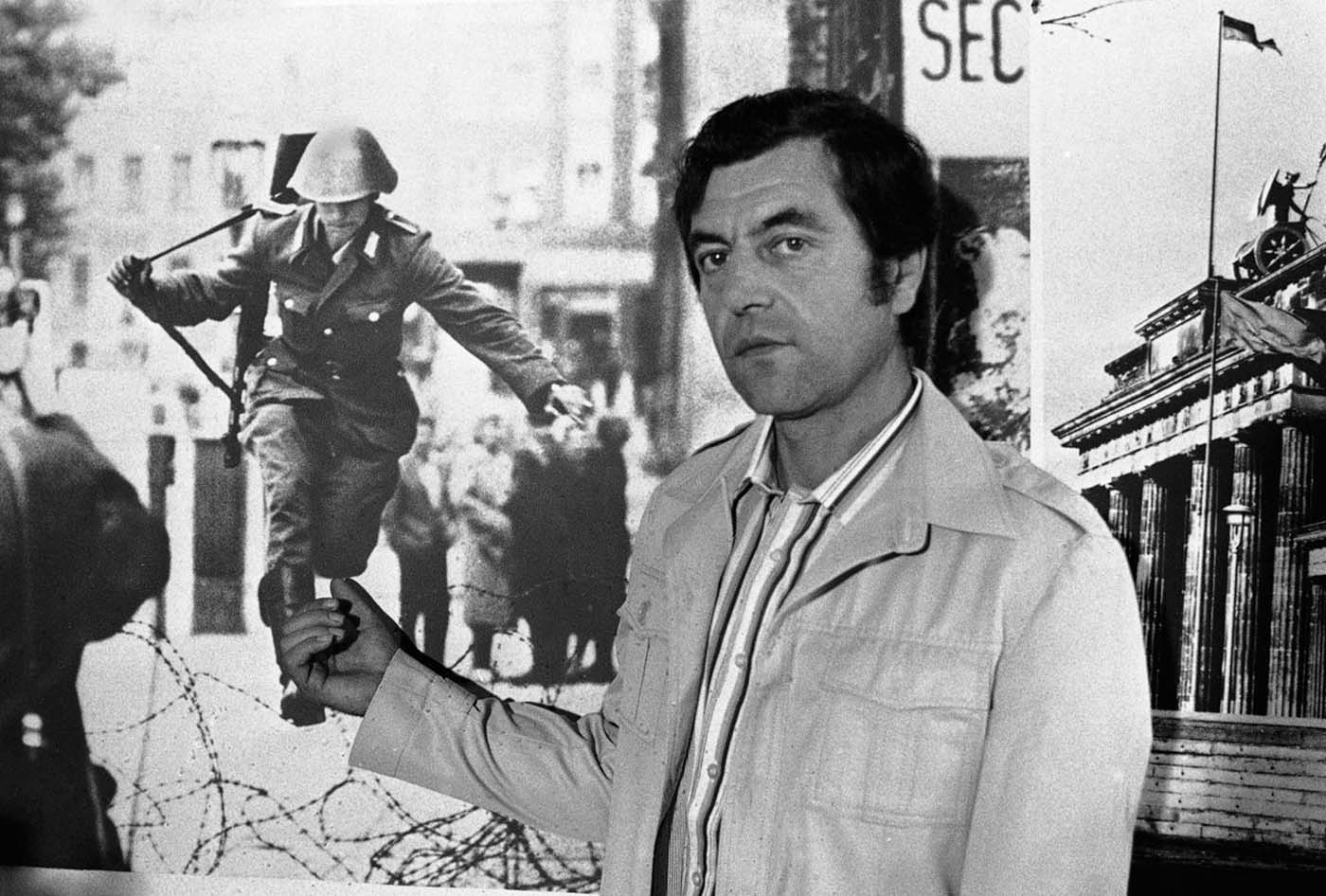
Until the other day I thought this photograph, the so-called ‘Leap into Freedom’, was the criterion for liberty, no less. A cursory Google search (the snap came up in some morbid conversation about David Hasselhoff’s ‘Looking for Freedom’) says otherwise. The power of images is propaganda above all, the human story often discarded. It appears Schumann was the prisoner of *our* image, and reading about his life post-1961 – depression, solace in alcohol, his eventual suicide in 1998 – one can’t help but feel for the guy.
That primary life-changing decision with all its what-ifs, and he had to be reminded of it daily, us lot ascribing meaning to the photograph that wasn’t there, like we’ve owned his experience.
20 years later.
I suppose the contemporary equivalent is becoming a meme and spending your life trying to supersede it.
Berlin went apostate after the Wall’s crumble – it is now a free-for-all, one of those clichéd multicultural hubs, the EU’s sociological vanguard. Not so back in the Honecker days, a Stasi-sprinkled 1984.
The audacity of this escape is bonkers, so too the entirely legit video recording of the getaway. Old Skool VHS-C home video footage isn’t half gnarly when the camera roams free in the exterior à la Paul Greengrass. No one wants to see a wee sprog from the States wail like Chewbacca on an ecstacy overdose upon opening a Nintendo 64; mind-blowing vistas is what it’s all about.
Escape artists:
Ingo Bethke, a border guard, fled East Berlin on an air mattress in 1975, crossing the River Elbe into West Germany. In 1983, his brother Holger did one better, using a zip line from an attic to Ingo’s car on the other side of the wall. It was six years later that the two brothers, having learned to fly, dressed in military garb, painted Soviet red stars on two planes, flew over the wall, landed in a park (with one place circling overhead), picked up the third brother, Egbert, and then flew back into West Berlin, arriving at the steps of the Reichstag. They then went off and got pished on a smorgasbord of alcoholic delicacies. Incredible.
Icarus (x3) they were not. Totalitarianism breeds creativity, just ask Jean-Paul Sartre. And nothing spotlights the stupidity of that lunatic Soviet ideology than getting a free pass to fly around with abandon merely because there are red stars on your plane.
Good Bye, Lenin! (2003) so comically captured those last dying days of the GDR. Imagine that mixed with The Great Escape of the Bethke brothers. Why isn’t this a movie yet?
A cursory Google search finds voluminous clips and blogs offering snippets of trips to former communist countries before Francis Fukuyama declared the End of History. Many of these comprise vintage polaroids from the ’60s and ’70s or VHS-C camcorder footage from the ’80s. A sequence shot of a Saint Petersburg Metro journey in the time of Brezhnev would ten years ago appear a trip down an irreconcilable lane. Born in ’85, I even whitewashed my early years, banishing the Cold War and its messy aftermath to the dustbin. Not so now.
Millions of westerners briefly experienced life behind the Iron Curtain and a not inconsiderable number of easterners did the same in the west, this with greater restrictons imposed by their home governments. Hammer-and-sickle enclaves were popular destinations for a kind of ‘police state tourism’, the almighty Soviet Union the predominant attraction.
The Soviets’ need for hard currency was the driving factor in this contradictory embrace of the outsider. Exchange rates were highly inflated, and what you could and couldn’t do was restricted. The visitor was obliged to stick to one’s pre-disclosed itinerary, and, officially, not trade on the black market. This was, however, unoffically permitted as a stimulator of commerce which the often struggling economy needed.
I’d rather travel to the Soviet Union of 1985 than the Russia of today; astonishingly, it appears more hospitable and the people more cordial yet at the same time more exotic. My experiences the past few years have been a mixed bag – so many cities are so alike in their banality that after a mere six hours in them I long for the return flight home as I recall that memorable line in Fight Club (1999): ‘Everything is a copy of a copy of a copy.’ I could be in Frankfurt but it may as well be Milan – much-vaunted landmarks aside they both house the same old shit and the same faux-charming narratives, with English the certified Esperanto of the city experience.
We are, however, as a reaction to the ill-thought-out effects of globalisation now less likely to dance around the Schengen fire to kumbaya and exalt in the multicultural utopia. Just east of the EU, Russia as it is today in its hideous incarnation makes those archive clips on YouTube appear a snapshot of a more civilised time. For good or bad, as the European federal project continues to erode from within, we may return to the fully autonomous nation state system our parents dismantled. It perhaps makes travel more purposeful, with destinations the more fanciful. We’re going back to building walls in order to bridge a way foward.




 Wanderings and ... wonderings.