I saw it in the cinema and thought it was brilliant! This is why we don’t go back.
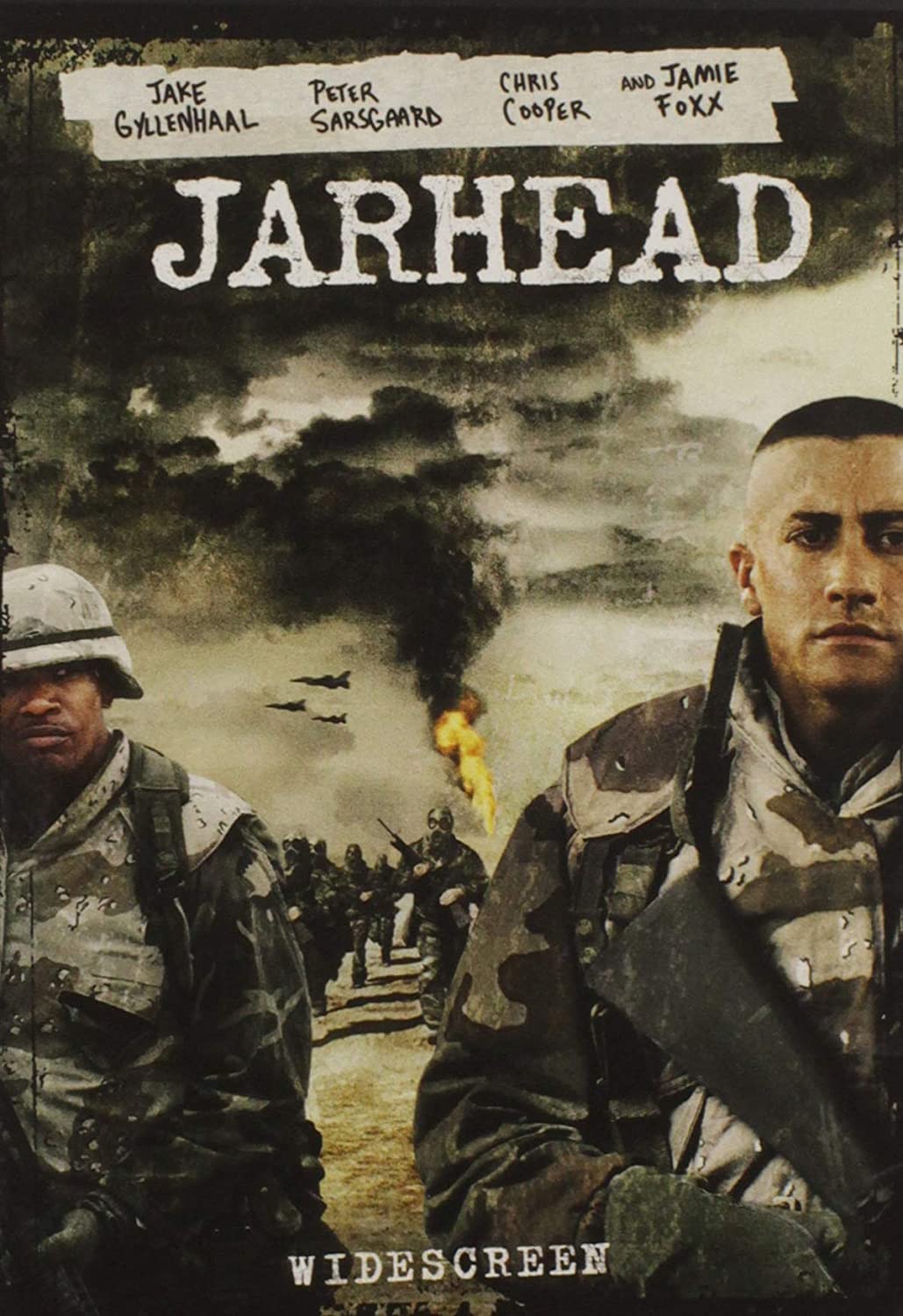
This movie is so terrible that even at the 28-minute stage I was gasping for it to expire. A Council of Elders, ‘evil creatures’ lurking in the woods. It’s the most obvious and worst premise and metaphor ever, and so boring. The twist ending barely bothered me as much as the preceding nonsense leading up to it. I’ve read contemporary reviews lauding the film’s treatment of the Iraq War. Are these critics on drugs?
Speaking of which, I would have bolted from the entire 19th-century scheme like Gump on a combo of Red Bull, Monster, Relentless, and crystal meth.
“Those We Don’t Speak Of”? I’d like to never again speak of this movie.
He’s off the charts in this, he really is. It’s the most self-effacing acting job in years. He defines scumbag ‘junkie’ but by the end you realise the bloke does have a heart and everything he does is for a reason, though he usually fucks it up. It’s a redempton story and one of the best because it’s REAL.
That last fight scene is the damage. It’s drama and technique. And it actually happened.
And the perfect movie. Disturbing, very clever, incredibly paced. Acting off the charts.
It defines ‘slow-burning drama’, and there is a joy in every scene with its peculiarities and what-you-think-are-pointless details. The explosions of violence are exactly that because they rarely happen but when they do they … do. It’s a noir that like the best of noirs becomes more than a PI job, ’30s Los Angeles the personal and the metaphorical. Best scene – J. J. “Jake” Gittes winding up the batty secretary to no end with his seemingly … pointless questions. Nothing in this movie is pointless.
It’s cliché to talk about masterful portraits of ugly capitalism. But this is one of them.
Finally got around to seeing this having missed it on the big screen. Netflix would have to make do as it usually does these days. I suppose movies like this demand the theatre experience, but I’m not waiting a decade for a one-off re-release.
Cinema concerning The Great War is understandably not omniscient as affairs regarding WWII are. The former conflict as seen by contemporary historiography (at least on the Western Front) is more static, more simple, with less of a political and civilian dimension. There are exceptions in cinema – Kubrick’s Paths of Glory (1957), Lawrence of Arabia (1962), The White Ribbon (2009), but there are only a handful ever worth watching again.
I couldn’t stand this movie.
It’s appalling acting from many on display. The main bloke is good but the rest are phoning it in. There are so many annoying cameos from marquee actors who appear merely to boost the star names on the poster.
Bizarrely, it seldom feels like anything is at stake; I wasn’t bothered about any of the developments. One of the bloodiest and destructive conflicts in history is reduced to a bloodless, frankly boring episode which never once feels real or sincere. And as for the ‘one shot’ USP, it’s nothing more than a gimmick. But then a moment happens when it stops being a sequence shot by cutting to black, which negates the so-called perfectionism of the preceding exercise. It’s pointless.
And a lonely French woman makes an appearance, and she proceeds to shelter the protagonist. No cliché unturned.
Andrew Dominik is the real deal – Chopper (2000), The Assassinationof Jesse James by the Coward Robert Ford (2007), and this hidden gem.
This is such an unusual crime thriller with its entirely unexciting shoot-outs and dearth of brash or loud moments. The movie mostly comprises a lot of miserable criminals engaging in very convincing conversations about their jobs; none of this standard mafioso talk. And it’s especially memorable for James Gandolfini losing the plot in one of his last roles. It says a lot about the quality of the actor that Tony Soprano never once popped into my head throughout his scenes.
Despite coming out in 2012, the film exists in a weird Great Recession/2008 United States presidential election bubble, and for a reason. If a clue was ever needed as to the movie’s statement, Pitt’s furious monologue at the end is for you:
‘My friend, Jefferson’s an American saint because he wrote the words, “All men are created equal.” Words he clearly didn’t believe, since he allowed his own children to live in slavery. He was a rich wine snob who was sick of paying taxes to the Brits. So yeah, he wrote some lovely words and aroused the rabble, and they went out and died for those words, while he sat back and drank his wine and fucked his slave girl. This guy [Obama, acceptance speech on the TV] wants to tell me we’re living in a community. Don’t make me laugh. I’m living in America, and in America, you’re on your own. America’s not a country. It’s just a business. Now fucking pay me.’
I barely understand half of the stuff that went on but the movie somehow reaches an inexplicable transcendence in its last 30 minutes. I believe Terrence Malick is some kind of anomaly. He didn’t make a movie for two decades and now he’s putting out a picture every other year.
‘Terrence Malick’s “The Tree of Life” is a film of vast ambition and deep humility, attempting no less than to encompass all of existence and view it through the prism of a few infinitesimal lives. The only other film I’ve seen with this boldness of vision is Kubrick’s “2001: A Space Odyssey,” and it lacked Malick’s fierce evocation of human feeling. There were once several directors who yearned to make no less than a masterpiece, but now there are only a few. Malick has stayed true to that hope ever since his first feature in 1973.’
The chemistry between Ford and Connery is magical and even if the other components weren’t there, it would still be a memorable film because of the relationship. However, the prologue is still fabulous. Donovan’s ultra-ageing after sipping from the gold cup is still nightmare worthy. The action is still fast and inventive. It’s such a relentlessly entertaining yarn, and even the bad guys have something about them. The SS lad somehow rocked up in Braveheart (1995) and … of all things, Corrie Street as a member of the Gail Platt outfit. And Grange Hill’s Mr. Bronson plays Hitler here.
I mean, it’s bloody, as in baddies die and it’s graphic (which violence is). It’s Denzel doing his best Denzel; the opening sequence hilariously exposes his OCD by having the lad use a toothbrush to manicure his sneakers. You see him at work in a Walmart factory or whatever and he’s dedicated to the job. You get the feeling he’s hard as nails, though. And he turns out to be in the most Denzel way feasible.
The antagonist has a personality and is interesting; this is a rarity in the current action-thriller landscape. The soundtrack/score also works.
And Denzel utilises a nail gun.
Also, I’ve never seen the Edward Woodward TV show. It’s too late now to bother with it.
I’ve been on quite the Oliver Stone binge of late and it was inevitable that I arrived at a certain disaster. This is a complete train wreck of celluloid.
The accents are all over the place, for some unfathomable reason Macedonians from antiquity possessing Irish, Scottish, and Russian dialects. And dreadful ones at that.
The film is rammed, at the expense of drama and thrills, with pointless tactical information about the battles on display. In the nauseatingly constructed Battle of Gaugamela, Stone keeps cutting to an eagle surveying the scene. It’s a mad decision and I recall half the cinema howling at the time. There’s another bit with Alexander taking on an elephant and it is hilarious. The film apparently has like 18,000 different ‘Director’s Cuts’. They will all be shite, I guarantee you.
A nuts and utterly unwatchable motion picture. How can you make one of the greatest military commanders and statesmen in history so irrevocably boring? This movie achieves that impossible feat.
Ray Liotta has always looked both young and old at the same time, which is a hard act to do. Even in his thirties he appeared both 50 and 18. He’s had a very good career but lacks that marquee performance; Goodfellas (1990) isn’t really an astounding acting job because he’s unchanged throughout and overshadowed by you-know-who. Unlawful Entry (1992) is a trashy corker but Something Wild (1986) is strangely peak Liotta even though he’s just getting started. Also, I’ve seen Narc (2002) twice and don’t think much of it.
He is scary in this. It’s so rare to see an actor pull off scary but he is that, like Willem Dafoe as Bobby Peru.
The movie seamlessly tap-dances between genres, and the (very real) violence never appears out of place amidst the comedy. It reminded me of Grosse Pointe Blank (1997), which is fitting as that undoubted masterpiece is an ’80s throwback. This film felt like it could go anywhere at any moment, a freewheeling adventure. And it was. The unpredictable is hard to design or even pull off in fiction.