Category Archives: Monarchy

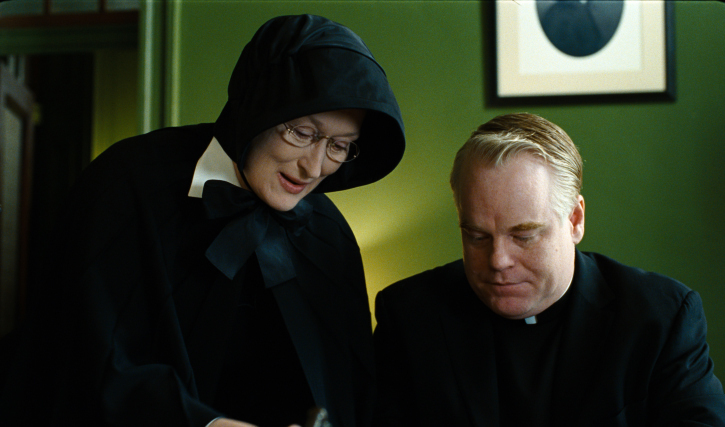
Doubt (2008).

Hoffman keeps this banal, stagy movie together in another supremely layered performance. Streep, however, is rubbish, and this can be added to the voluminous inventory of rubbish that is her CV. She’s not as bad here, though, as she was as Lady Thatcher in The Iron Lady (2011), which is a grating, painful experience to watch.

Casting blunders aside, I would summarise Doubt (2008) as a dull portrait of a repressive, gleefully authoritarian institution that everyone is aware of, inhabited by elders who operate as pedantic snores with no hinterland. It gets better after the dire exposition but barely.

A waste of time.

Bye for now.

Tagged , , , , ,

I, Claudius. I suppose it was seminal once.

Brian Blessed sans the beard and his general all-round formulaic Brian Blessedness was at least a shock. We also have shite costumes and dodgy wigs chucked into this insipid, very British mix/mess.

It’s essential history and for the time, I assume, it was event television. But bloody hell it isn’t half fucking boring. I couldn’t get beyond the embarrassing plastic sets and that did it for me. Did they shoot this in a prison? I had to pull the plug for I couldn’t suspend my disbelief.

The likes of Lars von Trier needn’t bother with an art department because that’s his obvious (oh so provocative!) intention; here, the skullduggery had the appearance of a school play. 

I’m sure it’s captivating but no thanks, I have a toga from a fancy dress shop I need to attend to. 

Tagged , , , , , ,

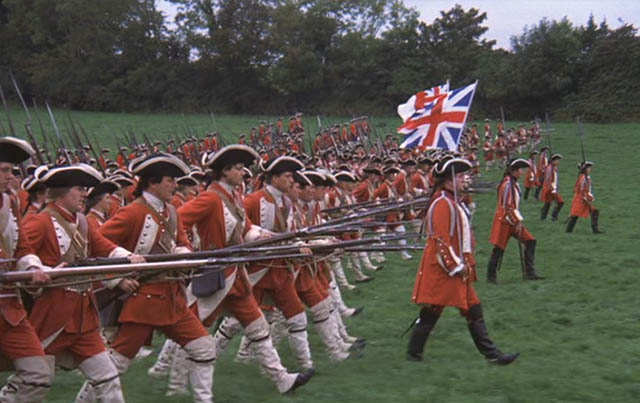
Kubrick sums up the Seven Years’ War (1756–1763) in 10 seconds.

‘It would require a great philosopher and historian to explain the causes of the famous Seven Years’ War, in which Europe was engaged, and in which Barry’s regiment was now on its way to take part. Let it suffice to say that England and Prussia were allies … and at war against the French, the Swedes, the Russians, and the Austrians.’

^Saved you half an hour on Wikipedia.

Tagged , , , , , , ,

Napoleon (2023).

I wish this would have just been about the Battle of Waterloo (1815) as it’s the only time this movie truly ignites, and that’s despite the battlefield inaccuracies and the atrocious performance of Rupert Everett as the Duke of Wellington, the ’90s throwback playing Wellesley as a snarling thug rather than aristocratic master of defensive battle.

The first 45 minutes are great, Napoleon awestruck by Joséphine and proceeding to act in the most hilariously childlike manner, a supreme baby smitten. It’s very funny and it’s a shame it didn’t stay this way, a couple’s domestic melodrama taken to the extremes of the world stage. Unfortunately, what follows is a series of scenes from your basic high school history lesson with nothing holding them together. Don’t expect a character study but a truncated telling of events. It’s an enigmatic performance from Phoenix and he’s always engrossing; the drama, however, is zilch.

Hurried, unfocused, and often boring, it’s a technical marvel with sumptuous visuals but a decent script would have helped. There’s no sense of the wider historical forces that enabled or expanded the Napoleonic Wars, or any concerted attempt to explore the lad’s mammoth fall. Here, it just … happens.

I’ll wait for the four-hour cut I keep hearing about.

Tagged , , , , , , , ,

The Adventures of Robin Hood (1938).

Wow, flawless entertainment. It knows exactly what it is and delivers on every level; it’s so immaculate that you can see hundreds of subsequent movies in its accidental blueprint, a formula before there was one. More impressive, if you don’t exactly get to luxuriate in blood and guts, are the shots framing folk actually dying. It sounds a bit daft, but I wasn’t expecting that for a movie of 1938.

Claude Rains once again runs off with a film. There’s something both immediately accessible and conversely abstract and untouchable about him. It’s the extraordinary voice, the alien demeanor, the coolness, and all of this given the fact he’s awfully short. Not sure if he was ever a protagonist in a movie. He was perhaps better as the svelte creep stealing every scene he’s in.

Anyway, a most gnarly yarn here.

Tagged , , , , ,

Epic History TV.

This channel is what the Internet was made for (aside from cat videos and staged pranks). The wealth and detail of info in these vids, the animation, the music, the narrator and his redoubtable voice.

https://www.youtube.com/@EpichistoryTv/videos

Tagged , , ,

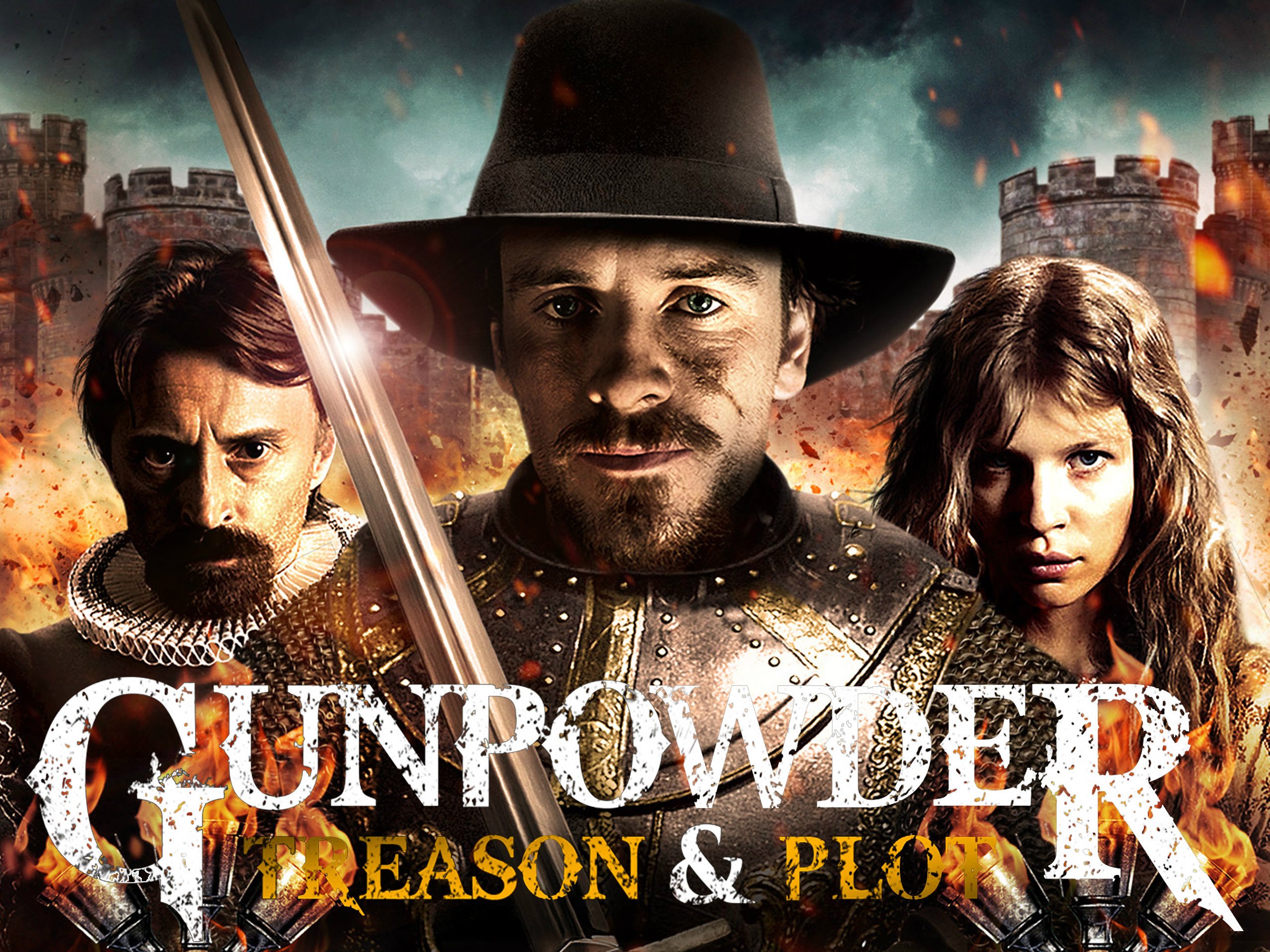
Gunpowder, Treason & Plot (2004) is Robert Carlyle at his most Robert Carlyle.

For the exposition, I thought this one of the worst performances I’d ever seen. It was like Carlyle watched Richard III – play or any movie – and decided to limp about like Crookback for the duration of a gunpowder plot. And spice it up with a bit of Begbie. His James VI/I is a foul-mouthed little bastard with no grace or manners, an opportunistic cockroach who would murder an OAP for a bag of sugar.

I was thinking this and then I thought: this is 1603+. These creatures chucked one another onto bonfires and ripped their entrails apart. And the same sort would do the same today if they could. And then I got the genius of the performance.

Carlyle is keeping it real.

This is the only place I could find it. It’s very good, and with a young(ish) Michael Fassbender as Guy Fawkes:

Tagged , , , , , ,

Stannis could have been up there with the gods.

But they ruined him. It’s another example of writing ‘jumping the shark/sofa’. He did a terrible deed – burning your kin is not the best move – and no one believed the sincerity of it for a second. It sums up how appalling Game of Thrones got in its last two pathetic seasons. It was ghastly, infected with bizarre vignettes that went NOWHERE.

The actor Stephen Dillane is the best in the show and he nails the character – absolutely and totally miserable, consumed with hatred. Even if he sat on the Iron Throne I can imagine he’d be bored to death and questioning his life role. That’s my kind of human. His quotes are incredible.

The crème de la crème: “A good act does not wash out the bad, nor a bad the good.”

Fucking hell. Fancy a pint?

Tagged , ,

Outlaw King (2018).

lead_720_405This feature-length Netflix release garnered mixed reviews (63% on Rotten Tomatoes) but I was quite impressed by it. The film doesn’t have the romantic sweep and scope of Braveheart (1995) but it excels in details – its gritty and grim depiction of Medieval warfare and the violent politics at the heart of the Wars of Scottish Independence.

The movie is brooding and deadly serious, and, shockingly, well acted. Chris Pine might just be the only Yank capable of pulling off a half-decent Scots accent. Every previous attempt at a Scottish brogue made by an actor – save Jonny Lee Miller in Trainspotting (1996) – has been disastrous, Groundskeeper Willie in the flesh. Pine thankfully doesn’t go OTT.

outlaw-king-cut-700x321

There’s no Battle of Bannockburn (1314) here, the movie acting as a sort of Batman Begins-esque ‘making of’ Robert the Bruce, the first act of a broader narrative. It’s decent –  no superheroes in capes or one-liners, just chain mail and chopped heads. Proper carnage. The Glory Days.

Tagged , , , , , , ,

George Orwell on constitutional monarchy.

George-Orwell

As a lifelong ‘Republican’, I’ve always looked upon the so-called ‘Royal Family’ with scorn – how dare such unelected lizards enjoy a ridiculously vaunted position of prestige and privilege. I thought some more and figured the current inhabitants of this role shouldn’t really even be there, for they are the descendents of noble houses who’ve supplanted others from the Plantagenets up (see basic British history). Something else vexes me terribly – the flag-waving masses who quite simply have nothing else to do but congregate in gargantuan packs and kowtow to said lizards waving on a balcony. It’s quite pathetic, really. You live on a council estate. Why are you cheering someone who has a servant prepare the toothbrush? This may explain a lot of election results (the working classes voting against their own interests).

However, George Orwell completely blew my mind yesterday. I’d never before even considered what he put forth here, and his level of socio-political thought – written in 1944 just before Operation Overlord – shouldn’t be of any surprise considering his oeuvre. What he’s saying in totality is that people need syntax, a continuity of tradition (immovable objects) linking change. The British Monarchy exists as a living Mount Rushmore, an indexical *constant*. Perhaps I’m swayed easily, but Orwell seemed to make perfect sense.

‘The function of the King in promoting stability and acting as a sort of keystone in a non-democratic society is, of course, obvious. But he also has, or can have, the function of acting as an escape-valve for dangerous emotions. A French journalist said to me once that the monarchy was one of the things that have saved Britain from Fascism. What he meant was that modern people can’t, apparently, get along without drums, flags and loyalty parades, and that it is better that they should tie their leader-worship onto some figure who has no real power. In a dictatorship the power and the glory belong to the same person. In England the real power belongs to unprepossessing men in bowler hats: the creature who rides in a gilded coach behind soldiers in steel breast-plates is really a waxwork. It is at any rate possible that while this division of function exists a Hitler or a Stalin cannot come to power. On the whole the European countries which have most successfully avoided Fascism have been constitutional monarchies. The conditions seemingly are that the Royal Family shall be long-established and taken for granted, shall understand its own position and shall not produce strong characters with political ambitions. These have been fulfilled in Britain, the Low Countries and Scandinavia, but not in, say, Spain or Rumania [sic]. If you point these facts out to the average left-winger he gets very angry, but only because he has not examined the nature of his own feelings towards Stalin. I do not defend the institution of monarchy in an absolute sense, but I think that in an age like our own it may have an inoculating effect, and certainly it does far less harm than the existence of our so-called aristocracy. I have often advocated that a Labour government, i.e. one that meant business, would abolish titles while retaining the Royal Family.’ — George Orwell, Spring 1944 Partisan Review.

article-2657820-1EC1616700000578-507_964x517They are ghastly beings, but they do perhaps serve a noble purpose.

Further reading:

https://www.indy100.com/article/george-orwell-explains-why-leftwingers-should-actually-be-grateful-for-the-monarchy–WyYcUGaDbZ
Tagged , , , , ,