This movie defines fate and foreboding, superstition and subterfuge. It’s ostensibly about two blokes with shady pasts, but segues to a hysterical Puritan sermon on the dangers of drink, with a style which harks back to German Expressionism
It all gets a bit hardcore. You’re on a lighthouse island and with no escape, stranded with two total lunatics, the nominally quiet one and the macho man – and a descent into madness is the only outcome. It’s a gnarly movie.
An introduction to Wang Chung could not be scripted, but here we all are. It’s such a great movie to the extent that I am impressed with the soundtrack; the music choices are usually embarrassing with these pictures and I suppose the ’80s are mostly like that. Manhunter (1986) springs to mind as an example, a film that approaches implosion through the worst possible jukebox selections.
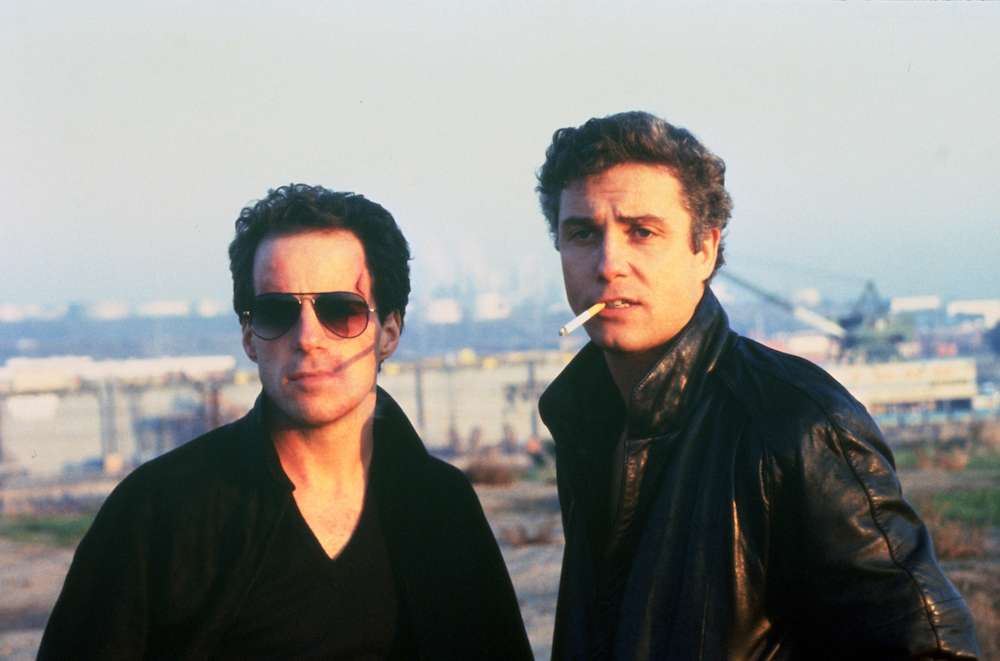
This oozes seductive style, Los Angeles a sun-blitzed glossy furnace of cops and criminals. Friedkin has, in spite of his occasional forays into turkeys, always understood the need to carve out a credible world for the narrative and impose a vision on the environment. So few directors appear to care for how their movies look; they are merely the point-and-shoot variety. This bloke, though, has a handle on the material. And the detail without being overbearing.
And the car chase in the film is another rarity; like Friedkin’s own The French Connection (1971), it’s backed up by actual character motivation. Apparently, one of the most recent Fast & Furious … things raked in a billion. The production cast and crew shut down half of Edinburgh a few years back with their silly antics. It will no doubt make a fortune, yet To Live and Die in L.A. (1985) recouped a pittance.


 Wanderings and ... wonderings.