A well-acted shitter (Toni Collette is marvellous in everything) but this descended into farce after about 30 unexpectedly disturbing minutes – I thought this was meant to be one of those quirky coming-of-age dramedies which can be quite therapeutic on occasion. The horrific MacGuffin had me almost turning the show off, such was its realism and relevance. I give it some kudos for that.
Things got messy thereon, however, and I’m referring to the script. It wasn’t going anywhere and I was losing interest with every gnawingly predictable moment, a pile-on of scenes from other thrillers. By the second episode I was lost in the world of far superior stuff demanding a second viewing.
I pulled the plug.
I hope you follow my lead (see what I did there?).
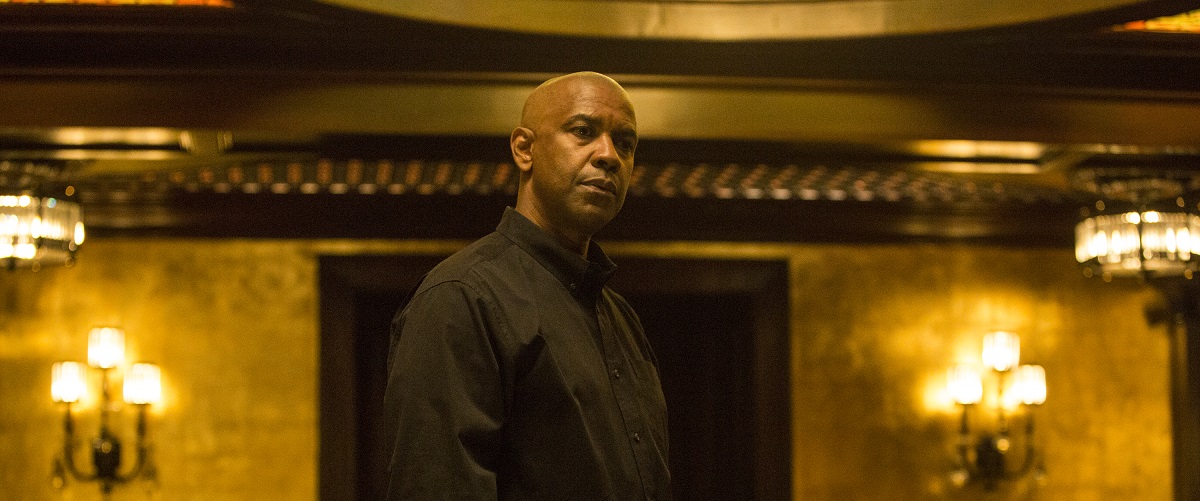
I mean, it’s bloody, as in baddies die and it’s graphic (which violence is). It’s Denzel doing his best Denzel; the opening sequence hilariously exposes his OCD by having the lad use a toothbrush to manicure his sneakers. You see him at work in a Walmart factory or whatever and he’s dedicated to the job. You get the feeling he’s hard as nails, though. And he turns out to be in the most Denzel way feasible.
The antagonist has a personality and is interesting; this is a rarity in the current action-thriller landscape. The soundtrack/score also works.
And Denzel utilises a nail gun.
Also, I’ve never seen the Edward Woodward TV show. It’s too late now to bother with it.
Lee Marvin had a bonkers year in 1967, this thriller and The Dirty Dozen representing the peak of his cult, not that your random audience member knew it at the time. They are a curious twosome as Point Blank appears a blueprint for a future style of film aesthetics and the Robert Aldrich ripper a throwback or definition of the classical form, if not in its then-graphic onscreen violence. It’s a watershed 52 weeks. I wasn’t alive back then, and thank fuck. But it looks eventful (just watch The Graduate).
What a seductive picture, and even the jarring time jumps work to reinforce the dreamy atmosphere of the film. The precise framing and use of colour, it LOOKS AMAZING (CAPS LOCK ALERT). The overlapping sound is pre-Robert Altman but betters those seminal works because it’s more than a silly afterthought or accident. There are scenes in this which require so little dialogue they may as well be Godard in a traffic jam. It’s an exercise in stylistics. You get this with first-time filmmakers or those in the early throes of the game – the bold choices, the going with the instinct. Peckinpah retained it almost to the end. Scorsese – the last man standing – still has it.
This is peak Tarantinto three decades before peak Tarantino. But without the feet obsession.
It’s also hilarious. Marvin has to be the coolest bloke to ever be off his tits. He retains throughout a semi-plastered hangdog expression and even in his quietest rage barely looks interested in proceedings. It’s all too easy for Marvin. All he wants is his cash but not even the corporate pyramid semi-responsible for his fate are even capable of doing the basics. Almost everyone in this movie is useless. It’s a life lesson.
Point Blank is a relic and a template.
P.S. There is no relation between this and Point Break (1991), which I watched a few weeks ago.
For years, I forgot this existed. Then someone sent me a snap of Hamburg and I remembered a rather excellent wee spy thriller set in the city. Philip Seymour Hoffman, or THE HOFF, was magnetic in everything he did but with The Master (2012), this is his masterpiece. There’s something so sincere and likeable about his ability to get real, and what I mean by that is a gift to portray what one would deem as flawed character traits, warts and all, what humans are actually like.
Hamburg on film is a daunting task. This film really does capture the international feel of the city. I just remember it being absolutely fucking freezing. I went for a jog around the port one afternoon and ended up in a political rally. It was cinematic. Anyway, to Hoffman. You were the best.
I was in Newcastle this week. The city is a bit of a toilet and their football fans quite possibly the most delusional on the planet. I fondly recall Michael Caine’s Jack Carter uttering the immortal line, “Listen, the only reason I came back to this crap house – was to find out who did it. And I’m not leaving until I do.” That’s Newcastle in a sentence.
It has its wee charming attributes, though, as do most post-industrial northern dwellings. It’s Hovis advert territory but with tracksuits. I spent my time here wandering about like a wee numpty in search of locations featured in the movie. I didn’t find any, although I did locate a hostel kitchen that had no sink.
Leon (1994) is a Sergio Leone aesthetic with a chunk of Lolita chucked in the works. The dodgy-as-fuck paedo spectacle aside, its images are pure art, Widescreen as perfection. Luc Besson is an aficionado for the inchoate screenplay, but as a pure thriller this really reaches the summit. And seldom has a movie set in New York City had literally nothing to do with New York City; it could be set in Marseilles, Edinburgh, Reykjavik. There’s something to be said for that, such are filmmakers’ obsession with the place. Personally, I don’t get it. I’ve been twice and wasn’t overly impressed; it felt like a cauldron of reprobates. And loud people roam the streets clutching fast food. Awful.
It’s just a cool-as-milk film, visuals off the scale. It doesn’t matter that the ‘Italian’ assassin sounds like Charles de Gaulle on methadone; it’s all about the framing. And Gary Oldman off his tits.
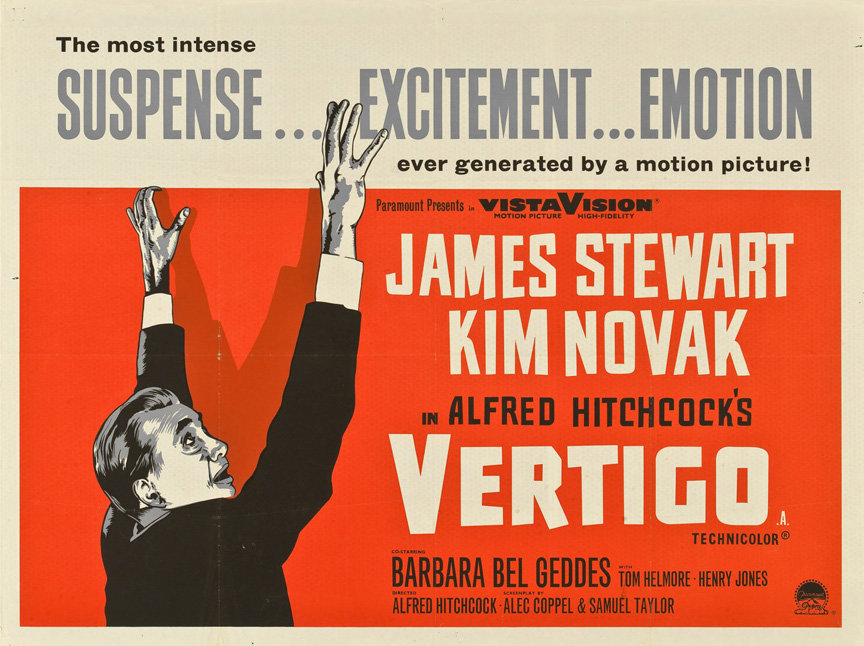
I first saw the unfathomable sensations of Vertigo (1958) on Boxing Day in 2001. I figured Hitchcock this go-to guy for cheap thrills, banal comedic interludes, nonsensical MacGuffins, crop dusters galore, and … trains. Vertigo spoke artistry, something deep and profound (so I heard) from the psyche. Looking at the physiognomy of the great master, one couldn’t help but think he’d spent a career pulling his plonker to his leading ladies; sources inform us, however, that he was no Mr. Miramax.
It’s a deeply unsettling picture, a compendium, in that Mad Men era, of the ‘Male Gaze‘. Novak’s ice-cold beauty is a kaleidoscope onto which John “Scottie” Ferguson projects his hysteria. She’s barely a character, and that’s the point.
A mastery of pacing, understatement, camera placement, and the semiotics of colour, the movie is your psychoanalyst’s wet dream. A narrative so stilted and sedate just builds and builds, unearthing an unblinkered aggression in every facet of the frame. It helps that the most serenely pacific of cities, San Francisco, acts as the melting pot for James Stewart’s warped solipsistic frenzy.
You watch Vertigo and witness every cinematic trope of the 50 years that followed. No Vertigo, no Brian De Palma. In 2012, Sight and Sound magazine voted Vertigo the greatest film ever made. It’s certainly more engaging than Grown Ups 2 (2013).
The Fugitive (1993) still holds up today, a thousand action-thrillers on. It’s now widely considered the benchmark for the ‘smart’ popcorn movie (big name star, TV source material, Oscar pretensions). There are spectacular set pieces here but it’s the intelligence of the script and the care in which the characters are sculpted which first captivated audiences. The battle of wits between the two leads and the obsession with which they pursue their agendas is like Maverick vs. Iceman but without the fighter jets and a volleyball scene. Well, perhaps a more mature version.
I saw it the other day for the first time in a decade and I was struck by how mature the film is, how it doesn’t pay lip service to target audiences/demographics. It’s simply a wrongly accused bloke on the run, but these are humans and not cardboard stock characters.
Stylistically, there is one sequence which dominates. A film lecturer I had at university showed us it in class as a textbook/expert use of montage, how a sequence so brief can cover so much crucial plot information. It takes your average modern-day movie an hour to cover what’s done here in under five minutes:







 Wanderings and ... wonderings.