Brian Blessed sans the beard and his general all-round formulaic Brian Blessedness was at least a shock. We also have shite costumes and dodgy wigs chucked into this insipid, very British mix/mess.
It’s essential history and for the time, I assume, it was event television. But bloody hell it isn’t half fucking boring. I couldn’t get beyond the embarrassing plastic sets and that did it for me. Did they shoot this in a prison? I had to pull the plug for I couldn’t suspend my disbelief.
The likes of Lars von Trier needn’t bother with an art department because that’s his obvious (oh so provocative!) intention; here, the skullduggery had the appearance of a school play.
I’m sure it’s captivating but no thanks, I have a toga from a fancy dress shop I need to attend to.
It’s your classic HBO series that deals with the upper echelons and the gutter, the senate and the Aventine, Caesar, Pompey, Mark Anthony, Octavian – Roman Republic to Empire and buttressed perfectly by the characters Lucius Vorenus and Titus Pullo, these based on two centurions mentioned in Caesar’s Commentaries on the Gallic War. James Purefoy especially excels here as the dashing and charismatic Anthony. He’s Bond material (he did actually audition twice for the role and almost got it).
Rome doesn’t skirt from the depravity, the rituals and religious sacrifices of the era, and the creative use of naughty language is funny as hell. It succeeds so well at building a world and bringing that period to life, but these people also talk like we do; there’s none of this long-winded theatricality to the wordplay. The spectacle and ambition of the show is unrivalled for its time. The first season is nigh on perfection yet the second so very rushed; they were clearly tying everything together and trying to end the story in a satisfying way.
Apparently they just didn’t have the money to make any more of them which is a shame because it’s rather great.
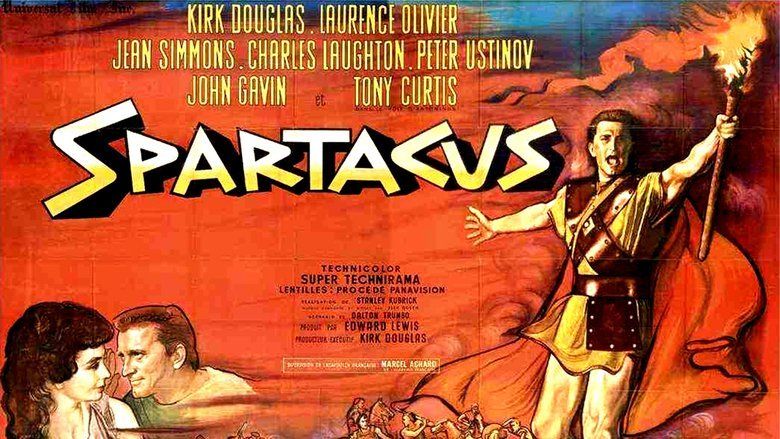
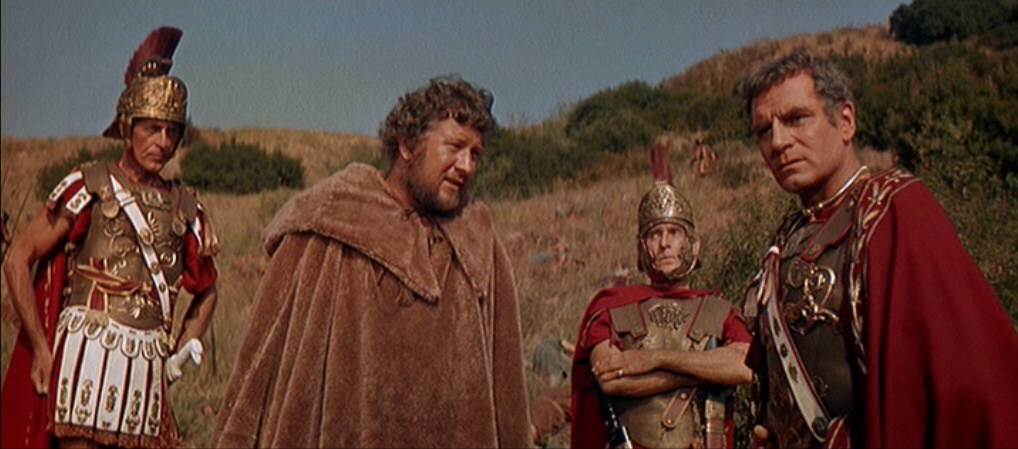
It’s still relevant because the story is universal and it’s by far the best directed and scripted of the historical epics, most of which are hackneyed affairs and wholly painful to watch. Aside from the Anthony Mann opening sequence, you can see the emergence of Kubrick’s style all over the picture despite the official record that he was constantly bickering with Kirk Douglas and screenwriter Dalton Trumbo. It also features perhaps the best ensemble of British acting talent from that era, Olivier, Ustinov, and Laughton showing the Americans how it’s done. Indeed, it’s almost a bit embarrassing viewing Douglas and Tony Curtis try and hold their own with the peerless Laurence Olivier; they appear awed by his presence.
His Crassus is a nasty fucker, but as always with Olivier he injects the ‘bad guy’ with layers and you can see where he’s coming from in what he does. His rivalry with Charles Laughton’s Senator Gracchus perfectly parallels the rebellion, and there’s a simple but historical truth to the outcome: order and dictatorship over anarchy every time. Special mention to Peter Ustinov who provides a chuckle in every scene, an obsequious slave-trader character usually bemused by proceedings.
A few snaps from my Rome sojourn popped up on one of those memories/flashback social media feeds that continue to remind me to jettison the silly things. But here I am, to share my profound thoughts and sublime snaps with the world.
This was back in 2015 on a trip which also took in Milan and Venice. Rome was legit stunning to look at, but it could have been so much better without a few garish elements; rather than just have the actual remnants of antiquity remaining as … well, themselves, there loitered a whole parade of local cretins decked out in Praetorian Guard clobber and the like. It stank of tacky tourism.
The Colosseum would have also been that slightly more monumental if the local authorities (or UNESCO or whoever has ‘claim’) removed the shitty parked cars circling the arena. No one wishes to see a banged-up Fiat (or any other variety of motor) plonked outside Russell Crowe’s stomping ground.
I suppose all our venerated treasures are like this; they come with a side order of cringe. And yes, those are needless ‘vintage’ filters I stuck on the images.
I first heard Ennio Morricone emanating from a dusty 4:3 TV in 1999. It was quite the introduction. For a Few Dollars More (1965) was on and I must confess it was the music that sucked me in rather than the story; I’d simply never heard of anything even remotely like it before. These days, on a Saturday afternoon attempting to trot off flab from a surfeit of Friday night booze, I on occasion find myself panting past our local Edinburgh prison to the very same maestro whom I ‘met’ in ’99, The Mission (1986) theme carrying me to the finish line.
Claudia Cardinale in Once Upon a Time in the West (1968).
The Italian’s music is synonymous with American cinema, just as his friend, compatriot and collaborator Sergio Leone is in the vanguard of Americana. Looking back at those Leone masterworks, seldom has music so perfectly been synced to visuals. And it is telling to know that the score was indeed played on set and the shots aligned to its rhythm.
His final live performances have arrived this year. I hate to say ‘swansong’ but one wonders where Morricone continues to muster the energy from at 90 years of age. His upcoming concerts are in Antwerp, Dublin, Verona, and the last showings in June – six nights in a row – at the Terme di Caracalla in Rome. One must truly experience The Ecstasy of Gold at these splendid Roman baths.
Terme di Caracalla, Rome.
One expects an anthology – this a fucking hell of a task to cherry-pick from over 500 scores – of some of the most operatic and iconic music to have emerged from 20th century cinema. Ennio Morricone is a trooper.




 I first heard Ennio Morricone emanating from a dusty 4:3 TV in 1999. It was quite the introduction. For a Few Dollars More (1965) was on and I must confess it was the music that sucked me in rather than the story; I’d simply never heard of anything even remotely like it before. These days, on a Saturday afternoon attempting to trot off flab from a surfeit of Friday night booze, I on occasion find myself panting past our local Edinburgh prison to the very same maestro whom I ‘met’ in ’99, The Mission (1986) theme carrying me to the finish line.

 Wanderings and ... wonderings.