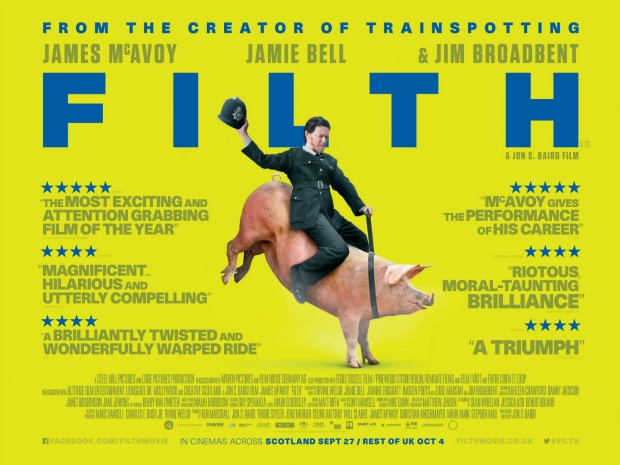
Not much of a heroic individual on display but bloody hell is Eric Bana funny here; it remains to this day his best role by a country mile. The bloke is just nuts, so quotable, and yet it’s allied to a singular style that is up there with Aronofsky or Scorsese. You need a dynamic treatment with material like this.
It is now 20 years since its release. I first saw it on DVD around 2005; it still holds up today. Like the best films, they don’t date because they were made in such a way which precludes this. It’s up on YouTube, by the way.
This is hilarious at times, black comedy done as it should be. And as an intro to Edinburgh it’s up there with the best of them. The Hamburg scene is off the charts in its accuracy. I’ve been on that messy adventure, believe me. However, I do feel this movie is a bit of a wasted opportunity. There’s not any kind of overarching message that elevates it into something other than a yarn, and the style is painfully nonexistent. One can only imagine what someone like Danny Boyle would have done with the script.
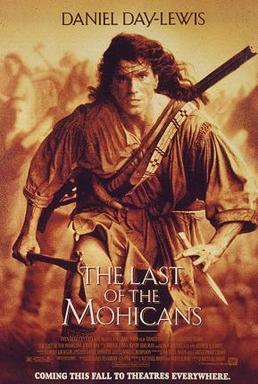
This blew my mind it was so good. On a simple action-adventure level it’s pure Mann, the framing and the cutting all signature style. What further distinguishes it are the connotations, though, the other world beyond the landscape. Mann always does this, always a subtext in the works. He makes deceptively uncomplicated yarns, but look closer and you unearth what he’s getting at.
This is pre-Revolutionary War (1775–1783) sparked by a Boston Tea Party. Get your head around that. The ending is magisterial, a literal crescendo of dimensions. The last shot – old America, current America, future America. It conveys more about American history than thousands of movies.
On a personal aside, I once synced the incredible Trevor Jones score to a panning shot of Edinburgh taken on a VHS-C camera from the top of Hillend. It was fucking pathetic but we can’t all be Michael Mann.
I’ve said on countless occasions to anyone and no one that the Bourne films easily supplant the modern Bonds in terms of a ‘hyper-realism’ because they are the right spy for this era – dodgy government agencies who are an extension of those governments, expendable employees prone to paranoia and literal identity crisis, a globalised landscape with overlapping institutions all out to screw you/each other.
In recent pictures, i.e., the Daniel Craig shit-bombs, Bond has essentially imitated Bourne, jettisoning some of the more ludicrous gadgets of the later Pierce Brosnan entries and going back to basics. Unfortunately, the filmmakers have missed the point and also lost the plot. Bond is Bond. Bourne is Bourne. Skyfall (2012) and the like are so schematic it’s embarrassing.
But enough about 007. What the Bourne movies did so well was capture that post-9/11 zeitgeist – expanded government powers, loss of individual freedoms for reasons of national security (or whatever), the sense that the rule of law is entirely flexible. They are also thrillingly unpredictable. You actually believe the carnage on display, and believe in the character and his mission to remember yet atone. It’s convincing.
The Bourne Supremacy (2004) is the big one for me. It’s the dazzling city-hopping angle of it, the Berlin centrepiece, the unexpected death of a central character which is ruthless but entirely necessary in motivating the protagonist. And that bonkers Moscow car chase.
These movies are more than mere thrillers; they are as much about a bloke’s weary relation to his time and place as they are his mission objectives. Someone once described the pictures to me as ‘existential’.
I mean, look at that fucking poster! Cool as milk, as is the movie. The script is a bit too melodramatic and Schrader is clearly a little too much obsessed with the cinema of Robert Bresson – the ending is almost shot-for-shot Pickpocket (1959). But the movie is pure sleek, art deco deluxe. And to top it off you’ve got Blondie and Giorgio Moroder on soundtrack duties.
Peak Richard Gere. No one plays the narcissist as well as he can.
Terrifying scenes the other evening. It all came flooding back (no pun intended). This was some movie back in the day. And like most of these Japanese and South Korean horrors from the noughties, it was subject to an inferior American remake.
They need to stop doing this because they are still doing it.
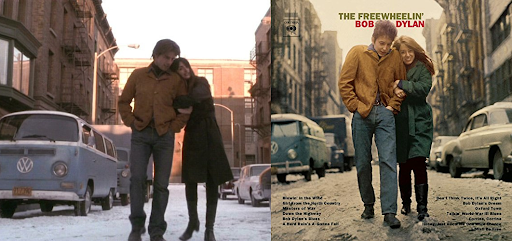
Bob Dylan. Not my kind of music. I go for the atmospherics and the bangin’ beats; take me back to the Sensation White Amsterdam era of alcopops and Ajax tops.
I have seen the movie Vanilla Sky (2001) 16 times, though. I know every single facet about the feature and WHY it is incredible yet folk still slate it. Some plebs just hate Tom Cruise; I think he is the best. He puts his all into everything and clearly loves his life. He also gets stick for the Scientology thing, as if every other religion isn’t insane.
Anyway, an album cover from something from Bob Dylan features in the film. I have never listened to the album and never will but it’s a belter of a photo. I feel about Bob Dylan as some do Tom Cruise.
I like to frequent this little Anthony Burgess habitat at least once a year to remind me of one of the greatest movies ever put on celluloid. When I depart I say to myself, “I was cured alright.”
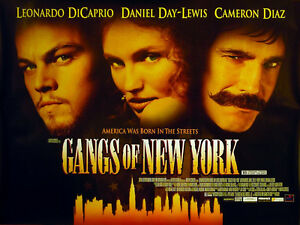
This movie had so much potential; during its production I was sincerely anticipating the greatest motion picture event … ever. Upon first viewing I desperately wanted to love it but couldn’t help but make a mental note of everything about the shitter which vexed me. There was something seriously wrong with this movie.
It is pointlessly and relentlessly weird, depicting 1860s New York as something out of a comic book. I’m sure the experience of living in what was by all accounts a cesspit approximating a cartoon strip at times, but it simply can’t have been as baroque as the ludicrous fancy dress show on display in GONY.
The movie has this irritating tendency for revelling in micro details about stuff that has zilch to do with the overall narrative, as if it’s half history lesson and half entertainment. I see no reason for the Manhattan draft riots to be treated with such gravity. This is the only Scorsese film in which he appears overwhelmed by the material, which I find completely baffling as it’s about New York, crime, and religion, his cinema oeuvre.
Weirdly (again), it is bereft of energy. It feels like a painful Baz Luhrmann film, the cinematography and editing just jarring – insert bonkers Speedy Gonzales shot here, a rapid cut there. Even the voice-over is draining. And it ends with a U2 song and a shot of the Twin Towers. Is this MTV?
And why even insert Cameron Diaz in this? Her ‘accent’ (or whatever) is diabolical, as is Leo’s. The latter appears way out of his depth, evidently awed by the full-method Daniel Day-Lewis. I must also confess that I think it’s the great Day-Lewis’ worst ever performance. He’s just comedy, nothing else; I can’t take him seriously any time he gets … serious.
Sadly, I keep giving the film a chance every few years. The only parellel I can think of is when you open the fridge expecting a different result from when you opened it 30 minutes prior.
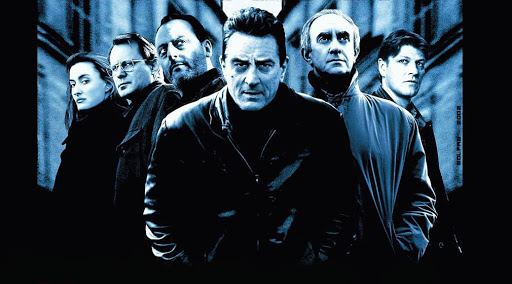
My 2020 massacre of Netflix took in the refreshingly old-fashioned Ronin (1998) the other day. When I say old-fashioned, I refer to the non-CGI (as far as I could deduce) action sequences and car chases, the absence of silly comedy lines or winks to the audience in the dialogue, and the general maturity of proceedings. This is an anti-postmodern movie.
It doesn’t surprise me that the helmsman is John Frankenheimer as it does hark back to his earlier work in the ’60s and ’70s, decidedly ‘masculine affairs’ but which still retained strong female characters (Angela Lansbury, anyone?). Natascha McElhone is the woman calling the shots here, definitely not the damsel in distress among the boys.
And it’s some assemble, particularly Sean Bean who totally convinces as a bullshitter way out of his depth, and Stellan Skarsgård as your buttoned-down ex-Stasi (one presumes) tech expert who just happens to be a complete psycho. De Niro is … De Niro, but De Niro before he became a pratfalling big baby in all those godawful ‘comedies’ from the noughties and beyond.
Rather than simply recommending Ronin for its throwback action and characters, though, there’s a bit more subtextual depth to it, a sense that this is the real world for a lot of folk, independent contractors segueing from job to job, making transient connections but nothing ever more than the odd fleeting bond. It’s a story of existential loneliness and a relatable one.
And regarding the MacGuffin, the perpetually elusive case which drives the narrative. Like Pulp Fiction (1994), we are never privy to the contents. It doesn’t matter.








 Wanderings and ... wonderings.