The stories were rampant at the time and bloody hell they were amusing: Brando refusing to be directed by Frank Oz for he moonlighted as a Muppet, Miss Piggy to be exact. The lionised thesp apparently took an instant dislike to the bloke, so Bobby De Niro had to take over directing duties, Brando fed instructions through an earpiece.
Frank Oz valiantly played Yoda through all of his incarnations, for fuck’s sake. Give him some slack, Marlon!
Anyway, it’s three generations of method maestros sharing the screen; sadly, none of them chew the scenery and you can just imagine what Michael Mann or someone of that caliber would have done with the material, even if the script is a bog-standard bag of cliches.
A movie completely bereft of style, any Tom, Dick or Harry could have put this together, as it’s as visually nondescript and anonymous as a hundred TV movies from the past 30 years. Only this came out in cinemas and features three quite extraordinary actors.
It’s good enough, but 90 mins of the three of them having an unscripted conversation in a pub toilet would have been more engaging.
Why is Marlon Brando in this? I’m confused. He appears lost, like he’s doing King Lear and not a man-in-a-cape flick.
Anyway, it’s an okay movie once the boring prologue ends, and I don’t mind the rubbish special effects. They kind of add to the charm.
This is what a superhero movie can be when it doesn’t feel the requirement for daft political subtext or the shoehorning in of a fashionable theme of the day. Just tell the fucking story!
It doesn’t half drag on but it’s a good template for that kind of movie. But I’ll never watch it again.
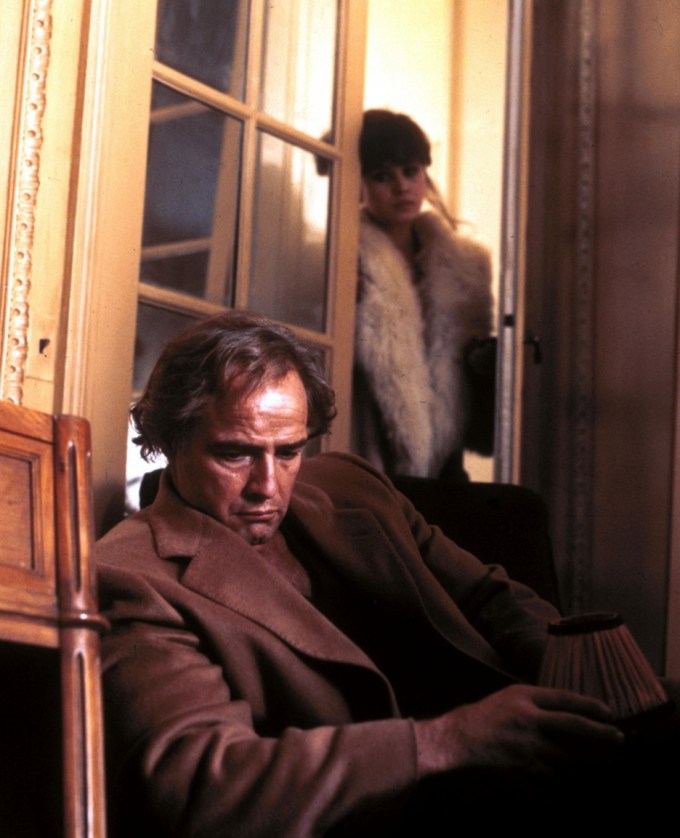
The Paris of Last Tango appears exactly as I remember it – grim, filthy, unforgiving, and indifferent. This uncaring squalor is manifested in the perversion practised by the characters, they upending all social mores and societal constraints. Almost as alarming is how cut off Marlon Brando’s Paul is from the outside world – it’s given him nothing but pain so he rejects it, and he himself confesses he has no friends or contacts worth having. The ‘man is an island’ feel of it, rather than sordid butter episodes, is what captivates me. This is of course by no means the central theme of the film, whose intention (I think) is to essentially piss on bourgeois conventions, but as artfully as possible; that Bertolucci marries some of the most sumptuously shot scenes with such animalistic content is no accident.
It is, though, the loneliness of the tale, the feeling that no one will ever know the travails of someone like Paul, that lingers most. His story has no indexical appeal – a chewed stick of gum on the underside of a Parisian balcony is the departing evidence that he was there, the connect between his end and the mysteries of his past (Schneider’s Jeanne intimates as much in her last lines as she prepares for police questioning).
In countless bars I’ve had drunken chats with innumerable ‘over-the-hill’ old codgers equipped with the most captivating and heartbreaking of evocations: a hazy trip with a childhood sweetheart to Amsterdam in the ’70s, riding the metro system with an ex-wife in Communist Moscow, a fleeting romance in Hong Kong circa 1964. The stories appear more than authentic enough, but they merely die with the teller.
I simply do not think I could cope without legitimisation through documentation – my travelling escapades are accompanied by articles, Instagram snaps, Facebook updates, WhatsApp messages to friends, and hundreds of photos, from beer glasses and buildings to cheeky street photography of stray dogs, traffic, and panhandlers. My view of unexplored regions is so tainted with media that I can’t separate myself from it – there is no solipsism on my voyages, and I disseminate any new city (for me) as a shared experience. My extended saké binge in Tokyo wasn’t just me getting wrecked in Tokyo; I brought along for the story Sofia Coppola, Yasujirō Ozu, and Ryuichi Sakamoto’s Merry Christmas, Mr. Lawrence (1983) theme. I must integrate myself into these narratives, extend their percolation, contribute my own little testament for the annals.
Chilling at Shibuya Crossing, 2015.
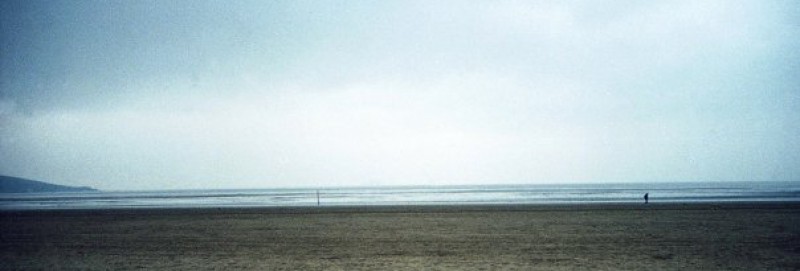
When people do go ‘off the grid’ as Paul does, we presume there is something really wrong with them, that they’ve done a Christopher McCandless; conversely, they are far more interesting, these nebulous figures unencumbered by our social media definitions. Were I a devoted wanderer of the East in the pre-digital age, I can’t imagine the pain of losing my copious rolls of film; it would render the whole trip without worth, an extended vignette banished to the fragmentation of my own memory. Moreover, it is through the photographic form that I continue to revisit, and even reimagine, the places I’ve seen – the photo has become the memory.
In something Straight Outta Bernstein’s haunting girl-on-the ferry story in Citizen Kane (1941), I twenty years ago at Nantes train station exchanged a wave with a woman on the platform as my train departed. Not a month goes by without me thinking of that elegant MILF with her lustrous blonde locks and catwalk boots. I do now wish I could have taken her snap or somehow exchanged Facebooks, as creepy as it sounds. She is but forever a fading, distorting memory. Call me, babes. Whoever you are. X.



 Wanderings and ... wonderings.