Terrifying scenes the other evening. It all came flooding back (no pun intended). This was some movie back in the day. And like most of these Japanese and South Korean horrors from the noughties, it was subject to an inferior American remake.
They need to stop doing this because they are still doing it.
Bob Dylan. Not my kind of music. I go for the atmospherics and the bangin’ beats; take me back to the Sensation White Amsterdam era of alcopops and Ajax tops.
I have seen the movie Vanilla Sky (2001) 16 times, though. I know every single facet about the feature and WHY it is incredible yet folk still slate it. Some plebs just hate Tom Cruise; I think he is the best. He puts his all into everything and clearly loves his life. He also gets stick for the Scientology thing, as if every other religion isn’t insane.
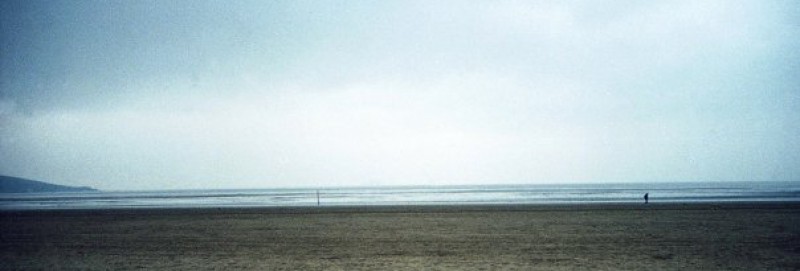
Anyway, an album cover from something from Bob Dylan features in the film. I have never listened to the album and never will but it’s a belter of a photo. I feel about Bob Dylan as some do Tom Cruise.
I like to frequent this little Anthony Burgess habitat at least once a year to remind me of one of the greatest movies ever put on celluloid. When I depart I say to myself, “I was cured alright.”
My 2020 massacre of Netflix took in the refreshingly old-fashioned Ronin (1998) the other day. When I say old-fashioned, I refer to the non-CGI (as far as I could deduce) action sequences and car chases, the absence of silly comedy lines or winks to the audience in the dialogue, and the general maturity of proceedings. This is an anti-postmodern movie.
It doesn’t surprise me that the helmsman is John Frankenheimer as it does hark back to his earlier work in the ’60s and ’70s, decidedly ‘masculine affairs’ but which still retained strong female characters (Angela Lansbury, anyone?). Natascha McElhone is the woman calling the shots here, definitely not the damsel in distress among the boys.
And it’s some assemble, particularly Sean Bean who totally convinces as a bullshitter way out of his depth, and Stellan Skarsgård as your buttoned-down ex-Stasi (one presumes) tech expert who just happens to be a complete psycho. De Niro is … De Niro, but De Niro before he became a pratfalling big baby in all those godawful ‘comedies’ from the noughties and beyond.
Rather than simply recommending Ronin for its throwback action and characters, though, there’s a bit more subtextual depth to it, a sense that this is the real world for a lot of folk, independent contractors segueing from job to job, making transient connections but nothing ever more than the odd fleeting bond. It’s a story of existential loneliness and a relatable one.
And regarding the MacGuffin, the perpetually elusive case which drives the narrative. Like Pulp Fiction (1994), we are never privy to the contents. It doesn’t matter.
In the midst of a global pandemic as it grabs peak humanity by the testicles, I sat down to watch 12 Monkeys (1995) again after a decade-long hiatus. And what smashing, thought-provoking, thoroughly enthralling sci-fi it is, a Terry Gilliam movie that isn’t uneven and all over the place, which basically makes it an anomaly. 1995 was kind to movies, and Bruce Willis was at his peak in the year of the Eric Cantona kung-fu kick.
There is a mind-blowing scene in this set on the Western Front during WWI; it is so magnificent that it almost derails the rest of the film. However, the character dynamics and pacing manage to keep it together and build to a stunning denouement, that and the inspired Vertigo (1958) references.
And this is one of the few movies that actually depicts people in ‘mental hospitals’ or ‘institutions’ as actually having meaningful, occasionally profound insights into the peculiarities of the social order.
And seek out its art-farty precursor La Jetée (1962). It’s definitely not shite.
It may not have the character-driven intricacies (and intensity) of Heat (1995) or The Insider (1999), but this is a technically perfect cops-and-robbers flick, pure genre. It takes itself so seriously; indeed, on this recent viewing I did not detect a single comedic moment or anything even approaching irony.
Once again, Mann displays bizarre music choices; why on earth would anyone use Audioslave/Chris Cornell in a movie? It works here, though, something one can not say for Casino Royale (2006).
It’s all about the transcendental moments. Any other director wouldn’t feature the speedboat scene at all but Mann turns it into the movie’s centrepiece. It’s here that Farrell’s Sonny Crockett illustrates everything Mann thinks a … man should be. I imagine the filmmaker would be ashamed at the sight of a grown man crying.
As visual experiences go, the movie is dynamite, action cinema as art. Mann has a thing for dance sequences; here they supplant the need for dialogue. And it doesn’t matter because they are so … cinematic.
And I’ve never seen the TV show Miami Vice so I have no idea how this movie relates to it. Am I missing anything?
I first purchased this bad boy in ‘Alps Second Hand Shop’ on Dalry Road in the scorching summer of ’99, which remains to this day the greatest era of recent cinema and probably my life. The VHS was a battered, well-worn pan and scan number that cost less than today’s fare for a single bus journey on one of our ghastly maroon peasant wagons. It suffices to say that the following two hours were a religious experience. The video, if you are curious to know, looked exactly like this:
Ocean Terminal’s Vue Cinema reopened yesterday after a lengthy hibernation, the new ‘distancing epoch’ peppered with PPE and anti-bacterial spray flying everywhere. They are showing some classics, presumably because studios are unsure as to how to proceed with their new releases. £5.99 a ticket for this cinematic baptism? Yes, yes, yes.
What a BELTER it is, magically flawless, deep escapism imbued with universal themes, a compendium of genre tropes and technique. PhDs have been written about this motion picture, and I cannot pinpoint even a single thing in it that should not … be in it. One could deem the experience Citizen Kane (1941) in space. There is no point me highlighting the highlights, as we all know what those are.
“NOOOOOOOOOO, NOOOOOOOOO!”
I would just like to say that 99.9% of cinema today is fucking gash, total tripe. Pure shite.
Third Reich satire has at its apex the twin OTT delights of The Great Dictator (1940) and The Producers (1967), two films so unabashedly barmy it’s easy to overlook the human element beside (or within) the bawdy farce. Jojo Rabbit (2019) is made, I presume, in the vein of these crackers.
It is a riot at times, taking the piss out of the ludicrous ideology and its glaring contradictions yet outlining its attractions for subscribers. Among the things most difficult to attain in cinema is the seamless veering between comedy and drama and this is the picture’s most impressive achievement, a mastery of tone.
S
P
O
I
L
E
R
And an imaginary der Führer karate-kicked through a window in rather cathartic fashion by a 10-year-old member of his own Hitler Youth is quite the enduring image.
This is one terrifically entertaining whodunnit with an unexpected political undercurrent that comes to the surface in the third act. The time flew by, mainly due to Daniel Craig’s outrageous PI southern shtick. His voice is so uncannily like that of House of Cards’ Frank Underwood, I closed my eyes and pictured Kevin Spacey and all the resultant grisly news following the accusations about the bloke. It didn’t ruin the movie, only giving it a creepier edge.
Most films of this ilk hark back to Agatha Christie and are mere pale imitations of those superior yarns; Knives Out (2019) is something more than that, with its contemporary setting and subtly subversive reworking of the genre. You also believe these characters.
The terrified audience bolted from the theatre, so the apocryphal story goes. Why anyone would flee from a black-and-white moving image with no sound didn’t appear to come into the mythmakers’ thinking.
YouTube user Denis Shiryaev has given the Lumières’ slice of early cinema a 2020 makeover (4K and 60 FPS) and it has the effect of amplifying the nostalgia factor and the strange serenity of the ‘narrative’. The frame’s occupants always looked too nonchalant to me, this a time when the presence of the camera was meant to turn folk into a frenzy. A mere few minutes of research reveals the extras in the shot were asked to ignore the filmmakers, the subjects ‘directed’ so to speak.
This is the upgrading of vintage visuals done right, none of this Ted Turned colorization pish.