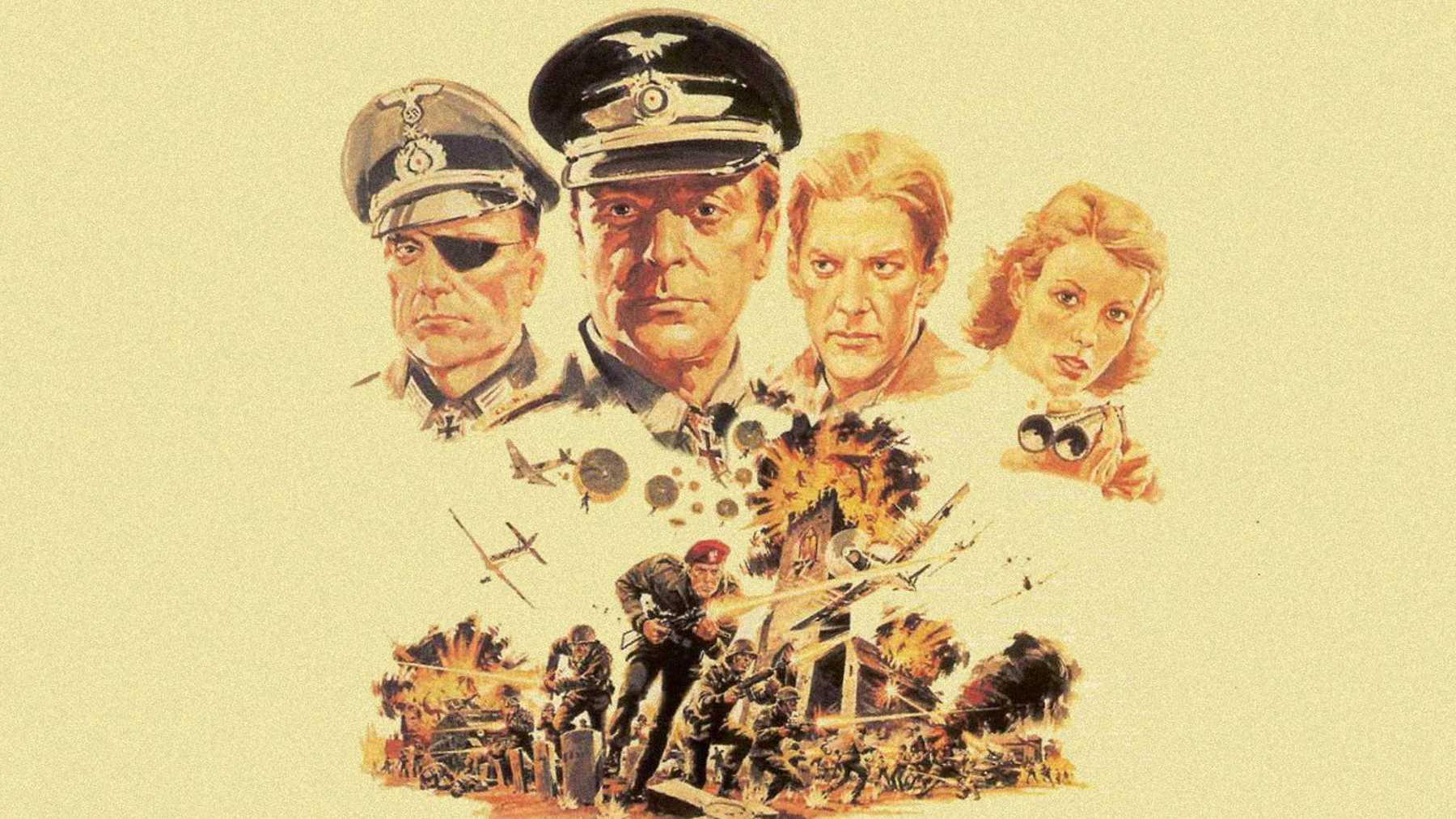
You standard old-fashioned wartime thriller which acts as a serviceable but inferior companion piece to The Day of the Jackal (1973), you’re aware of the outcome but the suspense is in getting there. Unfortunately, the exposition in this one is intriguing enough but by the halfway point it’s a snore. And then Larry Hagman appears as an inexperienced American colonel and it descends into silly comedy which I suspect today wouldn’t survive a pre-production script cull; we all know assassination attempts are no laughing matter.
Thank the heavens for Donald Sutherland. This is another case of Donald Sutherland being hired because only he can play a Donald Sutherland type. He’s fabulously nuts in everything and his career appears to be a personal mission in walking off with the movie. His supporting roles always suppose a spin-off picture with him at the fore. He even made the stinker that is Virus (1999) almost bearable.
This is the best thing on YouTube and exactly what the internet is for.
I’m not here to plug the channel and I don’t know anything about the production or its team at all but the show is so well put together it needs to be shared. The depth of research is up there with your contemporary historians and, rather than a simple retelling, the makers actually dig into everything and ponder the what-ifs. I’d take this form of accessible media over a dry academic piece any day, and it’s the intro for anyone interested in the topic; back in the day, all we ever had was the same old insipid, badly researched and produced textbook material regurgitated on the BBC.
We’re up to winter 1941 now and even to this day it’s utterly shocking how close the Wehrmacht made it to Moscow despite all of the setbacks. It’s the greatest and worst event in history. The age of extremes, aye.
I saw this movie many years ago and thought it rather great, but time distorts things. Goodbye Lenin! (2003) is an occasionally semi-funny insight into global changes impacting on the small scale; here, day-to-day life as experienced by an East German family going to increasingly elaborate lengths in maintaining the illusion of the GDR’s omniscience. The director’s stance as to reunification is a bit too ambiguous for me, the movie more concerned with a broad view of how the personal and political interweave, assessing the extent to which the society we live within affects us.
Why bother with such a contentious subject if you sit on the fence? This happens again and again.
It is at times a nauseating watch, almost an apologia for state tyranny. The film’s premise, pure Ostalgie, is that the economic and social constructs of the GDR, because of its restrictions on private wealth and public expression, harnessed a deep sense of togetherness felt by families. Wow. I won’t be watching it again. And all the Kubrick stylistic homages in it irritated me immensely.
If Lenin! refrains from showing the horror of life in East Germany in vivid detail by opting to examine why in recent years it has been de-emphasised, it has paved the way for a more meticulous and exacting probing of the Stasi state in contemporary cinema through devastating films such as The Lives of Others (2007), with all the GDR’s greed, hypocrisy, paranoia, and corruption laid bare.
It is 2020 and some folk (I call them “social spastics”) identify as communists.
They are the walking demonstration of why society is forever crumbling.
Anyway, I fucking despised this movie. HATED it. Stay away.
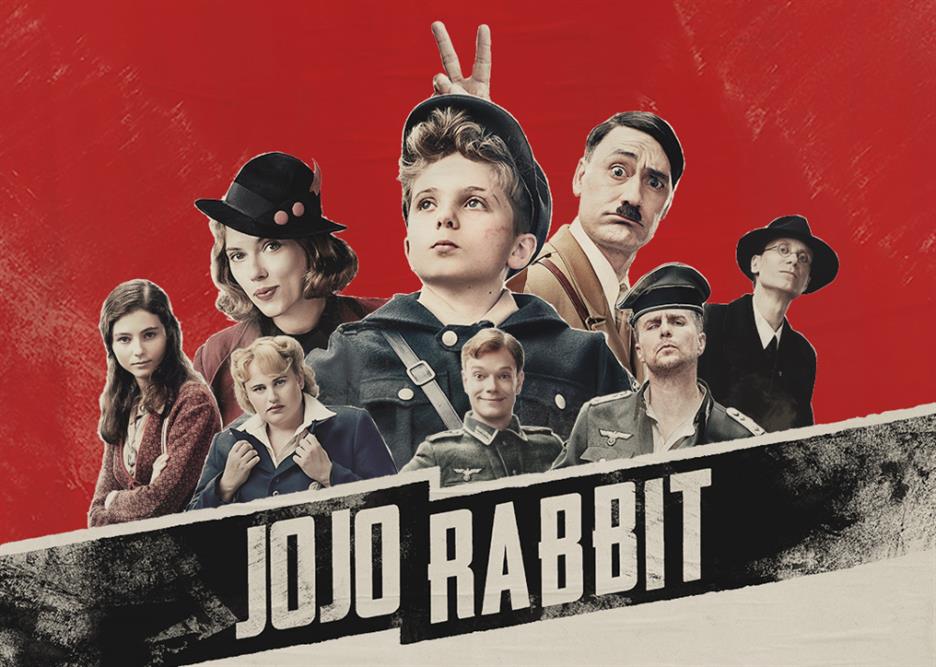
Third Reich satire has at its apex the twin OTT delights of The Great Dictator (1940) and The Producers (1967), two films so unabashedly barmy it’s easy to overlook the human element beside (or within) the bawdy farce. Jojo Rabbit (2019) is made, I presume, in the vein of these crackers.
It is a riot at times, taking the piss out of the ludicrous ideology and its glaring contradictions yet outlining its attractions for subscribers. Among the things most difficult to attain in cinema is the seamless veering between comedy and drama and this is the picture’s most impressive achievement, a mastery of tone.
S
P
O
I
L
E
R
And an imaginary der Führer karate-kicked through a window in rather cathartic fashion by a 10-year-old member of his own Hitler Youth is quite the enduring image.
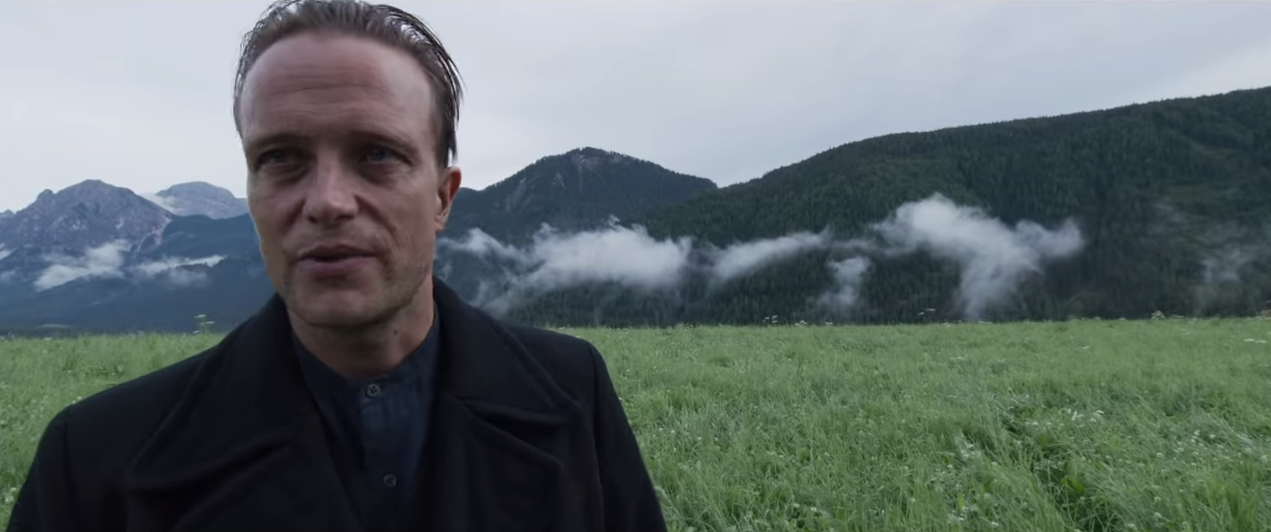
August Diehl holds one of those physiognomies of the Klaus Kinski variety, instantly recognisable and very creepy, more suited to playing the villain or the unhinged than the innocent. Diehl almost stole Inglorious Basterds (2009) from Christoph Waltz with his tavern-set scariness (in full Hugo Boss clobber). Here he pulls off the Jesus role with aplomb, a performance very much devoid of … dare-I-say-it – pretension. The worst performances by actors are the posturing sort which embarrassingly scream for an Oscar; none of that bombast here. And to give the movie more of a deathly air, Michael Nyqvist and Bruno Ganz both star in their final roles.
22 years after the release of The Thin Red Line (1998), Malick casts his spiritual magic once again on WWII, this time not on the soldiers at Guadalcanal but the German home front. Malick ticks all the Malick boxes = sweeping cinematography, incessant voice over, melancholic score, metaphysical monologues, and lots of nature and all that. It is a long sesh but with reason, and in no way a ‘slog’. The story of Franz Jägerstätter is one worth telling.
A third of the way through Stephen Kotkin’s middle chapter (Waiting for Hitler 1929-1941) of his mammoth three-volume study of Stalin, and it’s mind-blowing material. Fuck knows how long these books, with the final instalment still to be published, took to research and write. And it’s not just superlative academia; this chap with his razor-sharp wit can be funny as hell at times, which is most irregular when you consider the horrifying subject matter.
As an accessible compendium into what essentially made the Soviet Union work (Stalin’s own system of design) this is an unrivalled study of personal dictatorship and its geopolitical symbiosis.
As a speaker, Kotkin has been frequently described as ‘Professor Pesci’. Just listen to one of his lectures (posted below). Uncanny. I’d prefer, though, to not picture him in Casino (1995) with a hoodlum’s head in a vice.
An excellent wee doc here from DW, the anything-goes bacchanal of the Weimar Republic captured in all its glory. What a time to be alive – left vs. right, paramilitary chaos, Fritz Langesque serial killers, rampant crime, easy credit, and in the middle of this ‘Golden Twenties’ expressionist bonanza, Berlin’s loonies shagging, drinking, and sliding down poles. Just lovely.
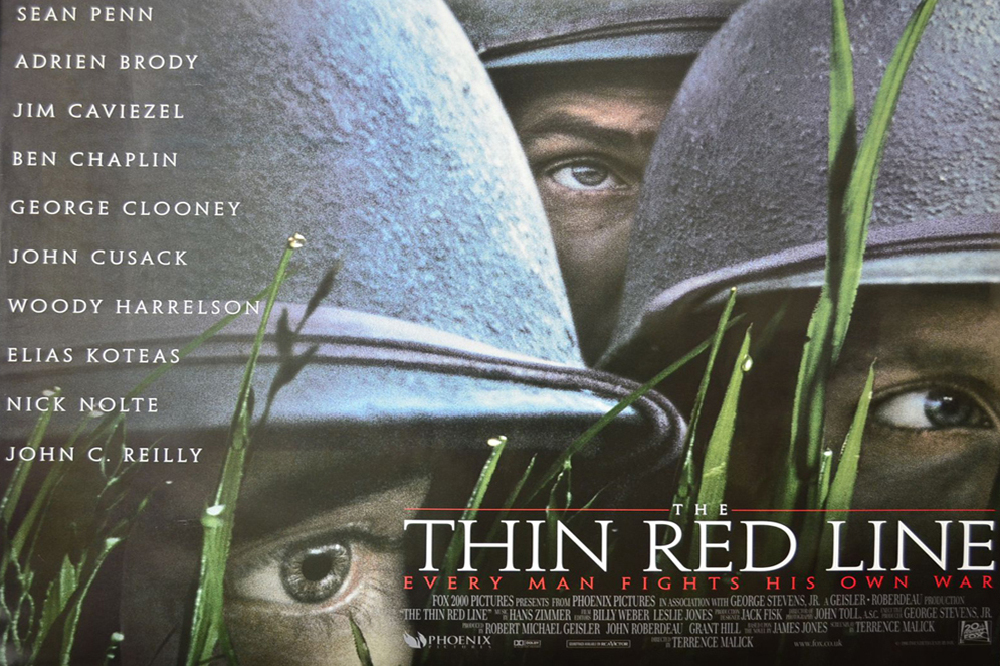
Fuck knows what Terrence Malick was doing betweenDays of Heaven (1978) and The Thin Red Line (1998). Malick goes period again, the slaughter of Guadalcanal complete with a who’s who of Hollywood ‘big names’. One could be forgiven for thinking this a contemporary The Longest Day (1962), a spot-the-star marathon. Malick clearly used these ‘stars’ as a means for making this entirely personal ontological exercise.
The least political war movie ever, the battle starts and ends and the company depart, characters question their place in the grand scheme of things, quite the number die. The cinematography is breathtaking, the score transcendental. It’s the closest ‘commercial’ motion picture to extended movie montage, à la Koyaanisqatsi (1982). There are no stock good guys and bad guys or retreading of traditional war movie tropes.
Martin Scorsese summed it up quite well: “The Thin Red Line” is so important. You could come in the middle of it, you can watch it. It’s almost like an endless picture. It has no beginning and no end. People say, “Well, sometimes I can’t tell whose voiceover it is.” It doesn’t matter. It’s everybody’s voiceover.”
Up until last year and the release of Dunkirk(2017), it was generally assumed by the layman and amateur historian that the successful evacuation of Dunkirk was due to the lax, complacent attitude of the German Army, this a direct order from Hitler to halt the armoured divisions as a benevolent peace offer to the British. Only now has consensus gathered amongst us part-time carnage bookworms that this is nothing but a fallacy. Myths are embedded within official military narrative and it happens because they are convenient, an easy answer to overwhelmingly complex logistical and political issues. The laziness, with exceptions, of the modern historian is so rampant that contemporary sources are taken as gospel, i.e., works by peers. It’s as if the archives don’t exist.
Fittingly, the Russians just this past week let forensic experts analyse Hitler’s teeth, dispelling, one would hope, the belief that he fled to Argentina in a U-boat or emigrated to the Moon.
I first saw A Bridge Too Far (1977) on VHS in 1998 midway through a glorious summer mostly spent playing Mortal Kombat on a dilapidated SNES. I purchased the film with Dante’s Peak(1997) from an electronics store on Dalry Road, Edinburgh. The latter movie, some gibberish about a volcano starring James Bond and Sarah Connor, was garbage on tape. The former, featuring the first incarnation of James Bond and a who’s who of star names, was a revelation. It had carnage, a British-American Pro Bowl of acting talent, a surfeit of bridges, an addictive theme tune, and some thoroughly nasty Waffen SS units.
More so than El Alamein, the Battle of Arnhem was the last gritty swansong of the British Army, and nothing like it was seen until the Falklands War in 1982. The movie was one of the first to shed light upon the deficiencies in military leadership that plagued the later ‘successful’ campaigns of WWII, the myth of Montgomery as peerless grand master demolished here. It’s fitting the film was made in the late ’70s, that rotten era of excessive inflation, industrial action, uncollected garbage, and three-day work weeks. Britain was seemingly on its last legs, and it’s almost as if a splatter of tragic nostalgia was needed to top it all off.