This channel is what the Internet was made for (aside from cat videos and staged pranks). The wealth and detail of info in these vids, the animation, the music, the narrator and his redoubtable voice.
Category Archives: World War One
All Quiet on the Western Front (2022) is a terrible movie.

The 1930 original is an exercise in magisterial technique. You watch it and marvel how it was put together.
Whether the technique fits the script – most films fail at this – has always been an issue for your reviewer, and as we’re talking about WWI films, the pointless 1917 (2019) is an infuriating venture into needless aesthetics.
Sadly, I hated this movie. It was the definition of mawkish and naive, the soldiers wee gullible pups with identikit snarling chops, marching about with big gormless grins on their proposed way to Paris. It was embarrassing to view. NO ONE behaves like this, and indoctrination isn’t that effective.
The score – annoying drums for no reason, interrupting the drama which could have been – was not good at all.
I also found it funny how the teacher looks the exact same as the Wilhelm II verbal-shagger from the Lewis Milestone corker – pathetic!
It’s a truly rubbish movie, a veritable Pick ‘n’ Mix of cliches and embarrassing reworkings of tropes from far superior fare.
I lost a lot of interest in all developments and contemplated my next viewing of Paths of Glory (1957).
Don’t bother with this.
1917 (2019) irritated me beyond belief.
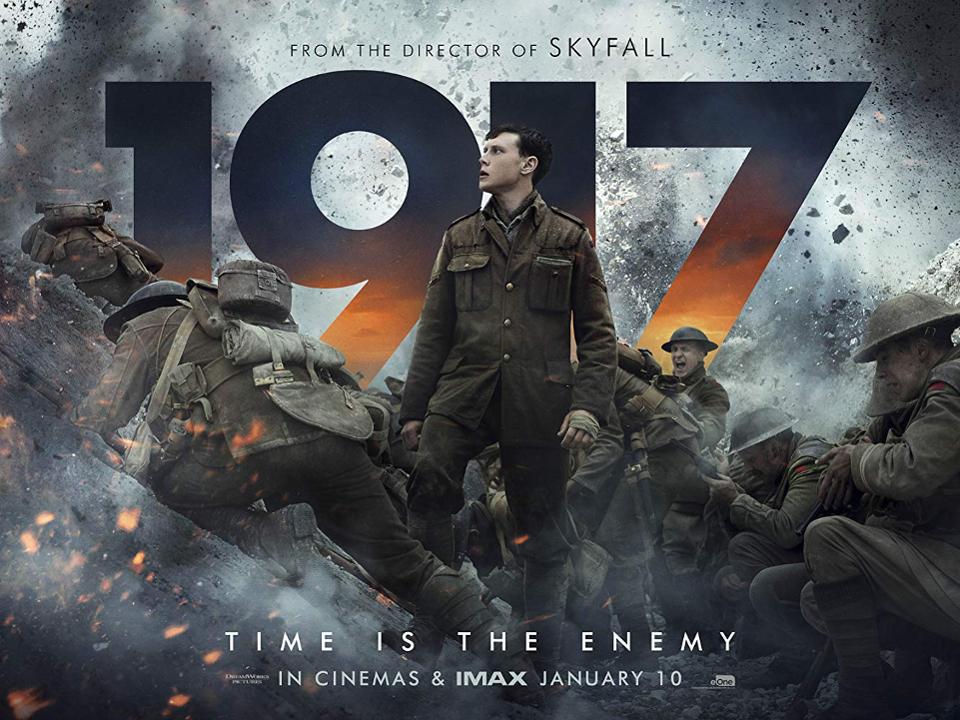
Finally got around to seeing this having missed it on the big screen. Netflix would have to make do as it usually does these days. I suppose movies like this demand the theatre experience, but I’m not waiting a decade for a one-off re-release.
Cinema concerning The Great War is understandably not omniscient as affairs regarding WWII are. The former conflict as seen by contemporary historiography (at least on the Western Front) is more static, more simple, with less of a political and civilian dimension. There are exceptions in cinema – Kubrick’s Paths of Glory (1957), Lawrence of Arabia (1962), The White Ribbon (2009), but there are only a handful ever worth watching again.
I couldn’t stand this movie.

It’s appalling acting from many on display. The main bloke is good but the rest are phoning it in. There are so many annoying cameos from marquee actors who appear merely to boost the star names on the poster.
Bizarrely, it seldom feels like anything is at stake; I wasn’t bothered about any of the developments. One of the bloodiest and destructive conflicts in history is reduced to a bloodless, frankly boring episode which never once feels real or sincere. And as for the ‘one shot’ USP, it’s nothing more than a gimmick. But then a moment happens when it stops being a sequence shot by cutting to black, which negates the so-called perfectionism of the preceding exercise. It’s pointless.
And a lonely French woman makes an appearance, and she proceeds to shelter the protagonist. No cliché unturned.
Stick to Paths of Glory (1957).
Lawrence of Arabia (1962) on the small screen.

I’ve never seen it in the cinema, which is a personal and public tragedy considering the following have been witnessed to a munching of popcorn and the intake of a sneaked-in batch of Blue WKDs: a Transformers movie, a crime-against-humanity Predator crapper, Cuba Gooding Jr. looking after kids, the list goes on and on.
The weirdest protagonist to ever feature in a movie of this kind. For 1962 it’s crazy the stuff on display – his sadomasochism and homosexual leanings, the rampant ego for a hero, his being a conduit for others’ ambitions, a conflicted symbol of British Imperialism, a puppet and a master. You have to read a bit about the context of the depicted period and ’60s Britain to understand the movie beyond its sheer scope and spectacle, the beauty of every frame. It’s also one of the few examples of the great man theory of history actually being given the full treatment. This bloke was certainly someone special yet David Lean in no way kowtows to the legend.

There is not a single female character because there simply weren’t any in the story. These days you’d have a token love interest or a signposted lesbian (or whatever) operating field artillery from the back of a camel. It’s what separates then from now. The insertion of silly politics into storytelling will be the death knell of this genre. I also imagine today we’d be subjected to a CGI bonanza replete with a script dumber than ….Wait a minute, Peter O’Toole was in Troy (2004) and that horrible film pretty much defines the post-Gladiator (2000) historical epic barren landscape.
This one-of-a-kind experience, though, can’t even be emulated. It’s a journey, a narrative about a hundred different things, even stuff you project onto by convincing yourself that’s what that scene means. For me, it’s always been about losing your marbles in an unfamiliar land and taking it back home with you for the banter and the scrapbook.
My favourite scene: the wondrous Claude Rains running his pinky across the table to inspect the dust on it. It’s so subtle and hilarious and just incredible. I am praying for a cinema release. The intermission, that bonkers sequence of black with Maurice Jarre’s bombastic score from the outer regions of audacity, that’s where I’ll sip my Blue WKD.
The best movie.
12 Monkeys (1995) is way better than I remembered.
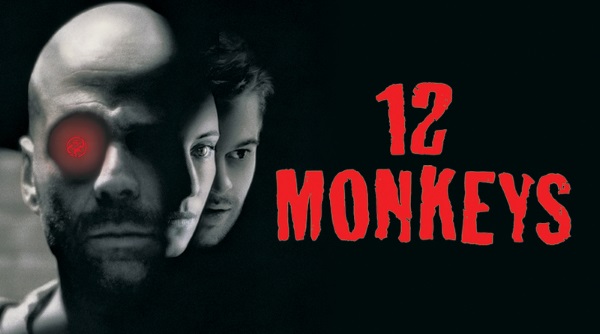
In the midst of a global pandemic as it grabs peak humanity by the testicles, I sat down to watch 12 Monkeys (1995) again after a decade-long hiatus. And what smashing, thought-provoking, thoroughly enthralling sci-fi it is, a Terry Gilliam movie that isn’t uneven and all over the place, which basically makes it an anomaly. 1995 was kind to movies, and Bruce Willis was at his peak in the year of the Eric Cantona kung-fu kick.
There is a mind-blowing scene in this set on the Western Front during WWI; it is so magnificent that it almost derails the rest of the film. However, the character dynamics and pacing manage to keep it together and build to a stunning denouement, that and the inspired Vertigo (1958) references.

And this is one of the few movies that actually depicts people in ‘mental hospitals’ or ‘institutions’ as actually having meaningful, occasionally profound insights into the peculiarities of the social order.
And seek out its art-farty precursor La Jetée (1962). It’s definitely not shite.
Stephen Kotkin on Stalin.

A third of the way through Stephen Kotkin’s middle chapter (Waiting for Hitler 1929-1941) of his mammoth three-volume study of Stalin, and it’s mind-blowing material. Fuck knows how long these books, with the final instalment still to be published, took to research and write. And it’s not just superlative academia; this chap with his razor-sharp wit can be funny as hell at times, which is most irregular when you consider the horrifying subject matter.
As an accessible compendium into what essentially made the Soviet Union work (Stalin’s own system of design) this is an unrivalled study of personal dictatorship and its geopolitical symbiosis.
As a speaker, Kotkin has been frequently described as ‘Professor Pesci’. Just listen to one of his lectures (posted below). Uncanny. I’d prefer, though, to not picture him in Casino (1995) with a hoodlum’s head in a vice.
Further reading/viewing:
https://www.goodreads.com/book/show/20821221-stalin
The Great War (1964).

I finally got around to viewing this epic 26-episode series from 1964. It’s an incredible compendium of WWI in all its participants’ hubris and misguided adventurism, and is majestically narrated by Sir Michael Redgrave (this bloke sounds more Laurence Olivier than Laurence Olivier himself).
This is how to do a documentary – with sweeping scope and intricate detail, no half measures. With terrifying archive footage and an expert use of primary sources read by contemporary actors, as well as interviews with those serving on the military and civilian fronts, it set the benchmark for such works, acting as a precursor to The World at War (1973).
The wonders of the Internet ensure it is free to binge-watch.
They Shall Not Grow Old (2018) – colourised reality.
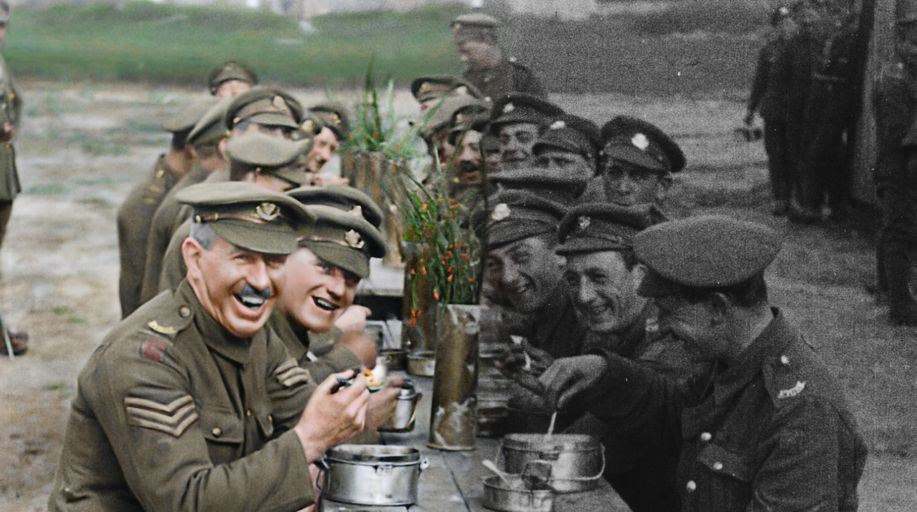
Viewed through the prism of black-and-white, Charlie Chaplin-speed film footage, it’s axiomatic to view actors from the past as otherworldly, alien even, and simply not blessed with the smarts and skills we believe ourselves to possess. We forget they are people of their time using that era’s technology and science and its harnessing of military doctrine.
Then the grainy kaleidoscope of war gets colourised to the max and all hell breaks loose. You’d think this is GoPro stuff sent back to Flanders in a time machine and then propelled back to the future by Marty and Doc, such has been the collective hyperbole over Peter Jackson’s colourised tribute to our great-grandparents.
And that’s the thing – as the red, green and blue is blitzed the more we can relate. Yet war today is some distant thing we flick through on CNN or whatever. Fully realised 3D depictions of car bombs and RPGs ambushing armoured personnel carriers we have decided are too graphic, this in an age when students find clapping traumatic. But the carnage of the Somme is somehow acceptable because it’s a centenary old. Weird.
Perhaps we need a WWIII to make reality (people die, war is hell) more palatable to our viewing tastes.
Further reading/viewing:
https://www.bbc.co.uk/news/entertainment-arts-45910189
The Great War – YouTube channel.
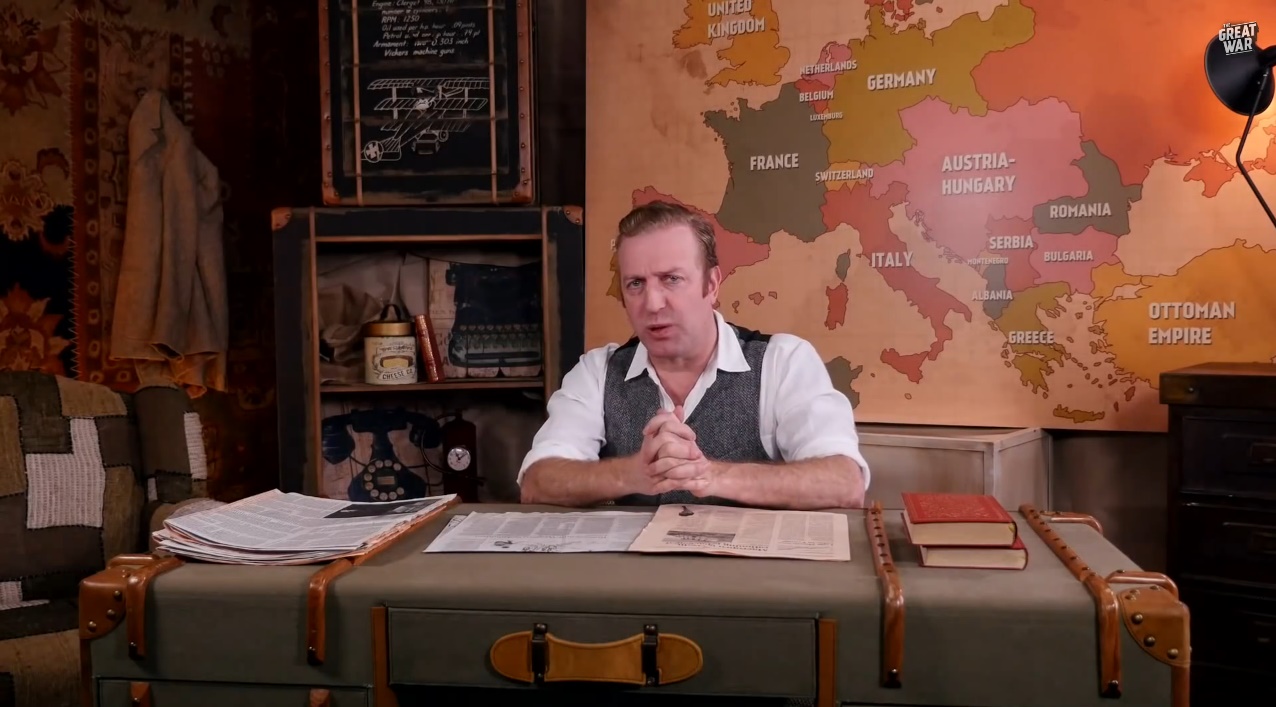
YouTube is littered with pointless garbage (cat videos, webcam rants, ‘best fails’) that perplexingly garner millions of views; this, however, is one of the gem finds. A week-by-week account of the First World War told in ten-minute (or thereabouts) episodes, what impresses is the sheer volume of research and breadth of detail. As far as I know, the programme makers are not professional historians in the traditional sense or have emerged from the academic field, but everything is painstakingly researched and just as accessible as your weekly Gangnam Style and all that.
Perhaps this is the New History, online sources our breadcrumbs trail to books.
https://www.youtube.com/user/TheGreatWar
Edinburgh from the skies.
The sheer technical brilliance of this snap, and the conditions of its making, shouts out pure romance. What a time to be alive. Today we get crappy iPhone images from the window of a Ryanair flight to Lanzarote.

Alfred G Buckham’s Aerial View of Edinburgh (1920) keeps cropping up in material I’m reading about aerial reconnaissance in the First World War, not as a documentation of that period, but as an example of what some pilots did following the conflict. In this new age of flight, they simply took to the skies and put to good use the skills they honed on the Western Front. It’s what I’d like to imagine Manfred von Richthofen (the Red Baron) would have done had he survived the making of his legend – art superseding war.
Buckham, the first head of aerial reconnaissance for the Royal Navy, captured most of his shots standing up in his plane. He left us with this enduring quote on aerial photographic technique: ‘If one’s right leg is tied to the seat with a scarf or a piece of rope, it is possible to work in perfect security.’
The guy had balls.
 Wanderings and ... wonderings.