‘One thing I could never stand was to see a filthy, dirty old drunkie, howling away at the filthy songs of his fathers and going blurp blurp in between as it might be a filthy old orchestra in his stinking, rotten guts. I could never stand to see anyone like that, whatever his age might be, but more especially when he was real old like this one was.’
For years, I forgot this existed. Then someone sent me a snap of Hamburg and I remembered a rather excellent wee spy thriller set in the city. Philip Seymour Hoffman, or THE HOFF, was magnetic in everything he did but with The Master (2012), this is his masterpiece. There’s something so sincere and likeable about his ability to get real, and what I mean by that is a gift to portray what one would deem as flawed character traits, warts and all, what humans are actually like.
Hamburg on film is a daunting task. This film really does capture the international feel of the city. I just remember it being absolutely fucking freezing. I went for a jog around the port one afternoon and ended up in a political rally. It was cinematic. Anyway, to Hoffman. You were the best.
Not much of a heroic individual on display but bloody hell is Eric Bana funny here; it remains to this day his best role by a country mile. The bloke is just nuts, so quotable, and yet it’s allied to a singular style that is up there with Aronofsky or Scorsese. You need a dynamic treatment with material like this.
It is now 20 years since its release. I first saw it on DVD around 2005; it still holds up today. Like the best films, they don’t date because they were made in such a way which precludes this. It’s up on YouTube, by the way.
I’ve said on countless occasions to anyone and no one that the Bourne films easily supplant the modern Bonds in terms of a ‘hyper-realism’ because they are the right spy for this era – dodgy government agencies who are an extension of those governments, expendable employees prone to paranoia and literal identity crisis, a globalised landscape with overlapping institutions all out to screw you/each other.
In recent pictures, i.e., the Daniel Craig shit-bombs, Bond has essentially imitated Bourne, jettisoning some of the more ludicrous gadgets of the later Pierce Brosnan entries and going back to basics. Unfortunately, the filmmakers have missed the point and also lost the plot. Bond is Bond. Bourne is Bourne. Skyfall (2012) and the like are so schematic it’s embarrassing.
But enough about 007. What the Bourne movies did so well was capture that post-9/11 zeitgeist – expanded government powers, loss of individual freedoms for reasons of national security (or whatever), the sense that the rule of law is entirely flexible. They are also thrillingly unpredictable. You actually believe the carnage on display, and believe in the character and his mission to remember yet atone. It’s convincing.
The Bourne Supremacy (2004) is the big one for me. It’s the dazzling city-hopping angle of it, the Berlin centrepiece, the unexpected death of a central character which is ruthless but entirely necessary in motivating the protagonist. And that bonkers Moscow car chase.
These movies are more than mere thrillers; they are as much about a bloke’s weary relation to his time and place as they are his mission objectives. Someone once described the pictures to me as ‘existential’.
I mean, look at that fucking poster! Cool as milk, as is the movie. The script is a bit too melodramatic and Schrader is clearly a little too much obsessed with the cinema of Robert Bresson – the ending is almost shot-for-shot Pickpocket (1959). But the movie is pure sleek, art deco deluxe. And to top it off you’ve got Blondie and Giorgio Moroder on soundtrack duties.
Peak Richard Gere. No one plays the narcissist as well as he can.
I like to frequent this little Anthony Burgess habitat at least once a year to remind me of one of the greatest movies ever put on celluloid. When I depart I say to myself, “I was cured alright.”
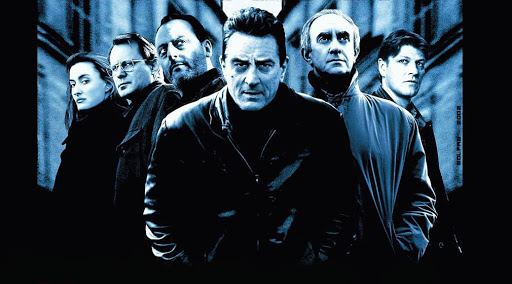
My 2020 massacre of Netflix took in the refreshingly old-fashioned Ronin (1998) the other day. When I say old-fashioned, I refer to the non-CGI (as far as I could deduce) action sequences and car chases, the absence of silly comedy lines or winks to the audience in the dialogue, and the general maturity of proceedings. This is an anti-postmodern movie.
It doesn’t surprise me that the helmsman is John Frankenheimer as it does hark back to his earlier work in the ’60s and ’70s, decidedly ‘masculine affairs’ but which still retained strong female characters (Angela Lansbury, anyone?). Natascha McElhone is the woman calling the shots here, definitely not the damsel in distress among the boys.
And it’s some assemble, particularly Sean Bean who totally convinces as a bullshitter way out of his depth, and Stellan Skarsgård as your buttoned-down ex-Stasi (one presumes) tech expert who just happens to be a complete psycho. De Niro is … De Niro, but De Niro before he became a pratfalling big baby in all those godawful ‘comedies’ from the noughties and beyond.
Rather than simply recommending Ronin for its throwback action and characters, though, there’s a bit more subtextual depth to it, a sense that this is the real world for a lot of folk, independent contractors segueing from job to job, making transient connections but nothing ever more than the odd fleeting bond. It’s a story of existential loneliness and a relatable one.
And regarding the MacGuffin, the perpetually elusive case which drives the narrative. Like Pulp Fiction (1994), we are never privy to the contents. It doesn’t matter.
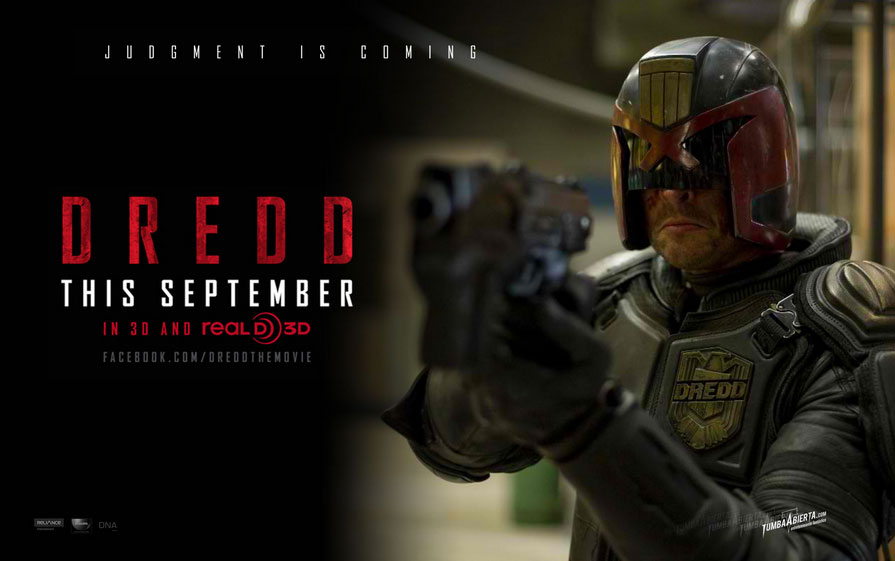
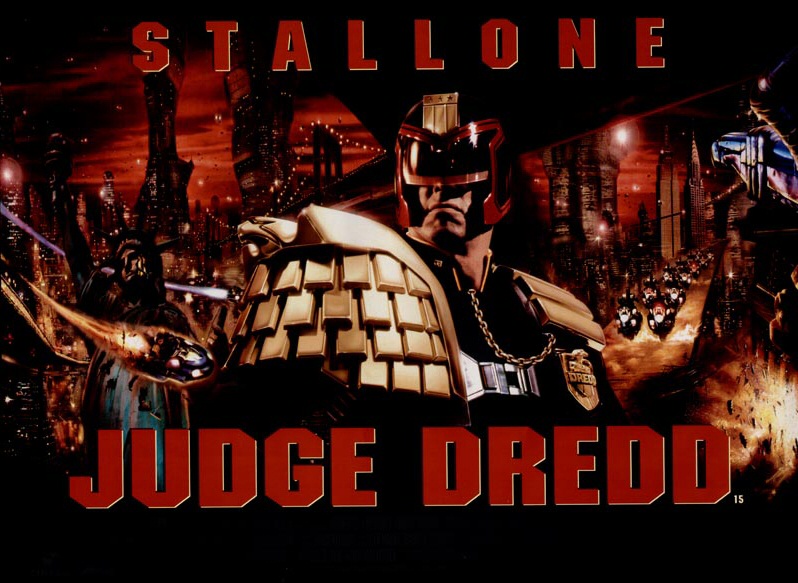
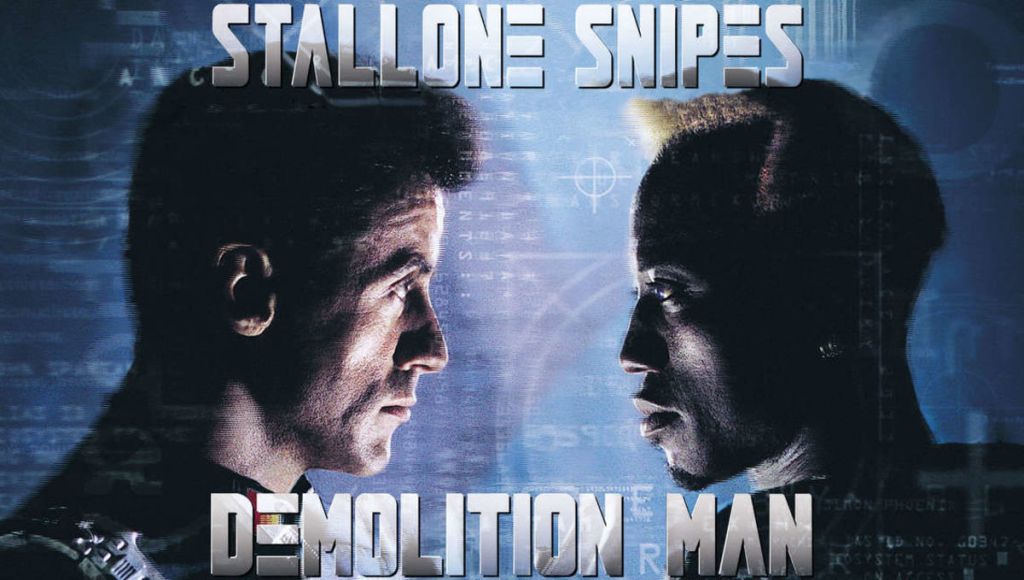
That is, the 2012 version and not the mess from 1995 that always popped up on Channel 5 in the late ’90s. I was going to maintain that a movie featuring both Sylvester Stallone and Rob Schneider is a recipe for sci-fi disaster, but then Demolition Man (1993) was a decent film, probably because the intolerable Schneider barely speaks in it.
The 1995 one is pure cheese, but blue cheese. You can see the extent of Stallone’s ego during this time, his performance one of simple vanity. The film is Sly’s hero worship vehicle for … himself. And it’s so badly made, your bog-standard video game aesthetic.
Anyway, that was then, and this is the era of the pandemic and the search for cinematic treats; it’s more accurately been a period spent revisiting lost treasures. Dredd (2012) seemed to go under the radar and I can’t even remember it being released. My first encounter with the Judge’s reboot was in a Bangkok hotel room after a grand night of hammering Samsong Thai rum with a pal who broke 9/11 to me (true story).
This movie is cracking, and aye, he never does once take his helmet off, which I find baffling. I know the bloke isn’t a massive star but he’s certainly a widely respected and recognised thespian. It’s violence done right – it matters, has a visceral role in law enforcement, and is mandatory in certain circumstances. It’s so rare to find a comic book adaptation which portrays violence for what it is in all its explicitness.
One of the many reasons I cannot stand these Marvel movies is the sheer cheek of them; it is nonstop carnage but designed for kids. The audience rarely sees the graphic consequences of bludgeoning someone to fuck with a massive hammer. The cannon of silly films in essence trivialise their own existence.
Back to Dredd. It’s strikingly shot and choreographed, and the dystopian future on display seems reasonable as it merely amplifies the ghetto milieu of some present inner cities. It is also rather funny, most of the humour stemming from Dredd’s apparent complete nonchalance as to the dangers around him.
Another memorable number from the 1993 movie vault, which I often posit the ‘best year ever for movies’: Mrs. Doubtfire, Schindler’s List, The Fugitive, Jurassic Park, Tombstone, Falling Down. Am I wrong? Have I missed anything?
It’s in all honesty not much of an action movie, the scenes terribly staged and edited, another case of the viewer not having a clue what is going on. It’s as unimaginative as it gets, ADHD Eisenstein. However, as satire and social commentary it is terrifyingly on the ball about today’s nightmarish cultural landscape. It actually predicted 2020.
It nails the all-out assault on language, the SJW proscription against alternate viewpoints, the restriction of real individualism in the quest for Utopia. Who knew that offending someone could be a crime? Well, it sadly is these days. Because they (the crusading creatures) have been allowed to get away with this.
The only thing this movie gets wrong is the method of wiping one’s arse. Britons will be doing it ‘Old Skool’ until the next extinction-level event.
It may not have the character-driven intricacies (and intensity) of Heat (1995) or The Insider (1999), but this is a technically perfect cops-and-robbers flick, pure genre. It takes itself so seriously; indeed, on this recent viewing I did not detect a single comedic moment or anything even approaching irony.
Once again, Mann displays bizarre music choices; why on earth would anyone use Audioslave/Chris Cornell in a movie? It works here, though, something one can not say for Casino Royale (2006).
It’s all about the transcendental moments. Any other director wouldn’t feature the speedboat scene at all but Mann turns it into the movie’s centrepiece. It’s here that Farrell’s Sonny Crockett illustrates everything Mann thinks a … man should be. I imagine the filmmaker would be ashamed at the sight of a grown man crying.
As visual experiences go, the movie is dynamite, action cinema as art. Mann has a thing for dance sequences; here they supplant the need for dialogue. And it doesn’t matter because they are so … cinematic.
And I’ve never seen the TV show Miami Vice so I have no idea how this movie relates to it. Am I missing anything?








 Wanderings and ... wonderings.