
I first saw the unfathomable sensations of Vertigo (1958) on Boxing Day in 2001. I figured Hitchcock this go-to guy for cheap thrills, banal comedic interludes, nonsensical MacGuffins, crop dusters galore, and … trains. Vertigo spoke artistry, something deep and profound (so I heard) from the psyche. Looking at the physiognomy of the great master, one couldn’t help but think he’d spent a career pulling his plonker to his leading ladies; sources inform us, however, that he was no Mr. Miramax.
It’s a deeply unsettling picture, a compendium, in that Mad Men era, of the ‘Male Gaze‘. Novak’s ice-cold beauty is a kaleidoscope onto which John “Scottie” Ferguson projects his hysteria. She’s barely a character, and that’s the point.
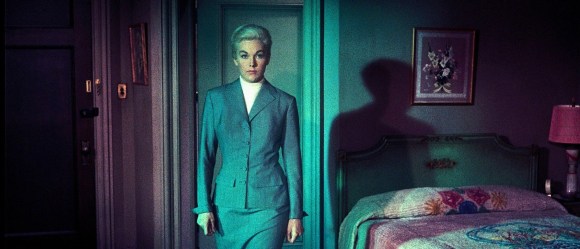
A mastery of pacing, understatement, camera placement, and the semiotics of colour, the movie is your psychoanalyst’s wet dream. A narrative so stilted and sedate just builds and builds, unearthing an unblinkered aggression in every facet of the frame. It helps that the most serenely pacific of cities, San Francisco, acts as the melting pot for James Stewart’s warped solipsistic frenzy.

You watch Vertigo and witness every cinematic trope of the 50 years that followed. No Vertigo, no Brian De Palma. In 2012, Sight and Sound magazine voted Vertigo the greatest film ever made. It’s certainly more engaging than Grown Ups 2 (2013).
Further reading/viewing:
http://www.openculture.com/2016/09/what-makes-vertigo-the-best-film-of-all-time.html
https://www.theguardian.com/film/1999/mar/05/martinscorsese
http://theconversation.com/explainer-what-does-the-male-gaze-mean-and-what-about-a-female-gaze-52486
Scorsese on Vertigo:
 Wanderings and ... wonderings.