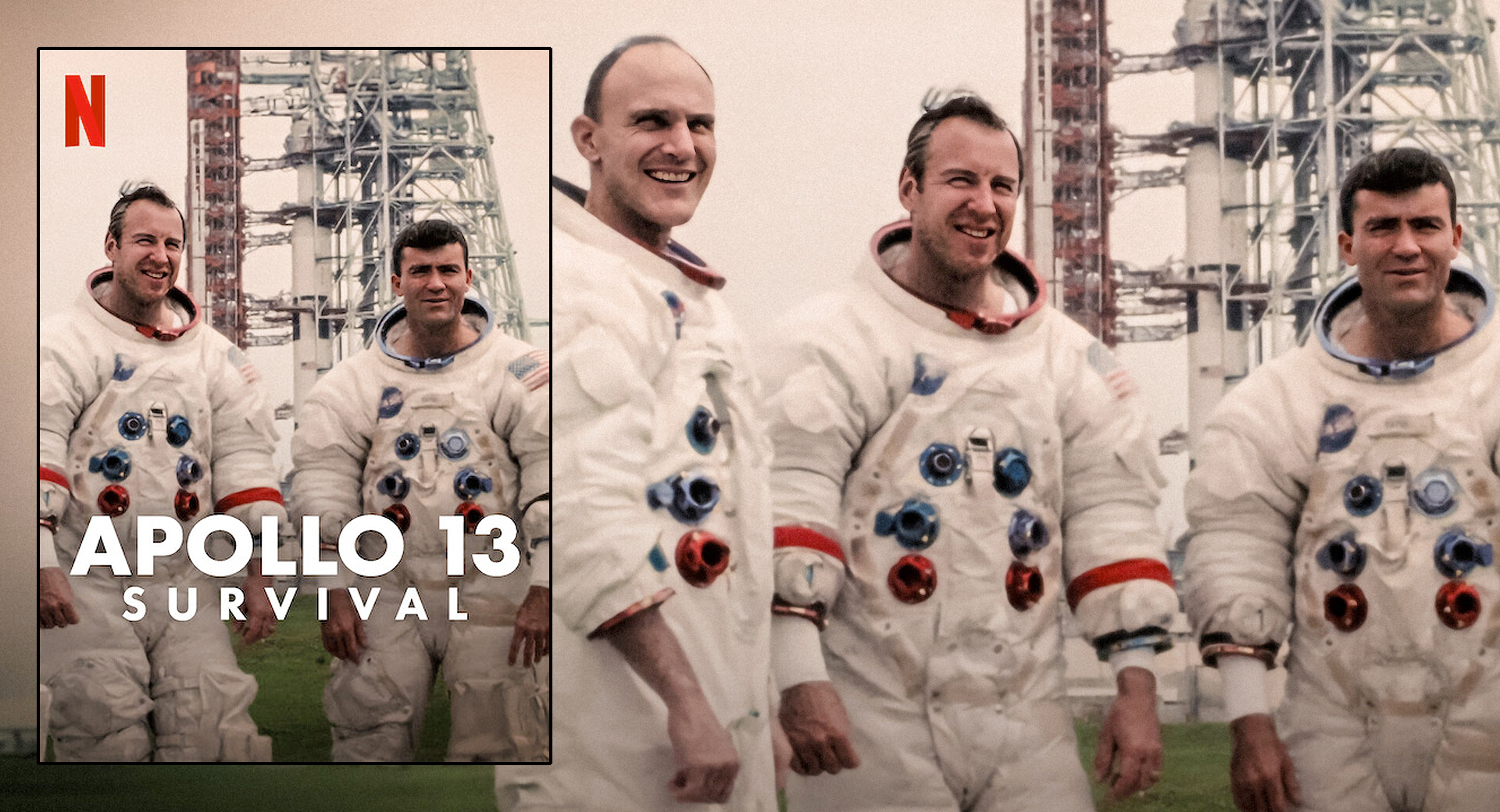
Outstanding. Worth it for the archive footage alone.
Recommended.
Outstanding. Worth it for the archive footage alone.
Recommended.

The incredible archive footage, the level of research, the interviews, the music, the sound of Laurence Olivier.
Sublime and unrivalled.

I personally find him extraordinarily inspirational.
His ego must be bananas but it’s justified – he started from zilch and made it to the summit through body and mind. I would buy him a pint. I’d vote for him also.
Despite some big boo-boos that he openly admits to, he remains the definition of hero.

This type of music is not really my cup of tea, save the band’s forever catchy ‘I Disappear’ from Mission: Impossible 2 (2000). I was expecting a sort of This Is Spinal Tap (1984) farce but what I found was an endlessly rewarding slog, and it is that exhausting, through the Dr. Melfi-infused (yes, the band hire a therapist) sessions of a troupe in full-blown crisis, trying to wrestle with a monster bigger than its human components.
It’s a document of the creative process – you actually see how music is made collaboratively, the hours that go into four minutes of a completed song, and the constant bickering that accompanies the undertaking. The chief treat here is drummer/co-lyricist/band founder and victor of Napster Lars Ulrich, who seems beguiled by most of the nonsense spewing from the therapy sessions, one step ahead of the psychobabble. He’s a totally self-aware uber-brat and utterly hilarious.
I’ve never listened to the album (St. Anger). This doc will suffice.
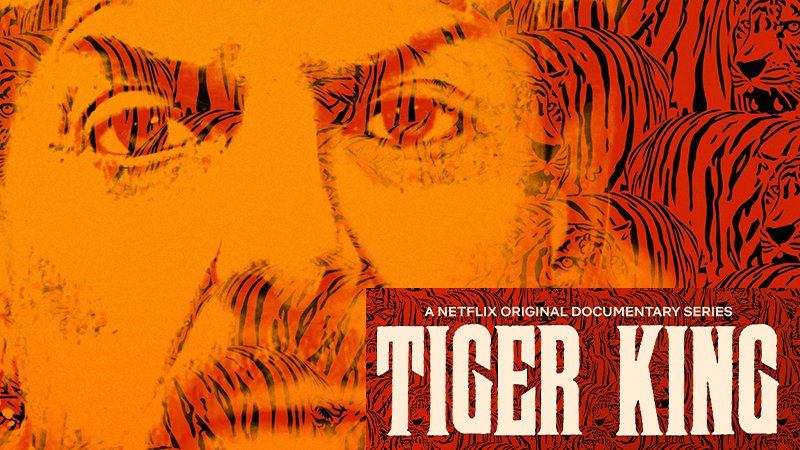
I am fond of the cheese that is alliteration – the bombast of these doc titles grabs my attention. You are usually guaranteed a slice of the surreal, and Tiger King features some of the oddest (real-life) characters Netflix has ever plucked from the fringes. One baffling subplot after another shocks as it entertains, and there are moments that are so … frankly nuts one questions the verisimilitude of it all. The resultant memes have been off the scale.
And this song is an addiction:
Further reading:
https://www.harpersbazaar.com/culture/film-tv/a31925589/tiger-king-netflix-tweets-memes/
https://www.gamesradar.com/tiger-king-netflix-true-crime-documentary-joe-exotic/

Watching this was a regret – I hated every minute of it but was compelled to witness the ghastly proceedings unfold. I usually have a weekday curfew of 11:00 p.m. but here I was lucid way into the wee hours with a WhatsApp cat topic frenzy on the go. Lesson learned: Do not ever Netflix (verb) when it’s dark.
The Internet is the Digital Frontier and all that, and now it appears to be the case that the apotheosis of human endeavour is an outlet for almost every single looney with a vengeance; the World Wide Web and the sociopath are meant to be.
The online sleuths in the three-episode show are more competent than the cops meant to be doing the basics of their jobs as professionals, which says rather a lot. The only reason I kept on watching was how in the fuck they managed to uncover the things they did. It is must-see detective work.
Further reading/viewing:

I finally got around to viewing this epic 26-episode series from 1964. It’s an incredible compendium of WWI in all its participants’ hubris and misguided adventurism, and is majestically narrated by Sir Michael Redgrave (this bloke sounds more Laurence Olivier than Laurence Olivier himself).
This is how to do a documentary – with sweeping scope and intricate detail, no half measures. With terrifying archive footage and an expert use of primary sources read by contemporary actors, as well as interviews with those serving on the military and civilian fronts, it set the benchmark for such works, acting as a precursor to The World at War (1973).
The wonders of the Internet ensure it is free to binge-watch.
Watching this short Pathé feature I’ve seldom recalled so many conflictingly good and bad memories inhabiting the same space. In almost every image here I ludicrously time-travel to a kaleidoscope of experiences and the Sartrean depths of the moment, something about the temporality of being-for-itself.
The singular power of images, for me, is that they transcend the ‘shadows-and-dust’ narrative we direct. A memory of a place or person is just a memory – it’s the image that validates our longing for the past experience.
It is odd how little Edinburgh has changed architecturally since 1931 – it’s one of those cities seemingly impervious to redesign (a Venice of the North?) and this is imbued in its dormant volcano. People come and go, the landscape watches on.
 Wanderings and ... wonderings.