Author Archives: Ben Gould

Off the grid.

‘Uncontacted Peoples’ is a term I hear more and more these days, and is tied into this whole rampant globalisation discourse – and the reaction against it – that dominates print and online journalism. The term itself is misleading, the narrative a skewed one as in many cases very limited contact has been made, even if it’s a ‘mere’ aerial lens capturing of a tribe.

I do find it totally unfathomable, though, that in an era of non-stop tweets, ‘trending’ on social media, 24-hour news, and the now seemingly complete interconnectivity of every facet of human existence, these people are still wading through rivers jabbing fish with spears, cultures whose capacity for art is alleged to be on a par with the sketches made by our caveman ancestors.

In an age in which an Instagram snap of one’s dinner evidences the meal, such Uncontacted Peoples perplex us with their scant concern for or awareness of anything beyond their own enclosed world. And yet we are curious about them, hence the plethora of anthropological works addressing their way of life, shaping a Western-oriented metanarrative of the ‘other’. What is often overlooked in such documentations is the effect upon the subject of the study itself, the presence of the evidence gatherer – journalist, photographer, filmmaker – and how this can not only misrepresent the indigenous subject but also materially influence it.

Ethnographic cinema, then, has its own set of problematic specificities, as evidenced in the notable historical depictions of previously unknown (to us) peoples.

Representations and the Observer Effect.

Nanook of the North (1922).

With its clumsy, trite staging of scenes and portraying them as ‘real life’, Nanook of the North (1922) elevates the artifice of ethnographic film to the ridiculous. The most infamous of these incidents is footage of Nanook – his actual name Allakariallak – hunting with a spear when in reality he used a gun. It’s anthropological cinema made to strengthen existing notions of how the ‘noble savage’ lives and works, a fallacy that does more to point out the deficiencies of the filmmaker and his effect on the material than a sincere depiction of an unfamiliar way of life.

The Ax Fight (1975).

The Ax Fight (1975), filmed among an ‘isolated’ Yanomami village in Venezuela, is dominated by an 11-minute unedited sequence of film showing an increasingly violent fight between two neighbouring tribes, the causes of which the filmmakers are ignorant of. The participants, however, are fully aware of the presence of the film crew, and discussion continues as to the influence the crew may have had over proceedings. Tim Asch and Napoleon Chagnon, its directors, maintain that their presence in the village, and the fact they had previously handed over machetes to individuals, had no effect on the causes or intensity of the fight.

Jean Rouch and cinéma vérité.

Jean Rouch, director of the seminal Chronicle of a Summer (1961), and widely considered to be in the vanguard of ethnofiction, seemed to find a way to illustrate a filmmaker’s interference – the Observer Effect – by consciously drawing attention to it, often appearing with his subjects in the films he made, fully aware that a camera can never be candid and impartial.

With the present ubiquity of discreetly placed GoPro recording devices and the like, this has now brought up new dynamic possibilities concerning the truth-legitimacy of the camera. Perhaps the only solution to achieving an uninfluential depiction of the ‘uncontacted’ would be to furtively place cameras in their locale and observe incognito, this introducing its own set of moral and ethical complications.

Maybe it’s just best to leave them alone.

Further reading:

https://www.therai.org.uk/film/volume-ii-contents/the-ax-fight

http://anthropology.si.edu/johnmarshall/

http://der.org/jean-rouch/content/index.php

http://www.newyorker.com/culture/richard-brody/the-extraordinary-chronicle-of-a-summer
Tagged , , , , ,

Eyesore.

DSC01687

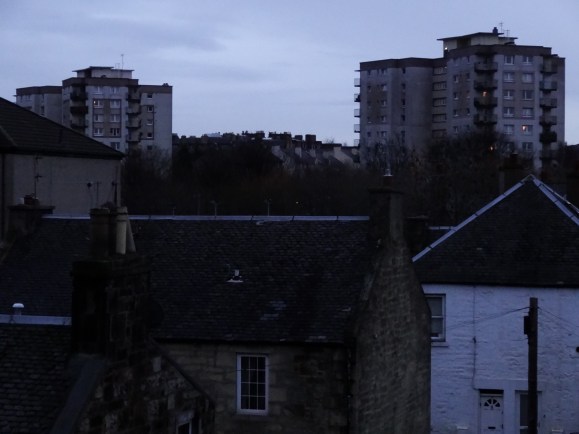
Quite possibly the most hideous vista that Edinburgh offers. These manky high-rises on Slateford Road are a gruesome portrait of Hell – tenants packed like tinned sardines in structures that wouldn’t look out of place in the Soviet Union. Still, I guess they do have a peculiar charm, a statement from a rather grim era best forgotten about.

Tagged ,

Wings of Hope – Juliane Diller.


Juliane Diller, née Koepcke, is the subject of the spellbinding Werner Herzog documentary Wings of Hope (1998). Diller, a German-Peruvian biologist, was the 17-year-old sole survivor of the LANSA Flight 508 plane crash on 24 December, 1971. Diller, strapped in her seat, plummeted 10,000 feet into the Peruvian rainforest during a thunderstorm (the plane had been struck by lightning). Finding a stream and relying on basic survival skills, she travelled along it for nine days before stumbling upon local lumbermen who, at first believing her to be a ‘water godess’, took her to a lumber station via canoe. She was eventually airlifted to hospital. You couldn’t make this shit up. Extraordinary.

Further reading:

http://www.telegraph.co.uk/culture/books/authorinterviews/9143701/Sole-survivor-the-woman-who-fell-to-earth.html

Tagged , , ,

In Bruges.

in-bruges-opening-walk

I spent two weeks in Belgium back in December 2010. Britain had denuded back to the Ice Age and all flights were grounded. What began as a cheeky booze-fuelled weekend in Brussels turned out to be one long, cold, depressing nightmare of manky hostels and an overload of waffles. It was dirty, dull, and overwhelmingly boring. I despised the place by my departure, a 35-hour bus journey back to Edinburgh the cherry on the cake (or waffle). Considering recent developments in Belgium, however, it wasn’t that bad in retrospect.

There was one sort of magical vignette – a day in Bruges, inspired by the movie … In Bruges (2008). A character in the film describes it as a “fairytale” place, and he’s spot on. A strange otherworldliness permeates the streets, the town an eerie remnant, it seems, of the Middle Ages.

The brilliance of the movie is in its transposing of a contemporary comedy thriller into this antiquated dwelling where time briefly stands still. Perhaps being *in* Bruges is modern-day purgatory. A belter of a movie.

bruges12

Tagged , , ,

Three days in Basel.

Hotel Münchnerhof.

The hotel is in Marc Augé’s characterisation, a ‘non-place’. I never meet another guest and the reception is forever empty; I interact only with tacky paintings on the walls – a giraffe the most verbose raconteur. I spend my yawning rituals before sleep concerned that Jack Torrance may be about to break down the door with an axe. On the Thursday night I hear disconcerting sounds from the communal bathroom. Someone appears to be constipated. I never meet this person but the introductory smell sufficed.

Wheels.

Either cycle on the road or the pavement; don’t indulge in the twin pursuit of hogging both spaces. It vexes me terribly. The nuisance didn’t reach Amsterdam levels but with the scooter element thrown into the cacophony of wheeled pastimes, my ‘vexed meter’ rose. I can understand kids hopping on scooters – it’s a childhood thing, the speedy thrill an adventure in an otherwise torporific narrative of cartoons and Coca-Cola. An adult on a scooter, though. One judges.

Stalin’s Gift?

I stumbled across this anachronistic tower/tunnel ‘thing’ 20 minutes into a morning jog. I thought I’d time-travelled back (and east) to the good ol’ days of the Soviet Union. I don’t know what it is, but it made me immediately think of simpler, more Manichaean times.

IMG_20160602_135437


Trams.

The trams were a godsend. Wondrous as hell (pardon the oxymoron), they traverse almost every millimetre of the city. A curious fellow was screaming on one of them and bashing a battery-operated fan against the window. I think he might have been on day-release from an institute. This aside, they were a serene experience. No one seemed to be paying to jump on the things despite the ticket machines littering the stops. I assumed they were for show so didn’t pay either.

IMG_20160602_180538

Tinguely Fountain.

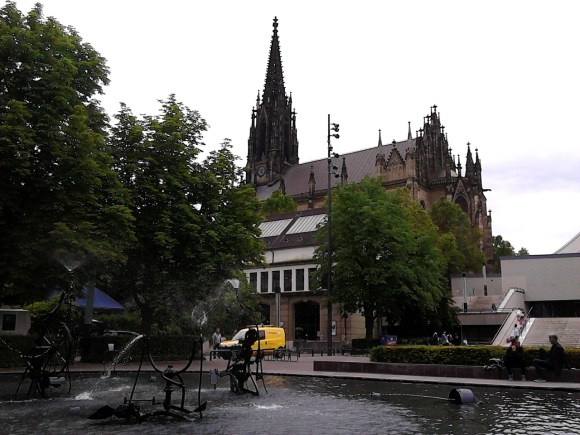
This Jean Tinguely fountain of machine sculptures constructed in 1977 was made, I have been informed, as a tribute to the old city theatre company who performed on the very same spot – industrialised nostalgia.

With all the kinetic apparatus on display, coupled with the scooters and roller skates screeching around its perimeter, it wouldn’t have been out of place for the much-feared Wheelers from Return to Oz (1985) to join in on the action. It’s how I imagine all fountains will look in our dystopian future once Skynet take over and the oil runs out – machines miming actors.

IMG_20160602_181140

Wrong Turn.

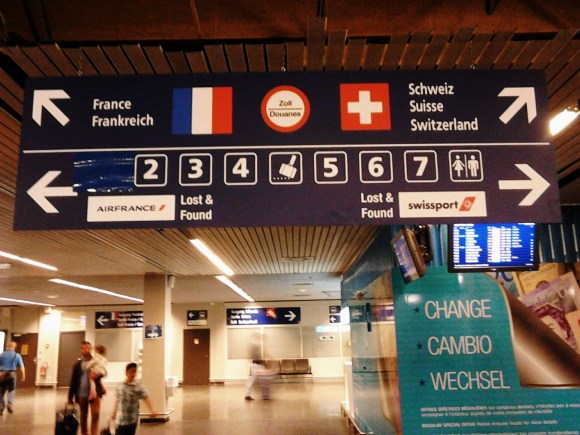
Thank you, sign. This could have been a worrying narrative. Thankfully, France was avoided.

IMG_20160601_213144

Secret Garden.

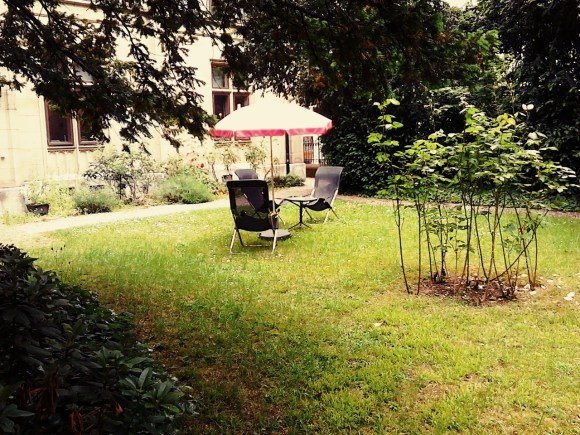
Of all the ethereal structures suggesting another age, this was the highlight. I sat here for a good 45 minutes thumbing through Leo McKinstry’s Operation Sealion. It was my secret garden, yet only a stone’s throw from the hustle-bustle of Elisabethenstrasse.

IMG_20160602_181007

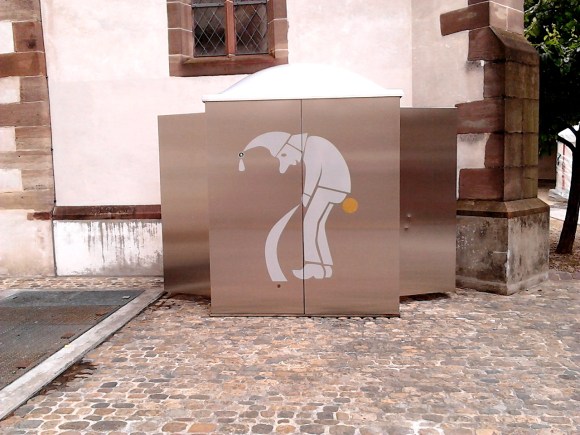
Wee charming enclaves, Basel has them aplenty, including this artfully placed urinal behind the Kunstmuseum.

IMG_20160602_220031

Ice Cube.

The only ice cubes I could locate required transportation back to the hotel in a wheelbarrow. I patiently queued for 6 minutes to reach the refrigerator by the till, but was confronted with a bag of ice the size of a behemoth coal sack. I didn’t purchase the ice.

Lidl.

I couldn’t find one.

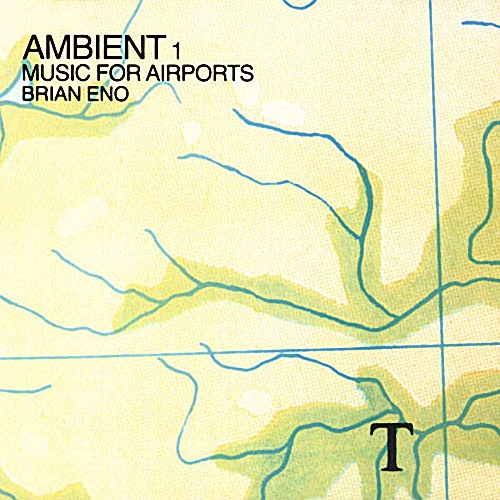
Music for Airports.

296192196_d785e0d1eb

The first album in Brian Eno’s Ambient quadrilogy, conceived as a looping sound installation with the desired effect of easing the stressful, smothering atmosphere of an airport terminal. Eno devised the piece whilst slumped in an insufferable seat in Cologne Bonn Airport in the mid-’70s, overwhelmed by the garish frenzy on display. That was 40 years ago, and to this day little thought appears to go into the aesthetic and ergonomic dimensions of our airports; ‘intolerable shithole’ is par for the course. One dreams of the tranquil upgrades conjured by Eno.


Tagged , , , ,

A week in Ljubljana.

I always got Slovenia and Slovakia mixed up as a young lad. Later, as my geographical knowledge extended beyond that of a six-year-old, I began to crave a visit to Nikola Tesla’s homeland, that lad an awe-inspiring pioneer who I for some time thought hailed from Slovenia until I realised that Croatia was a country and not the capital of Slovenia.

Anyway, Ljubljana – which I couldn’t pronounce until three weeks ago – was quietly electric. A charming hideaway a mere two-hours drive from the Julian Alps, its tri-polar weather, the warm embrace of its restaurants, and the cheap fags and booze had me at “zdravo”.

Hotel Emonec (with gym).

I check in at a hotel with a gym – a first for me. Flabbergasted by the equipment on display, I tried mastering the Transformeresque weight machine but gave up after ten minutes. I instead picked up the dumbbells and vainly stared at myself in the mirror, reciting Hail Marys Don Jon-style as the improbable choice of Abba’s ‘The Winner Takes It All’ blared through my mobile phone speaker.

That first evening was productively spent posting photos of my drink purchases on
Instagram.

IMG_20160429_185624

1 Dalmation.

I sat in a park the morning after, necking a manky bottle of Malibu Rum and chomping on a chorizo sausage. This gargantuan slobbering hound went for my spicy Spanish piece. I artfully hid the pork in my imported Lidl carrier bag. The beast then went full-on puppy-dog eyed, so too its incredulous owner. I’m sorry, pal. I’m a business, not a charity.

IMG_20160430_151043

The Skyscraper (Nebotičnik).

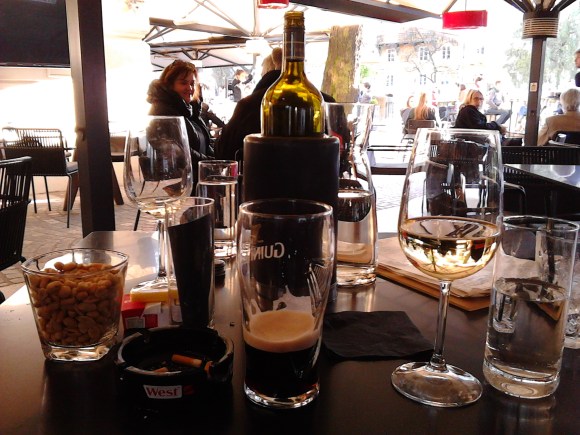
A rooftop drinks venue, club below, and restaurant beneath that, I sat atop the 231-foot-tall building – which is not high by any standards, but we’re vertically talking about the Verne Troyer of cities here – and sipped my Guinness, watching the shifting clouds descend upon Ljubljana Castle. It then began pouring down, and a hailstone hit me on the nose, but I didn’t mind.

IMG_20160429_155759

The castle.

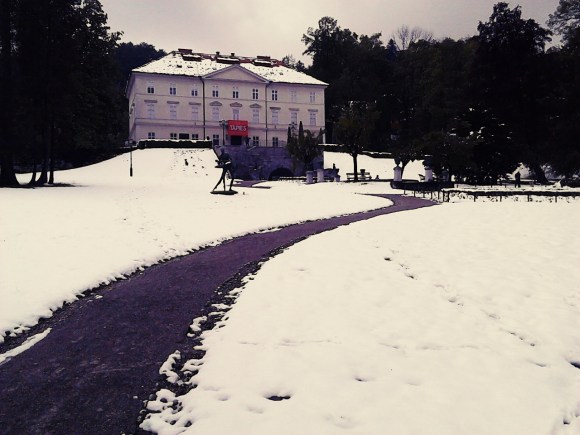
On my way to Ljubljana Castle the snow attacked me. I therefore hid in a pub for the next eight hours. Returning to Hotel Emonec I slipped on a snow-concealed grid. I considered this a premonition that no more arduous walking would recommence until the roads were kosher. The snow melted the next day, but so had I, so I sat in bed until dark watching Peaky Blinders with a bottle of Havana Club. A winning day.

IMG_20160428_162835

National Geographic exhibition.

I find a gallery in the street. I take photos of photos, fully aware that my photos were amateur hour and the photos I was photographing weren’t. I looked at my photos of the photos and thought of ways to trump the photographed with a daring new set of photos.

It was all a bit postmodern. I couldn’t think of anything to better the Ansel Adams snaps with, but he was a maestro using large-format film, and I merely a consumer clutching a £30 Huawei smartphone purchased off eBay.
Champions.

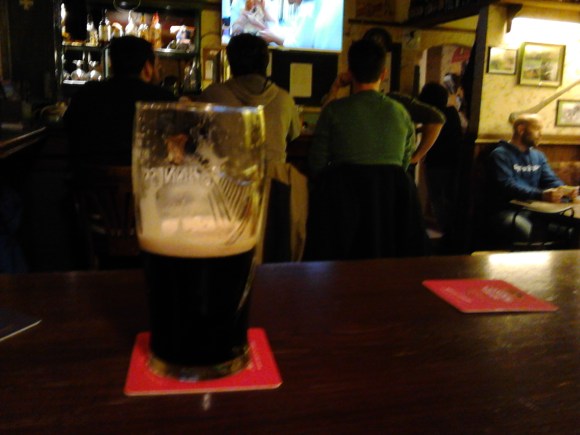
It was football week, and bars love their sports. Even the Europa League, that Ford Fiesta of cups, was made all the more thrilling by the intake of ethanol. Unfortunately, I caught a brief, bitterly coarse glimpse of a mirror image in the Cutty Sark Pub – drunken Brits abroad. I was vexed at them for their loutish behaviour, and also because they reminded me of … myself. Self-awareness isn’t conducive to having a good time. It’s better to be the pissed ingenu than the self-conscious one. It was time to leave.
IMG_20160426_224832

Lidl.

I saw this bad boy on the outskirts. I didn’t go in. It’s at the top of my list when I return.

Tagged , , , , ,

Abroad in pictures.

I find the most captivating ‘holiday movies’ to be the ones in which the jaded protagonist ventures off in search of relaxation – a chance to charge those batteries and perhaps experience ‘something new’ – but ends up losing the plot in a quagmire of, well, insanity. There’s a picture-postcard theme of the holiday embedded in the Lonely Planet narrative and the airport page-turner. The reality can sometimes be quite the opposite. Cinema has on occasion captured the nightmarish fever of being totally vulnerable in an alien environment.
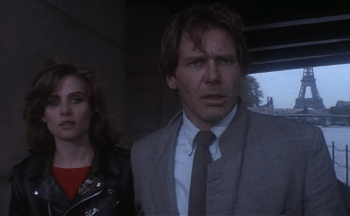
Frantic (1988).

F2_8355

A cracking performance from Harrison Ford here in a masterful Polanksi thriller. Dr. Richard Walker and his wife hit Paris – the city of their honeymoon – in an attempt to rekindle the passion in their marriage. What results is his wife’s kidnapping and a haphazard travail through the murky criminal underworld populated by petty crooks, shady governments, and international terrorists. It’s a film way ahead of its time. Paris is (strikingly) depicted as a sprawling mess. The opening scene in the taxi is an introduction to the French capital as not the romantic destination of lore but of a dark and menacing city-circus.

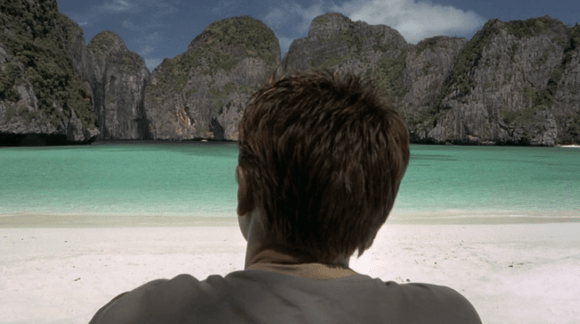
The Beach (2000).

b1

In the tourist trap that is ‘The Land of Smiles’, an unimpressed few in their pursuit of travelogue perfection seek an idyllic paradise, serene vistas without the holidaying masses. The book is a masterpiece depiction of what happens when overly impressionable humans get together in an unspoiled paradise they assume is the aesthete’s apex. The film loses its way in the final third, but for a good hour it is stunning cinema, truly capturing that obsessive pursuit of the Shangri-La. Even the ridiculous All Saints track synced to a cheesy interlude in the ocean works.

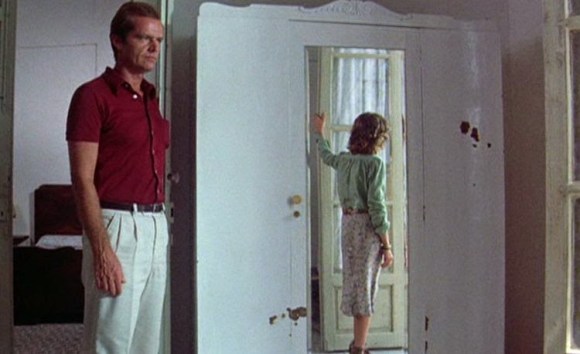
The Passenger (1975).

The Passenger 21

The Passenger channels that temptation seeping behind many an excursion – keep the holiday going, recant one’s existing life of drab conformity, construct a new identity. If no one knows you then you can be anything, so goes the dictum. The past has a way of catching up with you, though, or the circumstances of your switch to a new life are tainted. The film is a devastating picture concerned with fate, the impossibility of reinvention, and the indifference of the landscape to your psychological crises.

Don’t Look Now (1973).

dont-look-now-3

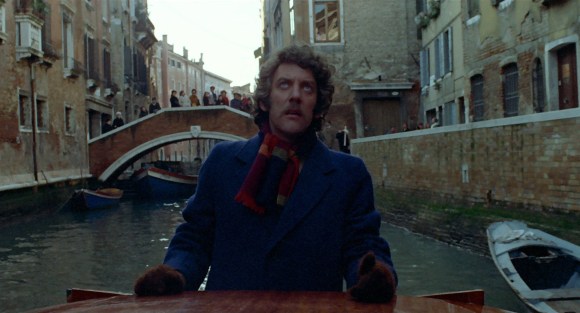
I was in Venice last September. It was sublime, borderline magical, and wholly civilised. All I did was drink wine in restaurants and saunter about the alleys, a wannabe seeker of the ‘Venetian feel’. I saw a pair of underpants hoisted on some blinds and considered this window symbolic.

Anyway, that was my drama. Let’s consider Don’t Look Now (1973). The impediments to recapturing past serenity, the simultaneous allure and fear of the unknown, the idea that in an unfamiliar milieu one can transplant a spark that existed in another epoch. Metaphoric to the max as the movie is, I’ve seldom seen such a *real*, evocative portrait of holiday hell.

Sexy Beast (2000).

05

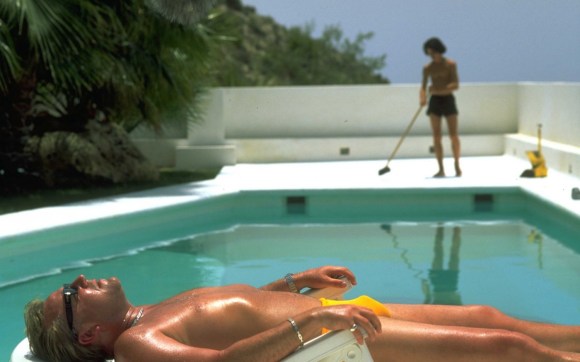
I love the central conceit of this: your retirement is all fine and dandy until a fellow (admittedly psychotic) Brit turns up to ruin the party. It’s very apt that the film is set in Spain. Sun and solitude ruined by a foul-mouthed ape – it’s most likely how the locals view British tourists swaggering about the Costa del Sol.

Glencourse Reservoir.

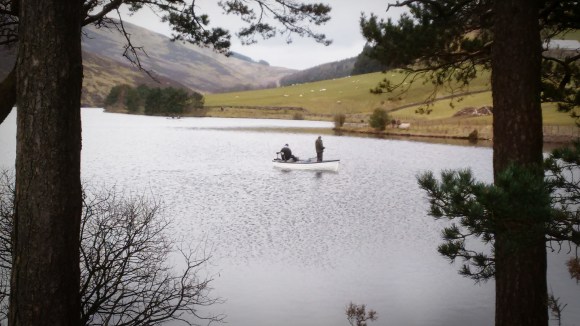
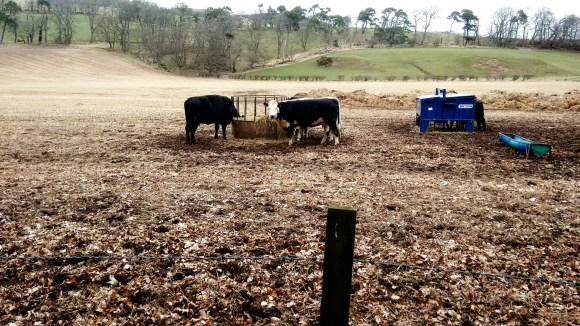
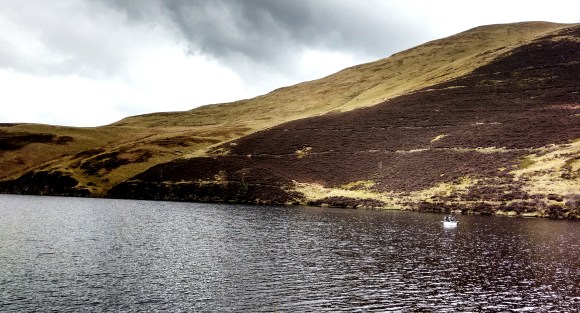
Hills, sheep, cows, fishermen, and walkers. IMG_20160402_144926IMG_20160402_144741IMG_20160402_155609

1863 ….

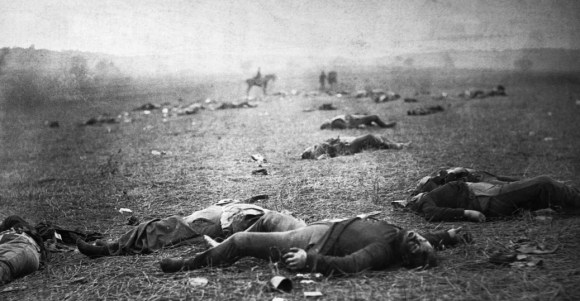
battlefield-casualties-gettysburg-PGettysburg, July 1863 by Timothy H. O’Sullivan.

The apex of war photography is attributed to World War Two and the snappage of Robert Capa. So much about this image captivates, though. It’s a disturbingly beautiful and haunting capture, even transcendental, one might say.

Who are these people in the frame? What is their narrative, their hopes and proverbial dreams? Does is warrant a book? No one seems to know. Is there a way to know their spouses or their antecedents?

The U.S. Civil War is another world, a so-called bygone age.

In the extant southern states today, though, the conflict defines them. The old Grant-Lee face-off is now a political one, a culture war where bitter hyperbole and myth prevails.