
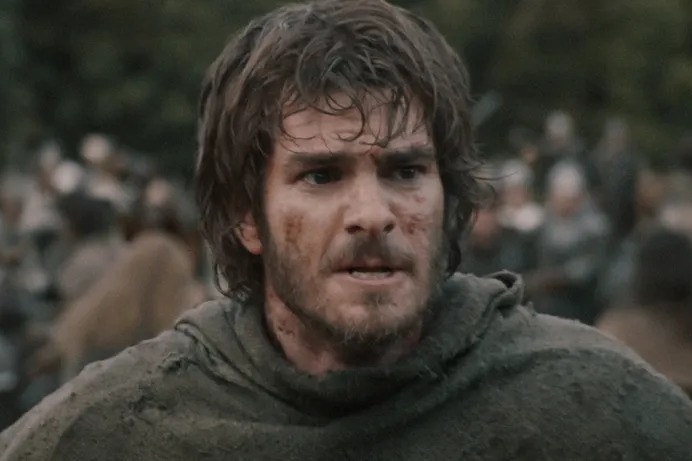
So much promise was here, ripe material with the still-universal reality of social and financial structures controlling the peasant from the womb – the Peasants Revolt (1381) parallels are real. And Paul Greengrass doing the Bourne shaky-cam Middle Ages aesthetic is a proposition.
There are some goodies, the peasants destroying records/archives and thus wiping the debt, in essence one of the apriori Space Monkey kickers of Fight Club (1999). The frantic scene of the communication methodology of the time was expert, and I’ve never seen a film highlight the operational importance of this.
So much promise, then, but it gets really, really rubbish, and it’s a shame. The centrepiece sequence of the storming of London by the cider-infused (one presumes, as they all appear off their tits) riff-raff has the director attempt to inject a bit of epic scale into it so he reverts to that bird’s eye elevated shot of ‘the battle’ like Oliver Stone did in his train wreck Alexander (2004).
Incongruous digital buildings with digit ‘people’. I was semi-fuming. It’s a ruinous vice and so stylistically apostate to the intention of the film, I almost punched the laptop. But I didn’t, because I’m poor, much like these peasants.
My brethren here aren’t portrayed in a flattering light but are sketchily painted as highly amenable, sanguinary human wigwams licking the Kool-Aid in the deepest depths of Pre-Renaissance Hell. I suppose this film does make a point.
Trigger warning: there are some ugly-looking fuckers in this yarn, flea-ridden serfs who all sound like Gareth Keenan from The Office. It’s a nice feature of a letdown film. And Stannis Baratheon also cameos as a grovelling bishop or something. As pathetic as he is, it shows the range of the brilliant Stephen Dillane.
I hated this film because it could have been a contender. Brace yourselves for this maddening mishap.

