
As a lifelong ‘Republican’, I’ve always looked upon the so-called ‘Royal Family’ with scorn – how dare such unelected lizards enjoy a ridiculously vaunted position of prestige and privilege. I thought some more and figured the current inhabitants of this role shouldn’t really even be there, for they are the descendents of noble houses who’ve supplanted others from the Plantagenets up (see basic British history). Something else vexes me terribly – the flag-waving masses who quite simply have nothing else to do but congregate in gargantuan packs and kowtow to said lizards waving on a balcony. It’s quite pathetic, really. You live on a council estate. Why are you cheering someone who has a servant prepare the toothbrush? This may explain a lot of election results (the working classes voting against their own interests).
However, George Orwell completely blew my mind yesterday. I’d never before even considered what he put forth here, and his level of socio-political thought – written in 1944 just before Operation Overlord – shouldn’t be of any surprise considering his oeuvre. What he’s saying in totality is that people need syntax, a continuity of tradition (immovable objects) linking change. The British Monarchy exists as a living Mount Rushmore, an indexical *constant*. Perhaps I’m swayed easily, but Orwell seemed to make perfect sense.
‘The function of the King in promoting stability and acting as a sort of keystone in a non-democratic society is, of course, obvious. But he also has, or can have, the function of acting as an escape-valve for dangerous emotions. A French journalist said to me once that the monarchy was one of the things that have saved Britain from Fascism. What he meant was that modern people can’t, apparently, get along without drums, flags and loyalty parades, and that it is better that they should tie their leader-worship onto some figure who has no real power. In a dictatorship the power and the glory belong to the same person. In England the real power belongs to unprepossessing men in bowler hats: the creature who rides in a gilded coach behind soldiers in steel breast-plates is really a waxwork. It is at any rate possible that while this division of function exists a Hitler or a Stalin cannot come to power. On the whole the European countries which have most successfully avoided Fascism have been constitutional monarchies. The conditions seemingly are that the Royal Family shall be long-established and taken for granted, shall understand its own position and shall not produce strong characters with political ambitions. These have been fulfilled in Britain, the Low Countries and Scandinavia, but not in, say, Spain or Rumania [sic]. If you point these facts out to the average left-winger he gets very angry, but only because he has not examined the nature of his own feelings towards Stalin. I do not defend the institution of monarchy in an absolute sense, but I think that in an age like our own it may have an inoculating effect, and certainly it does far less harm than the existence of our so-called aristocracy. I have often advocated that a Labour government, i.e. one that meant business, would abolish titles while retaining the Royal Family.’ — George Orwell, Spring 1944 Partisan Review.
 They are ghastly beings, but they do perhaps serve a noble purpose.
Further reading:
https://www.indy100.com/article/george-orwell-explains-why-leftwingers-should-actually-be-grateful-for-the-monarchy–WyYcUGaDbZ

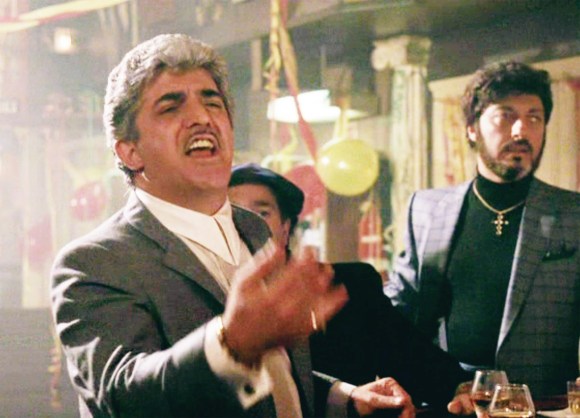




 I’d never until that trip seen such shamelessly corrupt ‘authority figures’ as I did their ticket inspectors. They’d swagger around in packs – they reminded me of the Toon Patrol weasels from Who Framed Roger Rabbit (1988) – the ugliest, shortest, most unshaven specimens you’ll ever witness wearing a uniform. If it were the early 1940s they’d be volunteering for a stint in a death camp. Weirdly, so many of them were the spitting image of







 Wanderings and ... wonderings.
