Category Archives: Travel

The Lumières and Apocalypto (2006).


The 50-second silent film L’Arrivée d’un train en gare de La Ciotat (The Arrival of a Train at La Ciotat Station) from 1896, made by Auguste and Louis Lumière.

The apocryphal story continues to do its rounds – people fleed from the cinema because they thought a (black and white) train was fast approaching the screen and in danger of smashing the audience into smithereens, they soon-to-be cinemagoing versions of William Huskisson MP at the opening of the Liverpool and Manchester Railway.

The events of the public screening sound bonkers, but then we often think that our precursors – Luddites and all that – were idiots.

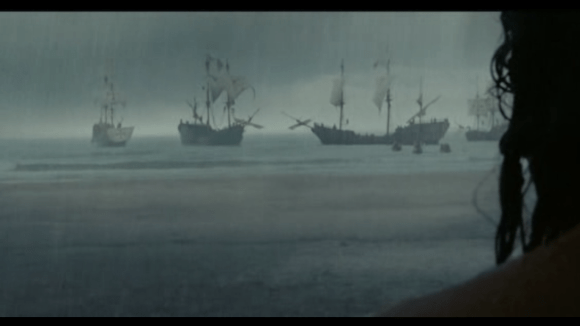
Viewing Apocalypto (2006), a frenzied masterwork in the vanguard of breathless chase cinema, the appearance of the conquistadors at its end (circa 1511) and the utterly perplexed reactions of the Mayans to these alien entities/shapes/unexplained phenomena had me immediately drawing parallels with the Lumières’ screening.

dpuylag

The jaw-dropping final sequence of Apocalypto (2006), directed by Mel Gibson.

Though the audience of the Lumière picture had of course seen trains before, they had never been subjected to their projections – if not screaming from the cinema I would expect they would be at least baffled, astonished, by the incident. As for the Mayans, I’d like to think the Spanish ships of their time will be the alien spacecraft (or accompanying ‘alien’ object) of ours.

1896 and 2006, documentary and fiction, are fleetingly both linked by this phenomenological dynamic and unsure relationships between subject (Mayans/cinemagoers) and object (ship/train), the questioning of whether what they are feeling is ‘real’ or not.

By all accounts, no one scurried away from a black and white train, but it’s a convenient precedent. These days, for example, we run from the likes of Batman v Superman: Dawn of Justice (2016), not because we question the very being of what we see, but for we seek more arresting phenomena – watching paint dry being one of them.

Tagged , , , ,

Raging Portobello.

16700212_10158327579725691_8467391244209127132_o

At high tide and with the waves chopping into the promenade, Portobello Beach is transformed from the plain, dreary sandpit typified by dog walkers and Strongbow-guzzling city dwellers lazing on towels with their tits out into something with urgency and vitality, a bit of drama for the afternoon. There’s nothing quite like pissing in the sea as the waves are thrashing. I like miserable scenes and I do most enjoy a good storm.

Tagged , ,

Dark Days (2000).

There’s a link now online to the absolutely stunning documentary Dark Days (2000), about New York City’s mid-’90s homeless community living in Freedom Tunnel, an abandoned part of the Amtrak underground. The subjects themselves use 16 mm gauge cameras to document their endeavours, and the film also serves as an introduction to DJ Shadow’s groundbreaking ‘trip hop’ album Entroducing (1996). With Hoop Dreams (1994) and The Cruise (1998), it’s one of the best documentaries from the tail end of the pre-digital age.

Further reading:

https://www.theguardian.com/film/2014/jan/26/dark-days-marc-singer-new-york

http://thevinylfactory.com/features/how-dj-shadows-entroducing-turned-forgotten-vinyl-into-a-postmodern-masterpiece/

Entroducing (1996):

Tagged , , , , ,

Fake News – old techniques.

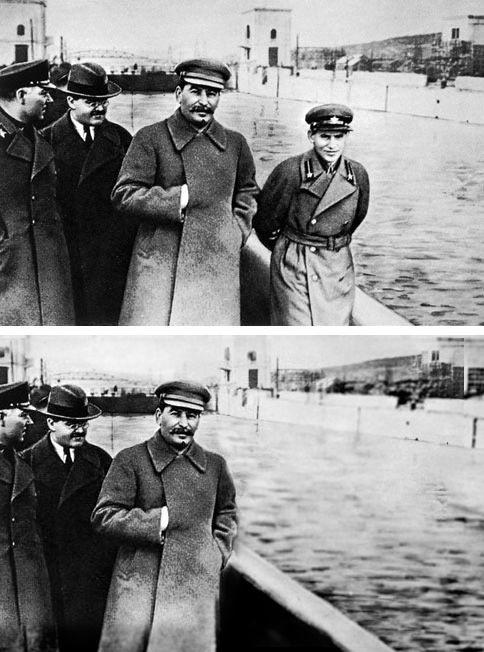
There’s been a lot of justified hullabaloo of late regarding ‘Fake News’ and the role of images – of dubious authenticity – in driving a news agenda. Politics, it seems, is truly the art of media manipulation and Photoshop now more than a mere meme creator. I’ve yet, however, to see anything to trump (pardon the pun) this Stalin cracker from back in the day:

9b1092e143e77877115981ed216ae41c

Stalin and NKVD head Nikolai Yezhov, whitewashed once in Koba’s bad books.

Why bother defending your actions (the Great Purge) when you can simply rewrite official history? Stalin is the gold standard here. Ridiculous.

Tagged , , , ,

Last Tango in Paris (1972) – off the grid.

last-tango-in-paris-poster

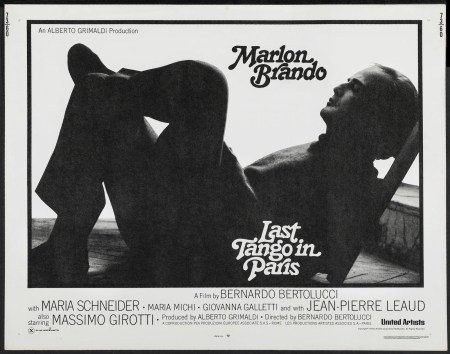
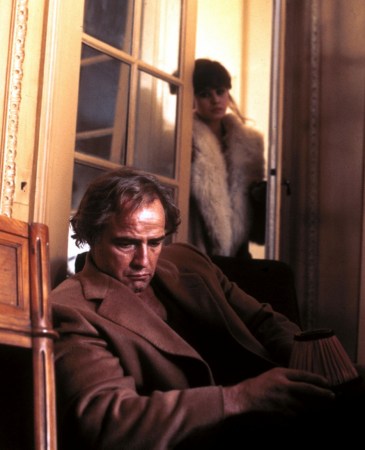
The Paris of Last Tango appears exactly as I remember it – grim, filthy, unforgiving, and indifferent. This uncaring squalor is manifested in the perversion practised by the characters, they upending all social mores and societal constraints. Almost as alarming is how cut off Marlon Brando’s Paul is from the outside world – it’s given him nothing but pain so he rejects it, and he himself confesses he has no friends or contacts worth having. The ‘man is an island’ feel of it, rather than sordid butter episodes, is what captivates me. This is of course by no means the central theme of the film, whose intention (I think) is to essentially piss on bourgeois conventions, but as artfully as possible; that Bertolucci marries some of the most sumptuously shot scenes with such animalistic content is no accident.

It is, though, the loneliness of the tale, the feeling that no one will ever know the travails of someone like Paul, that lingers most. His story has no indexical appeal – a chewed stick of gum on the underside of a Parisian balcony is the departing evidence that he was there, the connect between his end and the mysteries of his past (Schneider’s Jeanne intimates as much in her last lines as she prepares for police questioning).

last-tango-paris-2

In countless bars I’ve had drunken chats with innumerable ‘over-the-hill’ old codgers equipped with the most captivating and heartbreaking of evocations: a hazy trip with a childhood sweetheart to Amsterdam in the ’70s, riding the metro system with an ex-wife in Communist Moscow, a fleeting romance in Hong Kong circa 1964. The stories appear more than authentic enough, but they merely die with the teller.

I simply do not think I could cope without legitimisation through documentation – my travelling escapades are accompanied by articles, Instagram snaps, Facebook updates, WhatsApp messages to friends, and hundreds of photos, from beer glasses and buildings to cheeky street photography of stray dogs, traffic, and panhandlers. My view of unexplored regions is so tainted with media that I can’t separate myself from it – there is no solipsism on my voyages, and I disseminate any new city (for me) as a shared experience. My extended saké binge in Tokyo wasn’t just me getting wrecked in Tokyo; I brought along for the story Sofia Coppola, Yasujirō Ozu, and Ryuichi Sakamoto’s Merry Christmas, Mr. Lawrence (1983) theme. I must integrate myself into these narratives, extend their percolation, contribute my own little testament for the annals.

1487950_10154702881260691_6598004003568142070_o

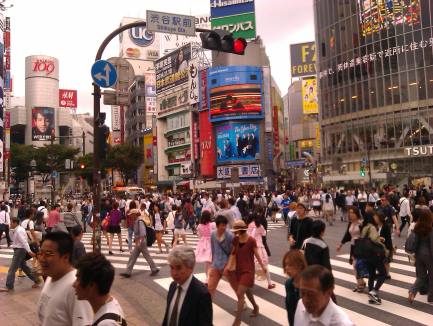
Chilling at Shibuya Crossing, 2015.

When people do go ‘off the grid’ as Paul does, we presume there is something really wrong with them, that they’ve done a Christopher McCandless; conversely, they are far more interesting, these nebulous figures unencumbered by our social media definitions. Were I a devoted wanderer of the East in the pre-digital age, I can’t imagine the pain of losing my copious rolls of film; it would render the whole trip without worth, an extended vignette banished to the fragmentation of my own memory. Moreover, it is through the photographic form that I continue to revisit, and even reimagine, the places I’ve seen – the photo has become the memory.


In something Straight Outta Bernstein’s haunting girl-on-the ferry story in Citizen Kane (1941), I twenty years ago at Nantes train station exchanged a wave with a woman on the platform as my train departed. Not a month goes by without me thinking of that elegant MILF with her lustrous blonde locks and catwalk boots. I do now wish I could have taken her snap or somehow exchanged Facebooks, as creepy as it sounds. She is but forever a fading, distorting memory. Call me, babes. Whoever you are. X.

Further reading:

https://www.criterion.com/current/posts/834-last-tango-in-paris

http://www.travelandleisure.com/articles/how-social-media-is-changing-travel

Social media: Changing the face of travel

http://twentytwowords.com/5-differences-between-life-now-and-life-before-cell-phones/

http://www.forbes.com/sites/kalevleetaru/2016/04/29/new-york-city-in-1993-an-hd-look-at-life-before-cell-phones/#4e7d2fde2351

Tagged , , , , , , , , , , ,

Trainspotting 2.

The Trainspotting of ’96 was made in that allegedly esoteric Britpop era of New Labour, swaggering Gallaghers, and unshackled chemical exploration, when the last honking remnants of Thatcher’s Britain (or Major’s) were ebbing away; a new cultural discourse on the horizon, things could only get better. I read an article (somewhere) a few weeks ago that pondered whether Trainspotting was a product of that alchemist epoch or actually created it. It’s a movie synced to its time, yet it doesn’t feel dated. Boyle’s expressionist, almost magical realist style – Gabriel García Márquez meets ’80s Edinburgh – is without gimmicks. Every tour de force shot or bravura sequence has a purpose, serving to express his characters’ experience of heroin and hedonism.

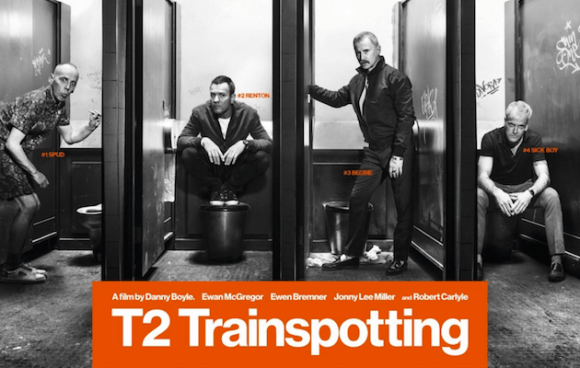
trainspotting2poster

The sequel is strong. It nails how much both Edinburgh and our sensibilities have mutated over the past two decades. The essentials of modern living have altered – now it’s Facebook and Instagram and not the Compact Disc Player and big fucking televisions. Sensations are less corporeal, more about building a social narrative – it’s surface appearances and their validation that brings happiness, not the materialism of yesteryear. Edinburgh is no longer the destitute hellhole of old but a gentrified cluster of hamlets, with some no-go areas still hanging in there. I was in Niddrie last week and I must confess I experienced ‘The Fear’ – it was like another world, an urban toilet with trolls. Left behind the express train to post-modernity, you’ll never see this ‘non-place’ – as Marc Augé  would put it – in a travel guide.

trainspotting-2-begbie-robert-carlyle

Mr. Francis Begbie in a toilet ….

There’s a sadness to proceedings, that these now middle-aged blokes look back on the shite times in a nostalgic sense, like the Ossis did (and still do) the GDR. Spud and Begbie especially wax lyrical about the rough ol’ days as if they were less a perversion and more an idyll. Familiarity doesn’t always breed contempt.

The new film has so much energy, is so visually dynamic, and the characters imbued with so much zest that it can’t be missed. And Francis Begbie is one scary bloke.

Further reading:

https://www.theguardian.com/cities/2015/feb/05/choose-leith-trainspotting-locations-changing-edinburgh-irvine-welsh

http://www.edinburghnews.scotsman.com/news/five-edinburgh-pubs-transformed-beyond-recognition-1-4072180


Tagged , , ,

Ethical travel?

It was only when I left Bangkok that I actively investigated the human rights issues plaguing the country. As risible as it sounds, when I was there I was so stuck in the bubble of expat life and ingrained in the culture, that I didn’t pay attention to what was happening around me – the military overthrowing a popularly elected government, Martial Law, anyone who criticised the Royal Family getting chucked in the slammer; that and rampant poverty. I even worked in a Catholic Primary School owned and operated by some of the most right-wing Monarchist creatures I’ve ever met – they were essentially Southeast Asian versions of Franz von Papen. I guess I was so grateful for my own slice of Apocalypse Now that I accepted the lunacy of the environment.

Something that’s troubled me recently is the extent to which one can ignore the human rights abuses of a host country, choosing to discard the unpalatable for the pursuit and pleasures of adventure. I piss around a lot on Instagram, and I am daily presented with the most apolitical of travelogues, almost completely divorced from reality.

In the often trumpeted ‘Cradle of Civilisation’ that is the Middle East, ladies are lashed for the temerity of being raped as jet-setters sip club sodas on trendy rooftops. On another popular page, ‘fearless’ folk hit North Korea for the banter, which consists of karaoke in an empty Pyongyang hotel bar. Meanwhile, government agencies bug your room and the peasants starve to death in Kim Fatty the Third’s death camps.

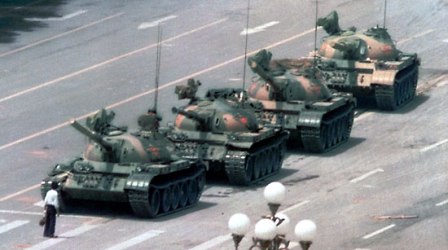
It’s gotten to the stage now where ignoramus tourists (us interlopers) shuffle around Tiananmen Square bereft of a Scooby that there was a rather … significant uprising there back in ’89. Perhaps the lone protestor halting the column of tanks was from a movie (Tank Man).
91866-004-0b707093

Tank Man at Tiananmen Square.

In all of this I am reminded of George Bernard Shaw singing Stalin’s praises and spunking all over the Soviet Union as if it were a utopian Animal Farm minus the pigs. As famine raged in Ukraine, hundreds of thousands rotted in the Gulag system, and the Lubyanka Prison accommodated nightly executions, Shaw sat down for a cosy meeting with the “Georgian gentleman”, and shortly afterwards spat out his unforgettable statement: “I have seen all the ‘terrors’ and I was terribly pleased by them.” Such a contemptible act borders on intellectual bankruptcy, and worse, appears the deliberate propaganda of Mephistopheles himself.

ukraine-famine-newspapers

The Holodomor.

By mingling with such repressive societies, the argument goes, we open them up to progressive politics and liberalism. One should respect their unique way of life, and not expect to transplant our values on them. This rubric also maintains that ‘responsible tourism’ contributes greatly to the economic well-being of the oppressed, especially if you stay in family-owned lodgings and buy from small businesses.
nt_16_silence-destacada

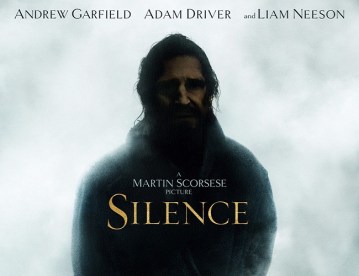
Dir: Martin Scorsese (2016).

A movie I saw recently, Martin Scorsese’s Silence (2016), sort of channels this we-know-best zeal, though this through the lens of religious imperialism. In the film, two 17th-century Jesuit priests travel from Portugal to Japan to locate their mentor and spread their faith. At first dedicated to protecting the persecuted local Christians from the authorities, they end up doing more harm than good, inflicting untold misery on the local believers.

That age-old question, wholly prescient in our era of regime change, is whether seeking to convert a ‘backward’ country is more or indeed less beneficial to the oppressed there; will it deliver them more freedom or extend their subjugation, with us as an additional (colonial) overlord?

And it’s not like we in our ivory towers are without our own glaring deficiencies. What is the Electoral College in the US but the manifestation of a gerrymandered, rigged franchise? And what of the colourful catalogue of miscarriages of justice that stain our judicial systems, or even the wanton spying practised illegally for years by surveillance agencies? Democracy ain’t what it says on the tin.

fotp2014_map

Map of ‘freedom’.


So the prevailing dogma is that you can see these retrograde places but just keep your mouth shut. Boycotting won’t help and neither will donning your missionary garb. I’d like to say I’ll pass on these countries out of a sense of misguided morality, and reserve my travel to Google Images. But I’m just too selfish to not tick these maligned countries off my list. My ‘moral compass’ doesn’t outweigh my curiosity/vanity. I’ve reached that jaded stage in my life where I’ve resigned myself to the fact that I shape nothing. Or maybe I can help a few folk (with generous tipping) on my way to some Instagram hits.

Further reading:

https://www.tourismconcern.org.uk/should-ivisit-countries-where-human-rights-are-violated/

http://www.irishtimes.com/life-and-style/health-family/is-it-wrong-to-holiday-in-a-country-that-has-a-poor-human-rights-record-1.2704102

The dilemma of travel to countries that violate human rights
Tagged , , , , , , ,

The Mongol Rally.

The Mongol Rally is a non-competitive, frankly ridiculous summer car rally from London to the Siberian town of Ulan Ude. The rally used to conclude in Ulaanbaatar but now for monetary reasons beyond the understanding of this author, the caper merely passes through Mongolia. It’s still called the Mongol Rally, though ….

Anyway, the three fundamental rules are as follows:

The car must be a smatter of shite, with an engine size limit of 1 litre.
You are on your own (no support team).
Teams need to raise at least £1000 for charity.

mongolrallypiratepullingsuzuki

Photo: Erik MacKinnon.

It’s a dangerous, DIY mode of travel. One must be creative, daring, and blessed with a stoic fortitude that the three to four week, 10,000 mile quest demands. Folk have been hospitalised, stripped naked and robbed; many arrive home skint. And sadly, a bloke died whilst passing through Iran a few years ago. There’s a sense of autonomy in the endeavour, and an undeniable romance – you’re an ersatz Marco Polo in a falling-to-pieces Volkswagen Beetle. FYI: I’ve personally had gnarly dreams of journeying from Mogadishu to Cape Town in the farcical Mutt Cutts Van (’84 Sheepdog) from Dumb and Dumber (1994).

lost-thunderyaks

Photo: Norrbet at Globotreks.

It’s almost as if it’s too easy to travel these days, that ‘anyone’ can do it. This is true, and the vainglorious elements within us have us chasing down more difficult, testing, and unusual pursuits – how else to explain all the death-from-selfie occurrences on outback mountain tops? There is, though, no better  story at a shindig than announcing to friends and neighbours that you’ve just driven to Siberia in a Ford Fiesta. Planes are for the masses, clearly. I verily anticipate the hipster-infused travel craze of 2018 – from Hamburg to Volgograd on a Segway, each participant armed to the fucking teeth with a bag of green tea, a 35mm SLR, and a typewriter.

Further reading:

Mongol Rally

https://www.gapyear.com/features/149618/how-do-you-survive-the-mongol-rally

Essential Tips for Driving The Mongol Rally

http://erikmackinnon.com/why-were-driving-a-beater-car-from-london-uk-to-ulaanbataar-mongolia-for-charity-and-why-you-should-join-us/

Mongol Rally: Getting Lost in Mongolia and Reaching Ulaanbaatar


Tagged , , , , , ,

Midnight in Paris.

I found Paris to be a grimy, dirty, overpriced and overrated hovel of a city, crawling with street urchins and riff-raff flogging pebbles and other assorted tat. There are esteemed features, but as someone with negligible interest in food, coffee, or fashion, I found it hard to be enamoured with the place. It’s the antithesis of the magical province propagated by such recent luminous movies as Amélie (2001) and Moulin Rouge! (2001). Granted, Montmartre  was splendid, and the Eiffel Tower a must-see cultural landmark, but these aside I reviled the setting; I simply didn’t see a reason for it to exist. It’s ugly, noisy, and boring.

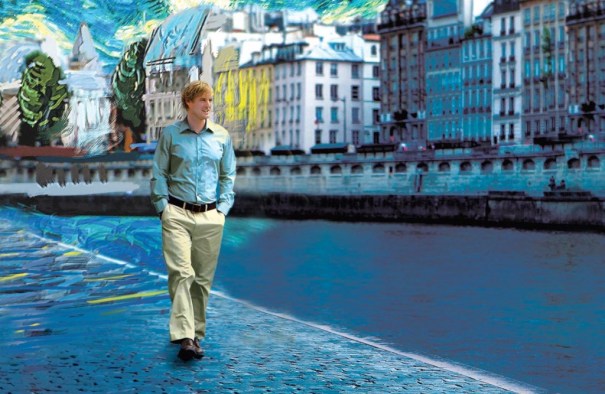
6-8-15-midnight1

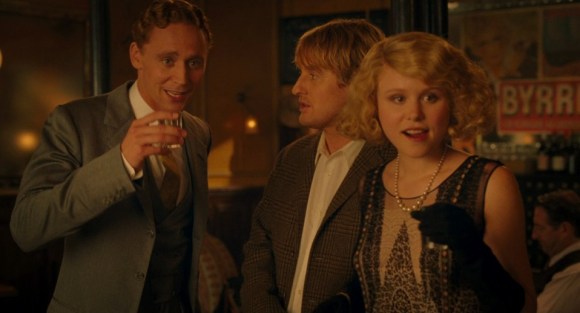
Midnight in Paris (2011), in which Owen Wilson’s successful but unfulfilled Hollywood screenwriter winds up galavanting Zelig-style around the 1920s Paris party scene with the most famous faces of the age, is one of the most … pleasing movies of the past decade. As escapist as Allen has got in recent years, it’s no accident that his late-career resurgance has coincided with him having effectively retired the Allen persona in front of camera.

Rather than gloss over the city’s defects or tackle them, Allen appears to have found a way to plausibly romanticise the city through its time-travel McGuffin – a vintage Peugeot Type 176 this picture’s DeLorean. Why bother essaying social and economic upheaval when you can have your protagonist shoot the shit with Cole Porter, Zelda and Scott Fitzgerald, Ernest Hemingway, and Gertrude Stein?

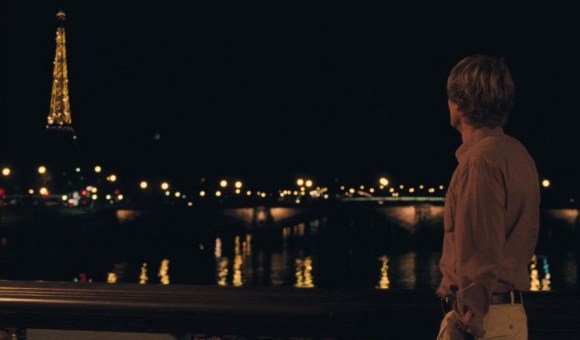
mp-4

Allen nails the centrifugal appeal of Paris in its most delectable incarnation – that carefree carnival of the Golden Twenties. Our everyman is vaulted seemingly by magic into a smoky conurbation of illustrious writers, poets, and artists, and able to hold his own with these literati. A roaring decade of promise between the wars, the ’20s stand as the most seductive and beguiling of the 20th century, and Paris (with Berlin) its gleeful carousel. ‘Les Années folles’, indeed.

midnight_in_paris_2011_720p_blu_ray_x264_nmd_00_2

With F. Scott and Zelda Fitzgerald.

It’s not so much the topography of the city that captivates the audience, but the freewheeling possibilities of Wilson’s night-time escapades. That was the essence of the ’20s – when ‘isms’ were scrawled on napkins and a trip to a café could be a life-changing experience.

The film is Paris as an ideal, less so reality. It’s how I’d like to regard the City of Lights, this aided by never returning there. It’s easier to empathise with the past than accept the present. The dream has become reality.


Tagged , , , , , , ,

Dry January in Weston-super-Mare.

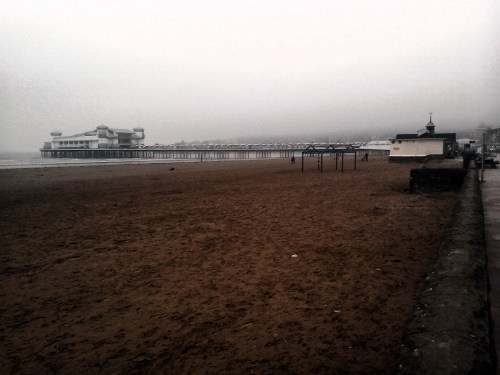
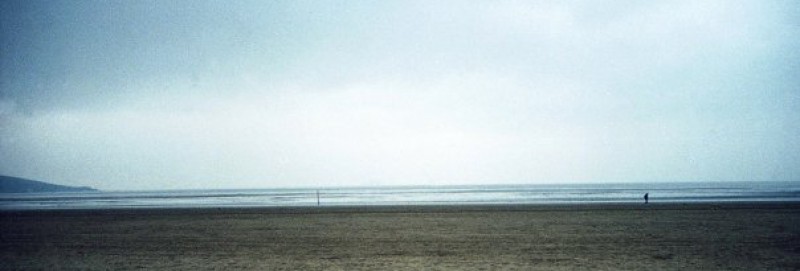
Weston-super-Mare appears as a West Country seaside relic from the 1950s, a chapter long before Ryanair and easyJet established themselves, apparently, as the conduit for poor people to see things other than factories. They seem simpler times, its agents unencumbered with the fatal liberality and accompanying ontological crises bequeathed to our generation. The birthplace of John Cleese and none other than Jeffrey Archer, the renowned borderline-midget Isambard Kingdom Brunel ‘chillaxed’ here when he wasn’t building the Bristol & Exeter Railway. I’d like to think he would have sat on that beach and taken a selfie were an iPhone readily available.

Jpeg
The town is Blackpool sans the tower. There are shops and several pubs; I venture in a few for Beck’s Blue non-alcoholic concoctions that produce aghast stares from puzzled bartenders. The Tesco houses a security guard decked out in jackboots. It rains in the winter and, presumably, the other seasons. The pier looks nice, but it was nicer before a fire engulfed the pavilion in 2008. A crucial part of a quietly devastating motion picture, the Merchant Ivory-produced The Remains of the Day (1993), takes place on the pier.

Highlight of the trip: I went looking for Bette Midler on the beach but found only sabotaged sandcastles and faint figures in the distance.

Tagged , , , , , ,