Category Archives: Tourism

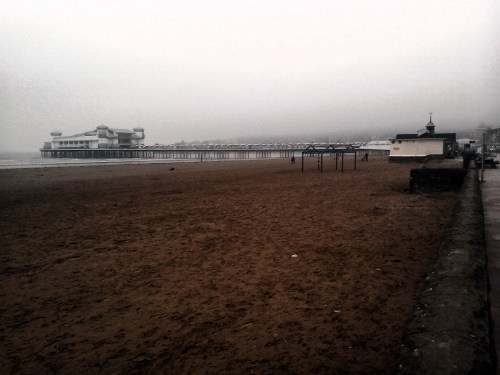
Dry January in Weston-super-Mare.

Weston-super-Mare appears as a West Country seaside relic from the 1950s, a chapter long before Ryanair and easyJet established themselves, apparently, as the conduit for poor people to see things other than factories. They seem simpler times, its agents unencumbered with the fatal liberality and accompanying ontological crises bequeathed to our generation. The birthplace of John Cleese and none other than Jeffrey Archer, the renowned borderline-midget Isambard Kingdom Brunel ‘chillaxed’ here when he wasn’t building the Bristol & Exeter Railway. I’d like to think he would have sat on that beach and taken a selfie were an iPhone readily available.

Jpeg
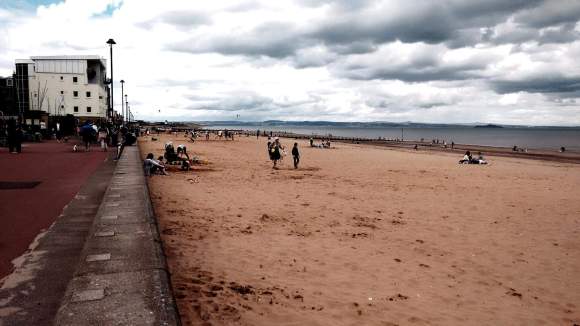
The town is Blackpool sans the tower. There are shops and several pubs; I venture in a few for Beck’s Blue non-alcoholic concoctions that produce aghast stares from puzzled bartenders. The Tesco houses a security guard decked out in jackboots. It rains in the winter and, presumably, the other seasons. The pier looks nice, but it was nicer before a fire engulfed the pavilion in 2008. A crucial part of a quietly devastating motion picture, the Merchant Ivory-produced The Remains of the Day (1993), takes place on the pier.

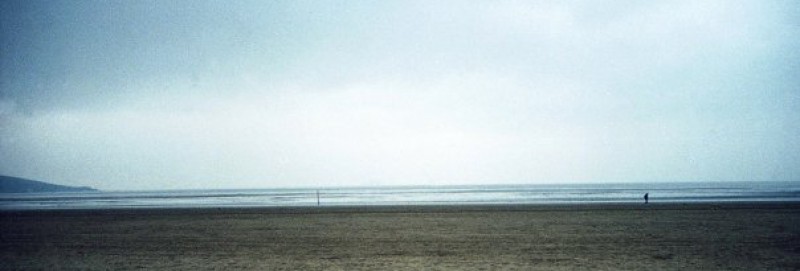
Highlight of the trip: I went looking for Bette Midler on the beach but found only sabotaged sandcastles and faint figures in the distance.

Tagged , , , , , ,

Death *of* Venice.

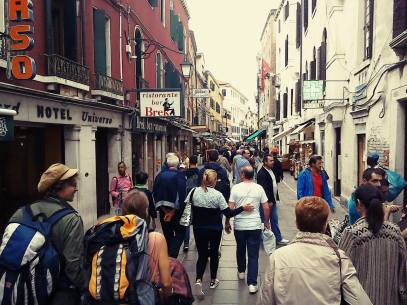
Venice was pure decadence; it reminded me of the decline of the Amberson family in Welles’s semi-forgotten masterwork, or more aptly the great ball sequence that closes The Leopard (1963). There was a sense about the place that I was walking the streets and traversing the canals of a city on the edge of time, an opulent remnant grasping on to another era. That bygone age becoming more irrelevant and forgotten by the day, it is now eroded by the pernicious intents of globalisation, nowhere more evident than in the installation of garish vending machines in the city’s piazzas.


Declared world heritage status by UNESCO, Venice now houses only 55,000 permanent inhabitants who must endure up to 30,000 cruise ship passengers a day, with an estimate 22 million visitors a year swarming into the archaic Republic.

ita_venice_cru_jpeg_img-02-1200x798

Revolting scenes. Photo: World Monument Scenes.

Venetians blame this tourism for the miniscule, still dwindling population. The catechism is that tourists’ need for short-term accommodation increases rent prices, with much available property utilised by landlords for holiday rentals as opposed to residents or long-term tenants. It’s an issue of space, and Venice can’t be built *upwards*. As summed up by UNESCO: “The capacity of the city, the number of its inhabitants and the number of tourists is out of balance and causing significant damage to the city.”

12001068_10156196420870691_220234028228904590_o

The ‘hordes’.

The Queen of the Adriatic is no doubt in need of more than a lick of paint, such is the deterioration of its buildings and canals through simply too many people cramming into such a tiny lagoon. But without the hordes of holidaymakers, and I am one of these vermin myself, Venice would surely melt away into Atlantis, a world unto itself, and though there’s something bittersweet and fatally beautiful about such a proposition, it demands an economy that ticks, and its permanent residents, however grating the experience, depend upon the premise of tourists spunking their bum bags of cash up the wall (or into the lagoon).

12032136_10156196407740691_2892670259554303656_n

There’s an argument that as something becomes more accessible it loses its aura, especially where cities are concerned, as if tourism is still the grand pursuit of the elite. Those days (I hope) are over. What must be done – the repairs, the concerted efforts by city administrators to study, manage, and maintain the integrity of its structures – has been thoroughly articulated by UNESCO. Speed limits on motor boats (to prevent wave erosion) and a buffer zone around the lagoon are just a couple of the common sense solutions that have yet to be implemented. A masterpiece needs periodic renovation, constant conservation, and the consultation of its most vital components – its makers.

12015039_10156196418190691_4237002161737408090_o


For further reading, please check out the following:

Italian Environment Fund: http://www.fondoambiente.it/

Shocking facts: http://theartnewspaper.com/news/conservation/how-italy-stopped-venice-being-put-on-unesco-s-heritage-in-danger-list/

Residents rather vexed: http://www.telegraph.co.uk/travel/news/tempers-flare-in-venice-as-angry-protesters-block-cruise-ships/


Tagged , , , , , ,

Loan and Lém. Saigon, 1968.

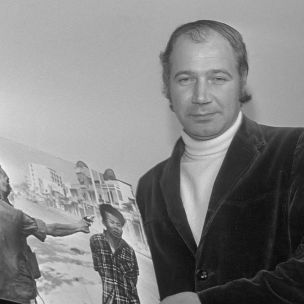
If ever a war produced a ‘Decisive Moment’ it’s this Eddie Adams Pulitzer-winning shot straight from the vanguard of photojournalism.

Nguyen Van Lem; Bay Lop

South Vietnamese General Nguyen Ngoc Loan, chief of the National Police, fires his pistol into the head of Viet Cong officer Nguyen Van Lém. Saigon, Feb. 1, 1968.

The image has always stayed with me. It spoke of brutality and a stark disregard for human life; it’s one pretty good encapsulation of death, pardon the oxymoron. I always assumed it was an indiscriminate execution until I read an Eddie Adams obituary article a few years ago.

Lém, the photograph’s victim, had just killed South Vietnamese Lieutenant Colonel Nguyen Tuan, his wife, their six children, and his 80-year-old mother. Loan was a personal friend of Tuan and his family.

eddie_adams_1969

Given this informational context, I view the photograph differently. However perverse this may be, I see Loan as the victim and Lém as the perpetrator. Alternatively, I see the photograph as a tabula rasa.

Loan fled South Vietnam during the fall of Saigon, and subsequently moved to the United States, opening a pizza restaurant in Burke, Virginia. He retired in 1991 after his identity was disclosed.

Adams later apologised to General Nguyen and his family for the effect the photograph had on his life.

Further viewing: https://m.youtube.com/watch?v=bst9mjjiBBo

Tagged , , , , , , ,

Colonel Bogey in Kanchanaburi.

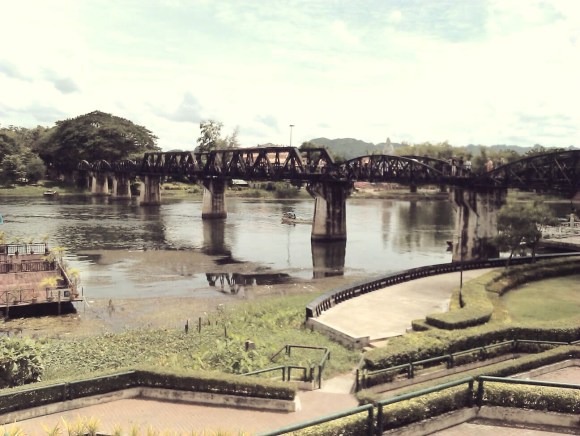
Rocked up to this masterpiece – the Bridge over the River Kwai – in Kanchanaburi three years ago, whistling the Colonel Bogey March with hallucinogenic images of Alec Guinness emerging from the jungle. I was plastered at the time, decked out in Khakis and looking like I’d emerged from the inferno. Transcendental moments.img_20161205_204639

Tagged , , , ,

Idling away in Achiltibuie.

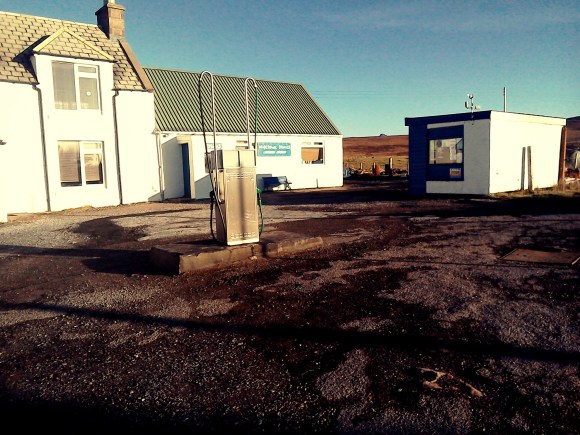
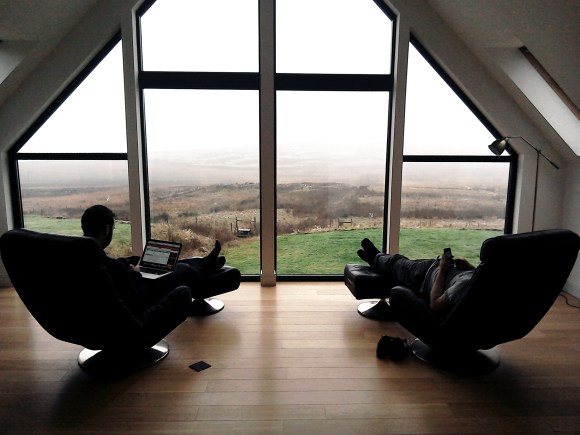
I became so enamoured with the enchanting isolation of Achiltibuie that any innocent impingement upon the solitude was an infection of my harmonious narrative. The mere sight of a stranger (a local) on the horizon had me hiding unceremoniously in a shrub until he exited the vicinity. It was like my own private garden had been badgered. This aside, the stay in the village was an uninterrupted mash-up of aimless rambles, a surfeit of Scotch, and episodic gazing from a minimalist lodge at the terrain … wondering ‘what it’s all about’. Scotland is relaxing.

Jpeg

Mandatory.

Jpeg

Achiltibuie stores.

Jpeg

Locholly Lodge.

Tagged , , , ,

München, Salzburg, Berchtesgaden, Alkohol.

Guten Morgen.

Arriving in Munich, we wander around the Hauptbahnhof before our 17:54 Salzburg departure, stumbling into an assortment of ghetto eateries (for the booze). What is it about train stations and their surrounding streets that attracts the oddballs and the riff-raff? I’ve never felt entirely safe sparking up a ciggy near a railway. One is invariably sniffed by the local hyenas wishing to devour their carcass of tobacco. We escape a verbose gentleman in green dungarees and find our seats on the train. When I finally conduct my Trans-Siberian Express jaunt, I wish it to be just like this, but with several suitcases filled to the brim with liquor.

Salzburg.

The delights of Salzburg. They have some cracking pubs – notably Alchimiste Belge – and a fag machine. And a SPAR selling Bacardi Breezers. What more could one want in a city? Oh, and a born-again Christian outside a nightclub gave me a book about God and things. I endowed it to the hotel for a lucky person to devour.

The wee Sunday market left the most memorable impression. Tiptoeing from stall to stall with a beer in each pocket, I got the sense that I was somehow intruding upon this idyllic community gathering. They all appeared so happy and thoughtful, like this was the day to take stock of the week’s events and indulge in a little R&R. There’s an ersatz ‘German Market’ back home in Edinburgh – it mostly consists of teenagers in tracksuits being very loud. No comparison, really.

Morning entertainment.

A spot of Apocalypse: The Second World War (2009) and a Jägermeister chaser performed their noble role as Room 304’s pre-eminent hangover cure. The hotel were showing The Sound of Music (1965) on a loop, but it’s just not graphic enough for my sensibilities. Julie Andrews doesn’t do it for me; I need proper carnage.

15107372_10157884517655691_4870394923197404121_n

To Obersalzberg.

Driving to Hitler’s notorious crib above Berchtesgaden and peering up awestruck at its twin delights of the Berghof and the Eagle’s Nest and all the tumultuous, tragic history that was made here, left me with a sense of being quite insignificant. The overwhelming splendour of the milieu merely magnified the feeling that I was an ant ripe for a trampling.

Munich (again).

By the time we reach Munich and go our separate ways after a few more drinky-poos, I’m content to conk out on my bed as Richard Wagner emanates from a tacky Bluetooth speaker. I wake up in darkness and feel my way around the room, realising I’m in Munich and not a lucid dream three minutes into this escapade. I crawl to the shower, then luxuriate in another cheeky nap, and depart at the first sound of a cleaning lady (I presume) patrolling the corridor. In the railway station I get visions of an anthropomorphic dog in a leg-cast playing Daft Punk’s “Da Funk” from a boombox. I don’t know why.

Tagged , , , , , , , , , ,

New York – Twin Cities.

The Big Apple is venerated as the most filmed city in movies, a hustle-bustle urban jungle of possibilities, both magical and harrowing.

It seems there aren’t films made *about* New York City very much anymore; they merely take place there, the protagonists unaffected by the milieu. Perhaps it’s a post 9/11 reluctance to confront the contentious ‘symbolism’ that the city continues to offer. Only Spike Lee’s 25th Hour (2002) confronts NYC in its role as ‘snapshot city’, and attempts to deconstruct its myths and contradictions.

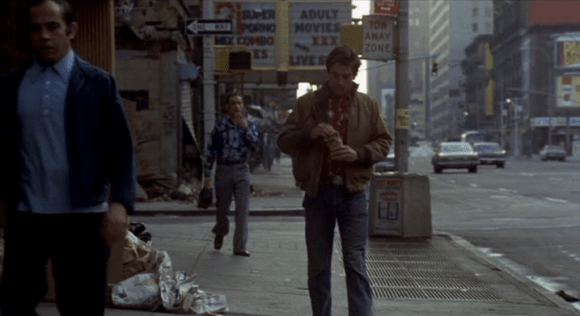
New York is represented in two modes of cinema – it’s a decrepit urban hell or a serene cloud to naval gaze on – guzzle down coffees, discuss Dialectical Materialism, be ‘arty’. The dichotomy is illustrated in two films made three years apart, Taxi Driver (1976) and Manhattan (1979).

Taxi Driver (1976).

If ever the topography of a city mirrored a protagonist’s crumbling psyche it’s Taxi Driver (1976). Travis Bickle here represents purgatory, New York a steaming cesspool of ‘animals’ and ‘filth’. The city is an ill-thought-out maze, a cruel, shallow, uncaring conurbation from gutter to canopy. An utter dump, it’s where people lose their minds.

taxi_driver_gods_lonely_man

Manhattan (1979).

This movie is paradise. I’d love to live like one of these characters. A bloke in it willingly quits his job because he can. He doesn’t worry over council tax or credit card debt or rent or any of that trivial shite – he just spends the remainder of the movie see-sawing between a neurotic journalist and a 17-year-old high school student. The city here black and white, lit up in fireworks and George Gershwin. There is no crime, there are no social problems. There are only parties and conversations. NYC is a lucid dream.

Photography By Brian Hamill

A film-maker from different backgrounds and experiences will of course develop his own vision of metropolis as distinct from another’s, but this city is ridiculous in its contrasting representations to the extent that one wonders if it’s the same place subjected to the camera. The theme goes beyond a depiction of class divide – its wholly disparate districts captured on celluloid – and channels two states of mind. New York is *the* kaleidoscopic dwelling.

Tagged , , , , , , ,

Reykjavík 2016 – autumn in Smoky Bay.

Reykjavík had a soothing effect on the soul, the city a meditative riposte to the palaver inherent to many a capital. It was a ‘Pleasantville’ setting in which everything appeared in sync, harmonious, and dare I say it, normal. One got the impression that vexing incidents seldom occur there, and when they do the locals sort it out – cleaning up its banks after the financial crisis being one example.

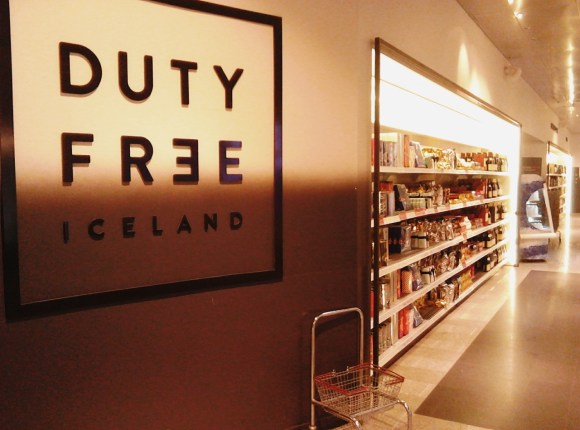
Duty Free.

This was a welcome sight. I’d heard the rumours and ‘conducted’ the research on Iceland’s inflated booze prices. Is it because of tariffs or taxes, or a form of social engineering? Whatever the explanation, this wee store was compulsory. I stock up on ethanol and fags, and hop on the coach to Reykjavík, snoozing at the back to a Sigur Rós mix because, well, I seem to be a cliché.
img_20160920_233849

First Night.

I arrive at BSI bus terminal, the sky black, the rain heavy. I don’t mind it, and the stroll to Reykjavík Downtown Hostel, passing the shore of Tjörnin Lake, with its calm waters and swan inhabitants, is almost cinematic, as if my pithy entrance into the city is indeed personalised. I don’t see a single person on this walk, only in the centre spotting a few figures making their way home from the closing pubs. I wander the streets some more, exploring the enclaves and with my eye out for the peculiar. I see only urban desert.

img_20160920_233303

Reykjavík Downtown Hostel.

It didn’t feel like a hostel. What I mean here is that it wasn’t dirty, noisy, or cheap. Wi-Fi, showers, cooking facilities – all were fine. Prime location, too.

Supermarkets.

It’s true what they all say – even your most basic goods here cost a fucking fortune. One must grit one’s teeth and get on with it, … or bring as much canned foods as possible. I don’t believe there’s an import limit on the volume of tuna or kidney beans making their way into hold luggage.

Vinbudin.

Vinbudin, a.k.a. the elixir of life. If one demands a cheeky bottle of spirits then this is your palace, conveyer belts galore splurging out an incessant volume of sparkling moonshine. It’s not exactly the Toys ‘R’ Us of ethanol, but it’s a useful additive to your standard Reykjavik night out, for which hip flasks are a frequent leitmotif.

Pubs.

I practised the ol’ habit of tearing into the spirits prior to any nightly excursions. By the time we reached the pubs I was operating in the upper echelons of intoxication. Nothing bad happened, though. I pissed in a bush between establishments, but that was the ghastly extent of my naughty behaviour.

Food poisoning.

Something I ate from a supermarket corrupted my insides. I think it may have been the Lumpfish Caviar and cottage cheese combo I mixed together for lunch. It seemed like a radical idea at the time but regrets were soon swarming. I’ve seldom been on so many toilet adventures. On the Thursday I spent 10 minutes slumped back on a park bench coping with the aftermath of a grenade explosion in my stomach. I shall refrain from further details but that Thursday was a slog.

img_20160923_101845

Hallgrímskirkja church.

This truly idiosyncratic structure towers atop the city as its main landmark, and can be glimpsed from all around. I didn’t venture to the top for I had an aforementioned grenade in my stomach. I did, however, crawl around on the ground outside. In these situations, you get a lot of bemused expressions from folk hoisting selfie sticks because you’re taking snaps ‘Old Skool’. I’m used to it.

Street Art.

It’s commonplace. It’s impressive, more elegant than tacky. I’m not sure what this is all about, but I find it strangely erotic. There’s nothing quite like being presented with a David Lynch-esque mural whilst on a random dawdle.

Farewell, Iceland. I’ll be back next year ….
 

Tagged , , , , , ,