The nostalgia trip is strong with this one, and it is done in such an artful way that it builds upon the 1984 … middling flick and goes into new directions that feel organic and … well, correct. It’s such an entertaining show at times and only today would it get made. The wait has been worth it, and I feel there is a benchmark quality here, a premonition of other ’80s movies getting the TV treatment.
I want to see Flashdance (1983) given the treatment.
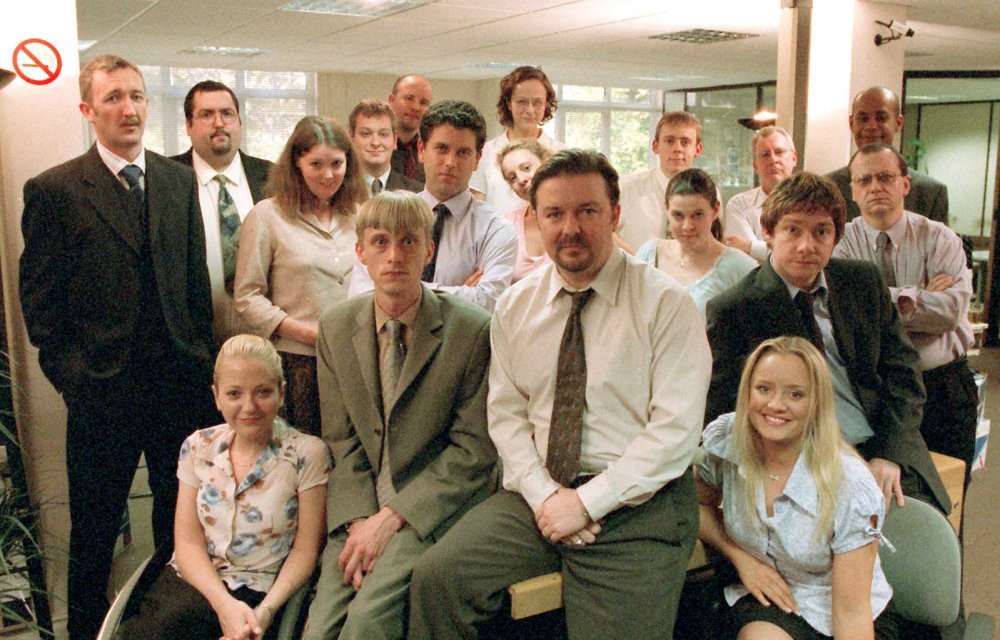
More Netflix throwback viewing brought me to The Office, the early nougthies apotheosis of workplace ennui, inanities, and bury-your-head-in-your-hands moments of embarrassment. Your everyday office environment is so well portrayed that I actually know these people: the delusional ‘boss’ who’s been there for two decades and whose work defines his/her life, the go-getter who thinks they’re in the FBI or something, the joker who isn’t funny, and the roughly 50% of them who know it’s just a job so get on with it.
The most striking aspect of the show is how it highlights the existential funk of the vast majority of workplaces – what we do isn’t particularly important to anyone, and a monkey can perform most tasks if you train it correctly. One looks for meaning in the wrong places. I’ve always been dubious of folk who proudly announce, “I love my job.” They have to be either psychologically pumping themselves up to cope with the pain or are putting on a show, or have to be burdened with actual real-life mental issues.
Unless they have an interesting job. Which is a rarity.
This show took a LONG time to get going but bloody hell once it did … oaft!
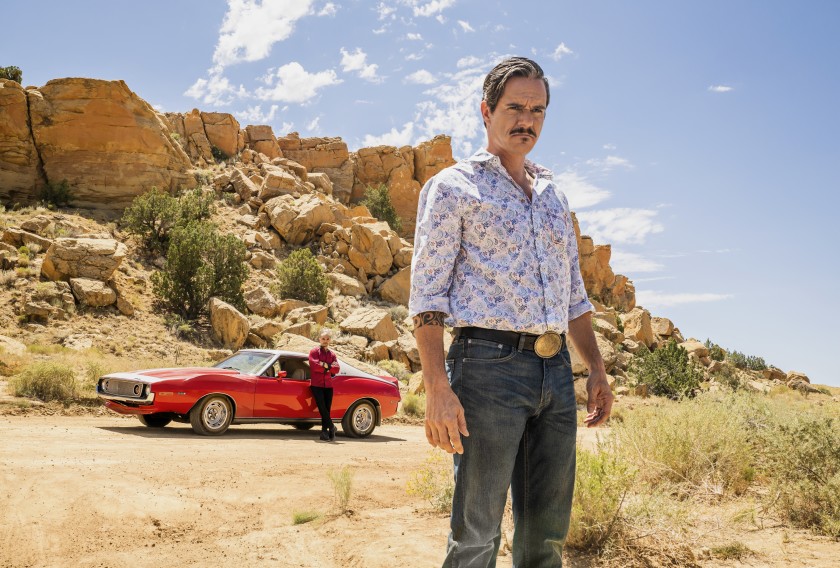
It finally shrugged off the tedious, totally unnecessary and frankly plodding shite with Saul’s brother, and now Saul is firmly in the criminal underworld (rather than dipping in and out) things have been much more tasty. There is also another reason for its current awesomeness: Lalo Salamanca.
He is by far the most charismatic ‘villain’ from both Saul and Breaking Bad, and the proof that moustaches aren’t just for novelty value. The bloke needs a spin-off show from this spin-off show. It’s an obvious statement, but characters make shows. And the lack of them in their dimensions is why most of the stuff out there is garbage. Stringer Bell in The Wire, Ralph Cifaretto in The Sopranos, Lalo is up there.
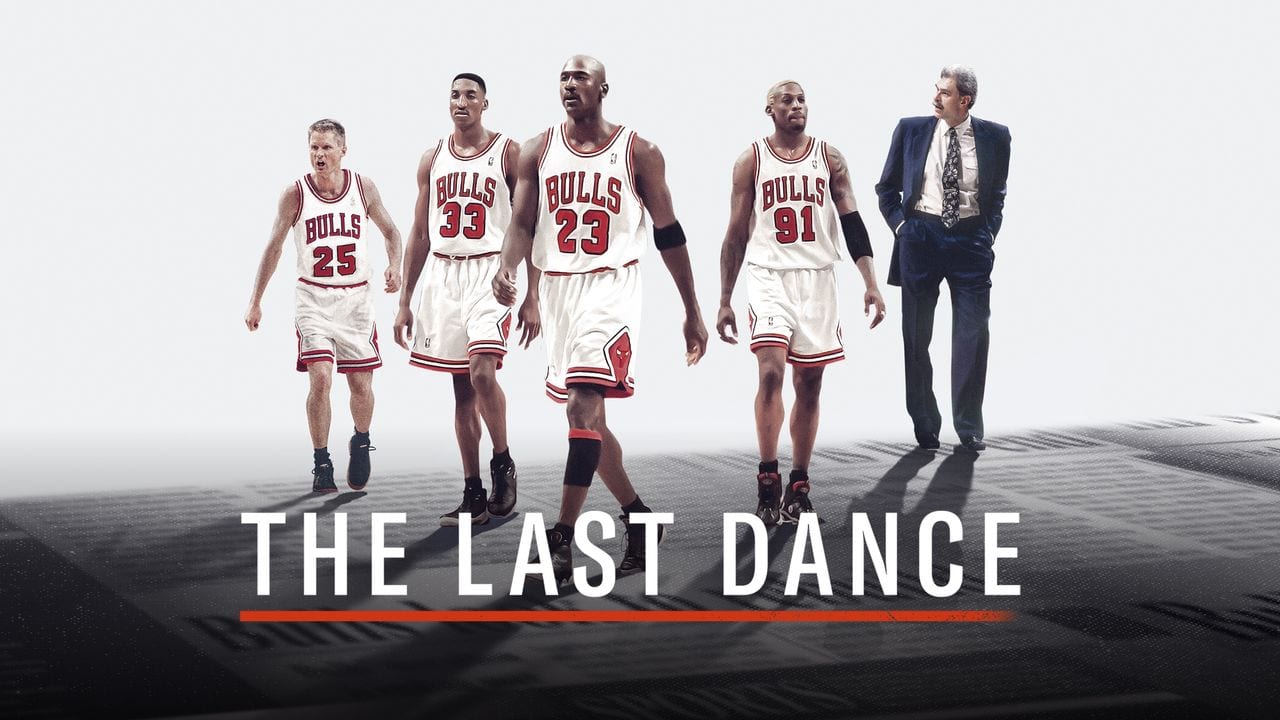
I know zilch about basketball, though I have seen Space Jam (1996) four times. Apparently, The Last Dance has just broken viewership records on Netflix, and it comes as no surprise. The series is a masterpiece in the assembly of archive footage, modern-day interview, and appropriation of soundtrack-ready tunes that I suspect can make taking a shit in a pre-lockdown Burger King somehow transcendental (my new ‘life goal’). This stunner, for example:
There is a current debate as to whether this is ‘real’ documentary or not as Michael Jordan had editorial control, but this an afterthought; it’s entertaining as hell, and I venture that all documentary is representation. The mere sight of a nonchalant Jordan sat there on a leather throne with his tumbler of whisky, in hysterics as he views on an iPad disparaging statements made against his worship by teammates and opponents, warrants an entire episode.
Not a very likeable bloke, but an entirely admirable one – he is scores above his supporting cast, and doesn’t seem bothered that he is derided as a prick. I’ll never understand the baying criticism of ruthless athletes; the sports supermen aren’t signing death warrants or invading countries, and one could argue that Jordan’s will to win put trophies in the hands of mediocre colleagues.
And for the record, I almost purchased a £6.99 basketball in Home Bargains last week. But I didn’t (there was no hoop available).
This started off so well. For seven episodes I was gripped. It was so intricately put together and had a masterful Breaking Bad cliffhanger quality to it. Like most contemporary dramas, though, it crumbled into the nonsensical at its denouement. The last episode was so dire it ruined the preceding madness. Depression kicked in and I was then reminded of how Lost completely … lost the plot.
Stay away from this rubbish. Anyway, there’s always a good doc about Nazis to help ease the melancholy.
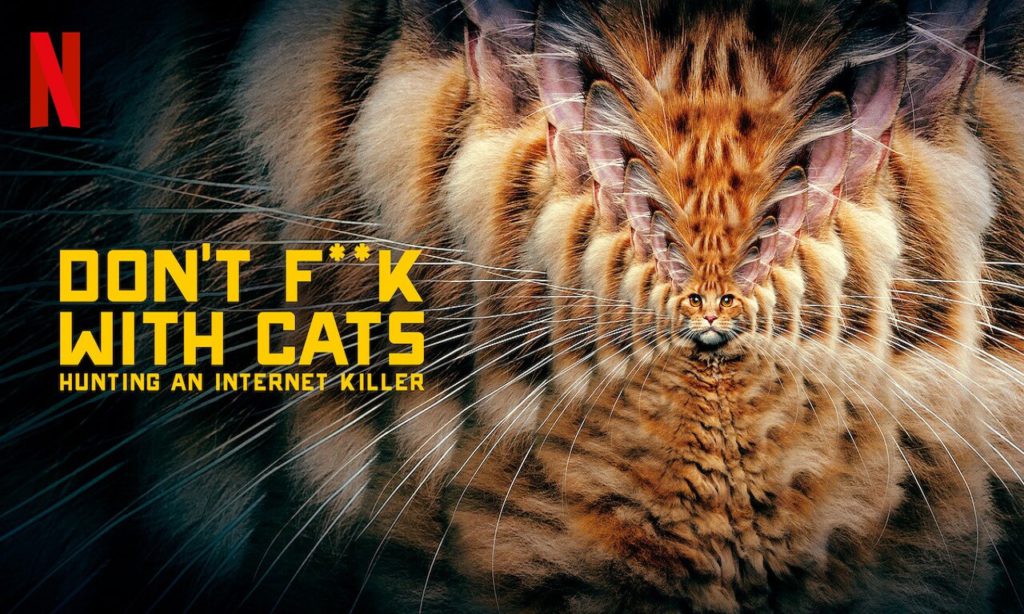
Watching this was a regret – I hated every minute of it but was compelled to witness the ghastly proceedings unfold. I usually have a weekday curfew of 11:00 p.m. but here I was lucid way into the wee hours with a WhatsApp cat topic frenzy on the go. Lesson learned: Do not ever Netflix (verb) when it’s dark.
The Internet is the Digital Frontier and all that, and now it appears to be the case that the apotheosis of human endeavour is an outlet for almost every single looney with a vengeance; the World Wide Web and the sociopath are meant to be.
The online sleuths in the three-episode show are more competent than the cops meant to be doing the basics of their jobs as professionals, which says rather a lot. The only reason I kept on watching was how in the fuck they managed to uncover the things they did. It is must-see detective work.
Nostalgia kicked in mega-heavy with this absolutely mental show; fuck knows how it even came into being. I have seen The Karate Kid (1984) 19 times and this somehow beats it. Through the complexity of the characters (they actually have three dimensions), the subtle middle fingers (plural) to the WOKE/SJW political correctness of this age, and the sheer hilarity of some of the scenes, it’s the best show for quite some time.
I always thought Johnny Lawrence got a bad rep; 35 years later he gets the treatment he deserves.
Eight years of Westeros drama, 2011-2019, with a godawful two-year hiatus between the 7th and final season. To accidentally appropriate a catchy verse in a recent Justin Bieber song, it’s been a hell of a ride (driving the edge of a knife).
Thrones was two-in-one TV, shades of history with splatters of fantasy, brutal realism and realpolitik – one got the sense of the intrigue at the court of Klemens von Metternich or Bismarck editing telegrams – with magic and dragons. And all if this topped off with booze, tits, and your occasional rape. Peak Thrones has to be season 4, for the superlative writing, the intricate balancing act between the intimate and the epic, Tyrion’s ‘fuck you all’ trial, and the sheer number of what-the-fuck-just-happened moments. It was literally astonishing.
Things went a bit downhill from season 6 on. It was evident the writers, having gone beyond the Martin books, had run out of ideas and sadly resigned the show to that of ‘experience’ – spectacle, hordes of extras, battle after battle. Which is fine, but the verbal sparring and power plays such as those between Varys and Littlefinger were sorely missed, so too was any sense of remaining mystery about the familiar ensemble – all their cards were on the table. It frankly became a bit silly. Not to bother, it’s partly because the bar was set so high for so long that the later episodes in the saga felt lazy despite being the most watchable bits of drama on TV.
Summary thoughts:
What the hell was Petyr Baelish’s accent all about? It fluctuated from one region of the British Isles to the next depending on how devious he was feeling.
Tyrion got boring by the end. He forgot he had witty things to say, and it didn’t help that it was no longer a case of dwarf vs. everyone.
Ramsay Bolton was Joffrey on steroids.
Stannis Baratheon reminded me of almost every supervisor/manager I’ve had, displaying a facade of nobility, but will without compunction burn their own kin for a pay rise.
And every time I eat chicken I think of The Hound and Arya tearing around the countryside, psychos in arms. Those two were meant to be.
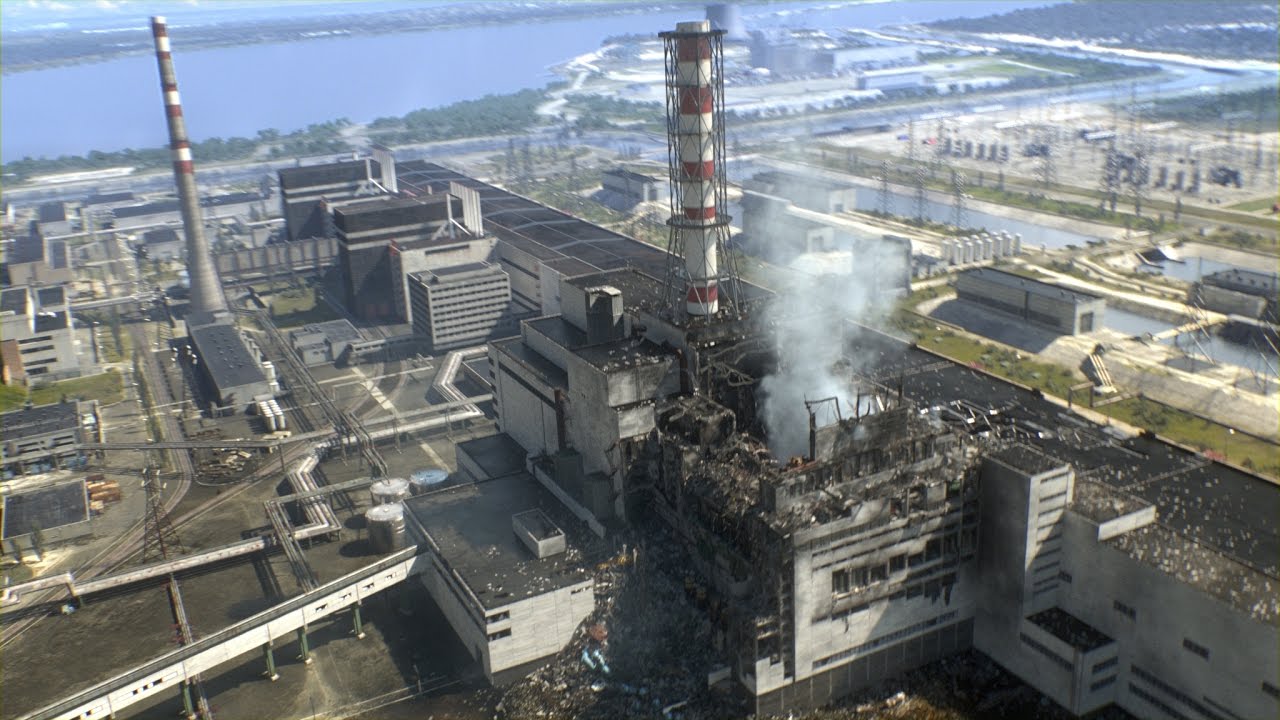
Shot in Fabijoniškės, Lithuania, this 5-episode mini-series by HBO is a cracker so far (one episode in). It puzzles me how there’s not, to my knowledge, been a major TV series or film about Chernobyl until now. One wouldn’t expect this would come from the Russian slice of the former Soviet Union, but you’d think Ukraine (its ‘western-oriented’ regions) would have put something together.
Documentaries have been galore, the main theme that the disaster was indicative of the pitfalls of communism, and a metaphor for the swift end of the USSR in the Gorbachev era of glasnost and perestroika.
This is mind-blowing, though, a real-life 28 Days Later (2002) with wild animals replacing the ‘infected’:
I know a good lad I met in Budapest, a fellow traveller named Paul. He’s the only person I’ve met who’s wandered into Pripyat’s Zone of Alienation with a Geiger counter. I have an epic image of him strolling about in a Walter White biohazard suit, with a beer hat atop the garb.
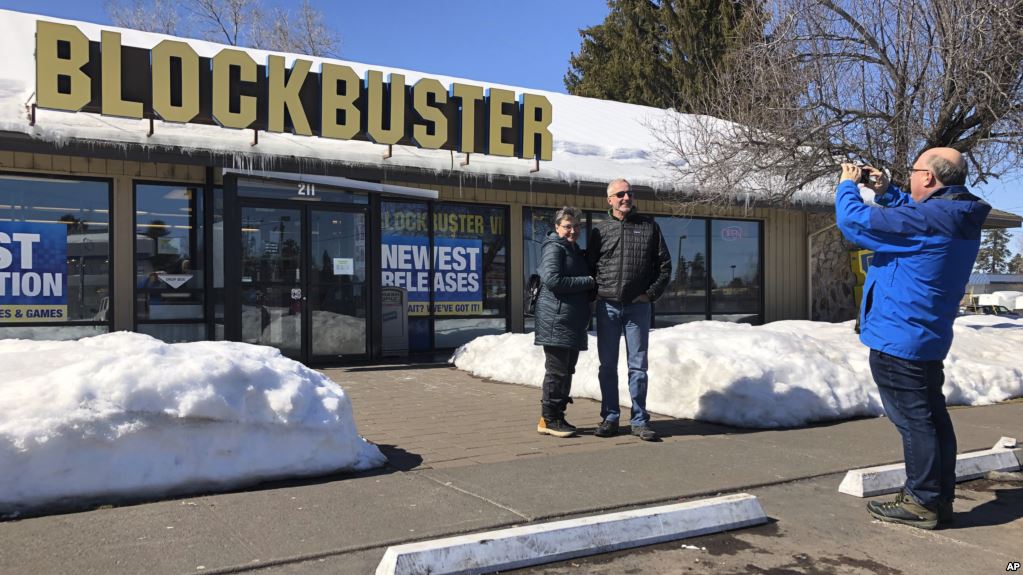
Bend, Oregon, houses the last remaining Blockbuster, defeated foe of Amazon and Netflix.
I can see this store becoming a sort of movie Mecca of the future, nostalgia in the present. And there should be just one of them, perhaps the only reason to ever visit Oregon. When Blockbuster ‘died’ I confess I wasn’t bothered. It’s only a few years down the line that you come to lament the absence of such treats.
Blockbuster was ‘da bomb’ back in the day, the Friday night Shangri-La – purveyor of movies and nibbles after a week of school tedium. Granted, there was an annoying element to proceedings, this the desk clerk who, when he didn’t believe he was Auld Reekie’s version of Quentin Tarantino, went into full SS Guard-mode if you didn’t rewind a VHS rental of Rush Hour (1998). It was for the most part a haven, though, and coupled with Edinburgh’s car boot sales a perfect introduction to film.
The internet is of course sublime (you don’t even have to leave the house and speak to anyone) but Blockbuster was where geeks congregated, our own wee social and cinema club. My old beloved Blockbuster in Gorgie has tragically metamorphosed into a Costa Coffee frequented by polo-necked creatures. Gentrification and all that.






 Wanderings and ... wonderings.