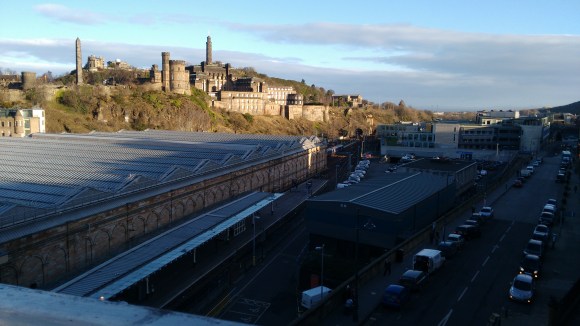
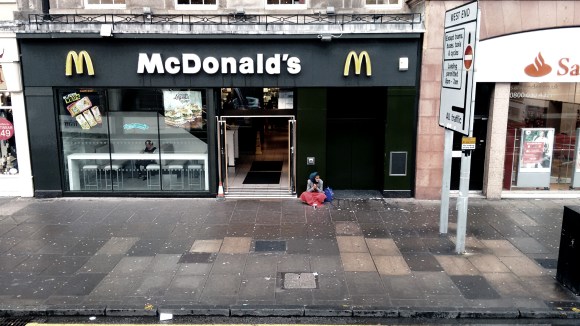
One of the very rare occasions on which a wander down Gorgie Road has resulted in a photo opportunity. Look at that sky. It’s something out of Cloud City … with the added bonus of an ALDI and a manky McDonald’s resting underneath.
One of the very rare occasions on which a wander down Gorgie Road has resulted in a photo opportunity. Look at that sky. It’s something out of Cloud City … with the added bonus of an ALDI and a manky McDonald’s resting underneath.
It’s always a treat passing through Dean Village, the soft underbelly of the Edinburgh experience. It’s how I imagine J. R. R. Tolkien conceived of an urban idyll. There’s nothing much to do here save waltz around, but one is briefly transported into a real-life Arcady.

Dean Village.

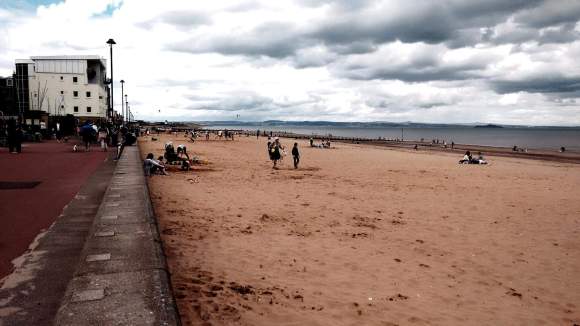
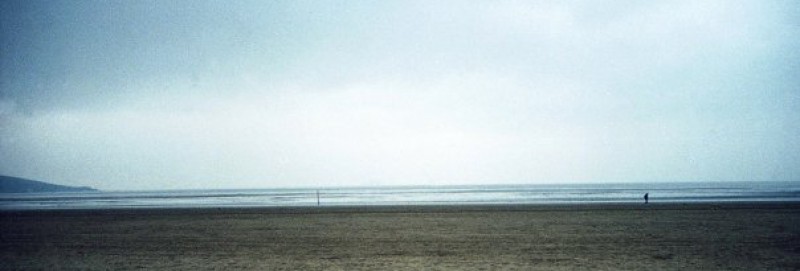
At high tide and with the waves chopping into the promenade, Portobello Beach is transformed from the plain, dreary sandpit typified by dog walkers and Strongbow-guzzling city dwellers lazing on towels with their tits out into something with urgency and vitality, a bit of drama for the afternoon. There’s nothing quite like pissing in the sea as the waves are thrashing. I like miserable scenes and I do most enjoy a good storm.
The Trainspotting of ’96 was made in that allegedly esoteric Britpop era of New Labour, swaggering Gallaghers, and unshackled chemical exploration, when the last honking remnants of Thatcher’s Britain (or Major’s) were ebbing away; a new cultural discourse on the horizon, things could only get better. I read an article (somewhere) a few weeks ago that pondered whether Trainspotting was a product of that alchemist epoch or actually created it. It’s a movie synced to its time, yet it doesn’t feel dated. Boyle’s expressionist, almost magical realist style – Gabriel García Márquez meets ’80s Edinburgh – is without gimmicks. Every tour de force shot or bravura sequence has a purpose, serving to express his characters’ experience of heroin and hedonism.
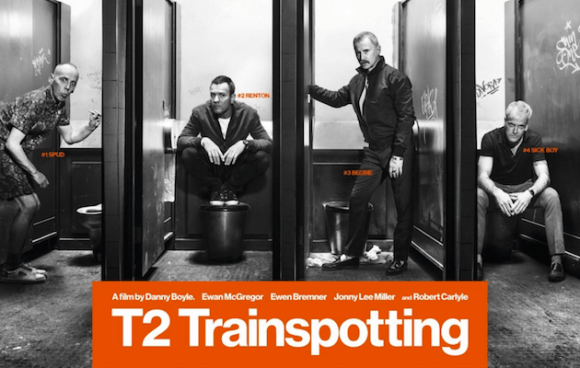
The sequel is strong. It nails how much both Edinburgh and our sensibilities have mutated over the past two decades. The essentials of modern living have altered – now it’s Facebook and Instagram and not the Compact Disc Player and big fucking televisions. Sensations are less corporeal, more about building a social narrative – it’s surface appearances and their validation that brings happiness, not the materialism of yesteryear. Edinburgh is no longer the destitute hellhole of old but a gentrified cluster of hamlets, with some no-go areas still hanging in there. I was in Niddrie last week and I must confess I experienced ‘The Fear’ – it was like another world, an urban toilet with trolls. Left behind the express train to post-modernity, you’ll never see this ‘non-place’ – as Marc Augé would put it – in a travel guide.
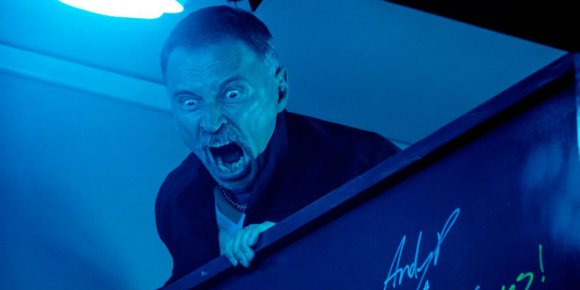
Mr. Francis Begbie in a toilet ….
There’s a sadness to proceedings, that these now middle-aged blokes look back on the shite times in a nostalgic sense, like the Ossis did (and still do) the GDR. Spud and Begbie especially wax lyrical about the rough ol’ days as if they were less a perversion and more an idyll. Familiarity doesn’t always breed contempt.
The new film has so much energy, is so visually dynamic, and the characters imbued with so much zest that it can’t be missed. And Francis Begbie is one scary bloke.
Further reading:

Meadowbank Shopping Centre on a Sunday morning. A dour consumer safari park of the most depressing order during the working hours, at first light it reminds me of Gary Oldman’s line in Leon (1994): ‘I like these calm little moments before the storm. It reminds me of Beethoven. Can you hear it? It’s like when you put your head to the grass and you can hear the growin’ and you can hear the insects.’
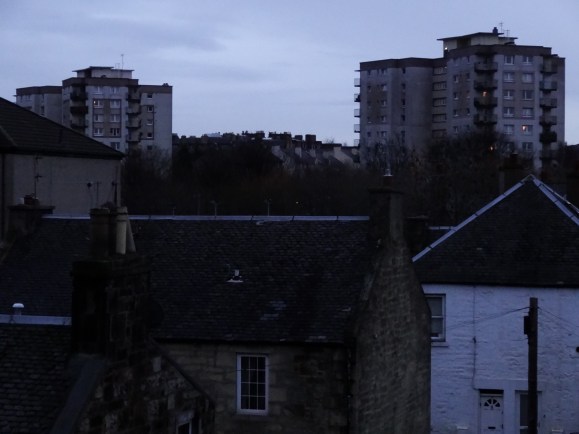
Quite possibly the most hideous vista that Edinburgh offers. These manky high-rises on Slateford Road are a gruesome portrait of Hell – tenants packed like tinned sardines in structures that wouldn’t look out of place in the Soviet Union. Still, I guess they do have a peculiar charm, a statement from a rather grim era best forgotten about.