Author Archives: Ben Gould
Copenhagen, Christiania, and … Malmo.
Copenhagen had me at … cleanliness. It’s spotlessly virtuous, and I hate dirt. There are other deal breakers – it’s not as expensive as they said, and it’s sunny in May. There are too many bikes for my liking but I forgive them this sin for I like 7-Elevens and they are plentiful. These franchises remind me of life in Thailand, and nostalgia enters. The city is so serenely relaxing, another stress-free metropolis I’ve been fortunate enough to sample. And I couldn’t find any Lego. Is its omniscience a myth?
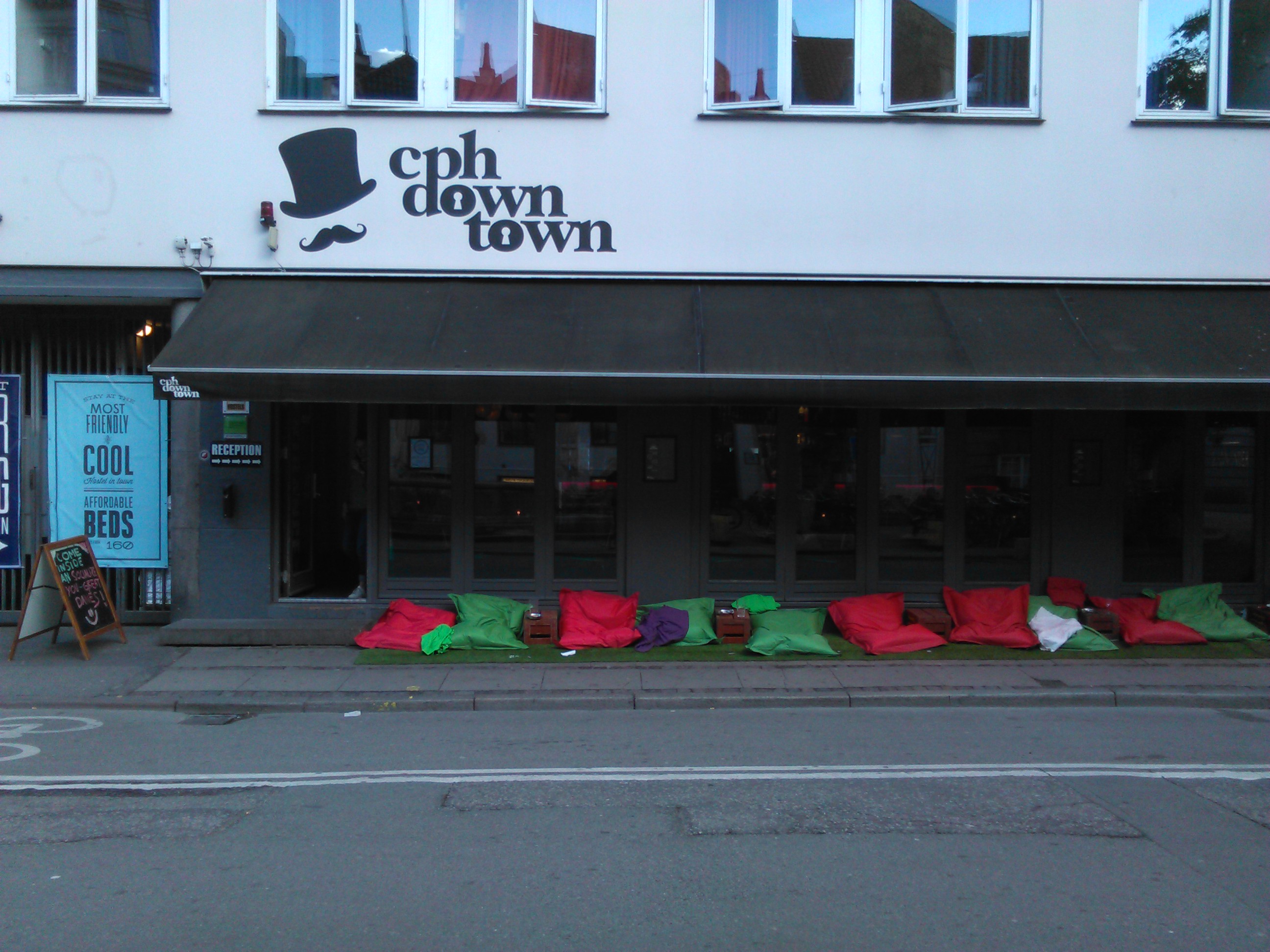
Copenhagen Downtown Hostel – a ten-minute walk from Nørreport Station – greets us with a two-for-one happy hour, a free evening meal, complementary towel, and a batch of board games. The latter are jettisoned in favour of a trek to a local sushi place and then The Globe Irish Pub. Here we watch the UK General Election results with the Irish manager, knocking back Jägermeister and a peculiar mouthwash concoction of his own making.
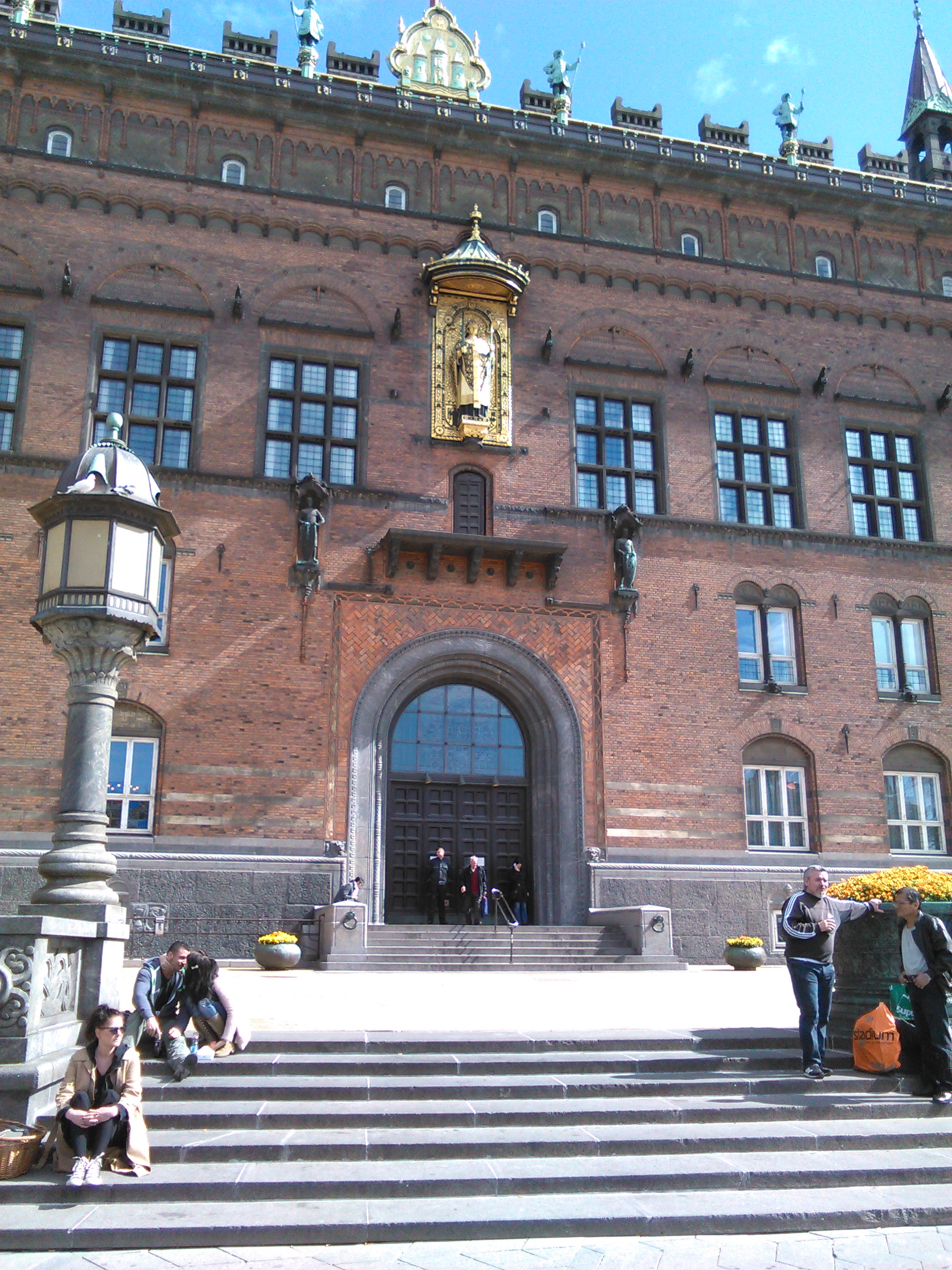
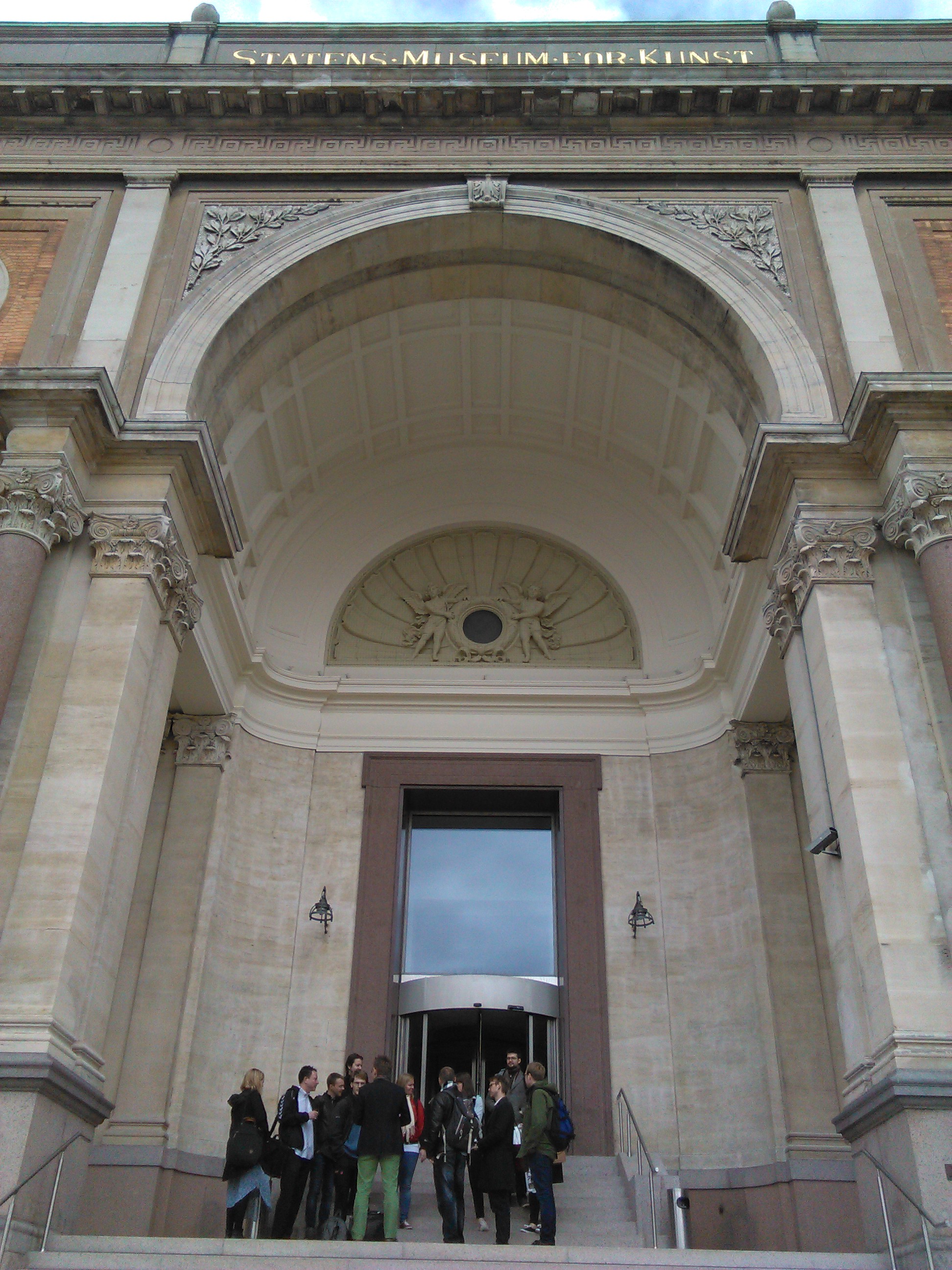
A brisk wander the next day with a few smokes and cans of Tuborg brings in Rosenborg Palace and The National Gallery of Denmark; here I unearth a painting of a noble from yesteryear who is the spitting image of one of my friends back in Edinburgh. Amused, I take a snap and promptly upload it to facebook. I’m very proud of that. We also look for The Royal Danish Arsenal Museum but end up in a pub.
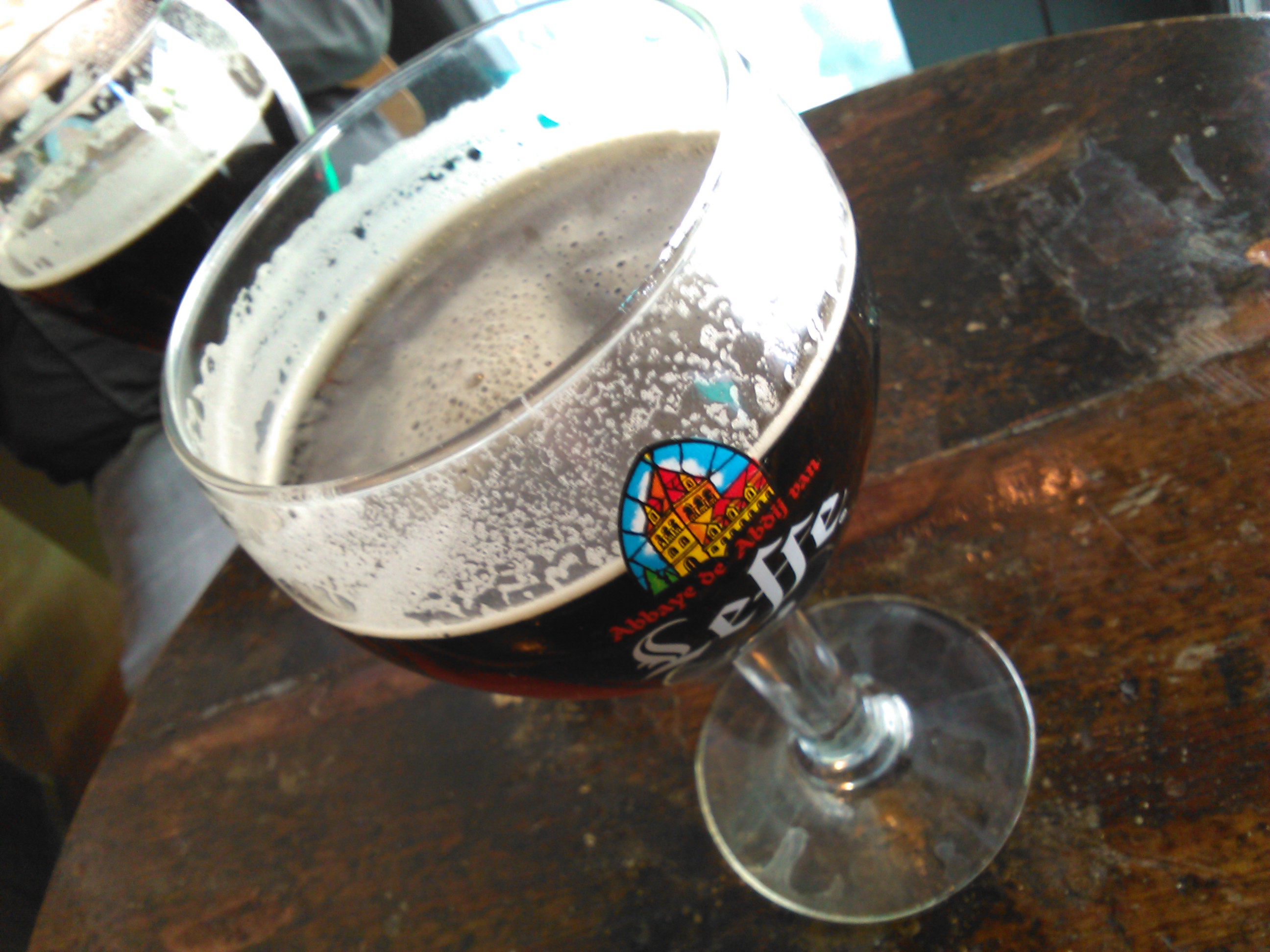
A walking tour in the afternoon culminates in a trip to Christiania. No photographs are allowed here, we are informed. I see why. An Anarchist commune, its Pusher Street market-sellers peddle cannabis from mock-camouflage stalls; speed and cocaine is more discreetly offered at standing bars and eateries. Pre-rolled joints in the sun by the river, we chat about airline safety, Lego, and the feasibility of setting up a commune. We proceed back to the hostel followed by Taphouse, a delectable bar close-by housing over 60 beers on tap.
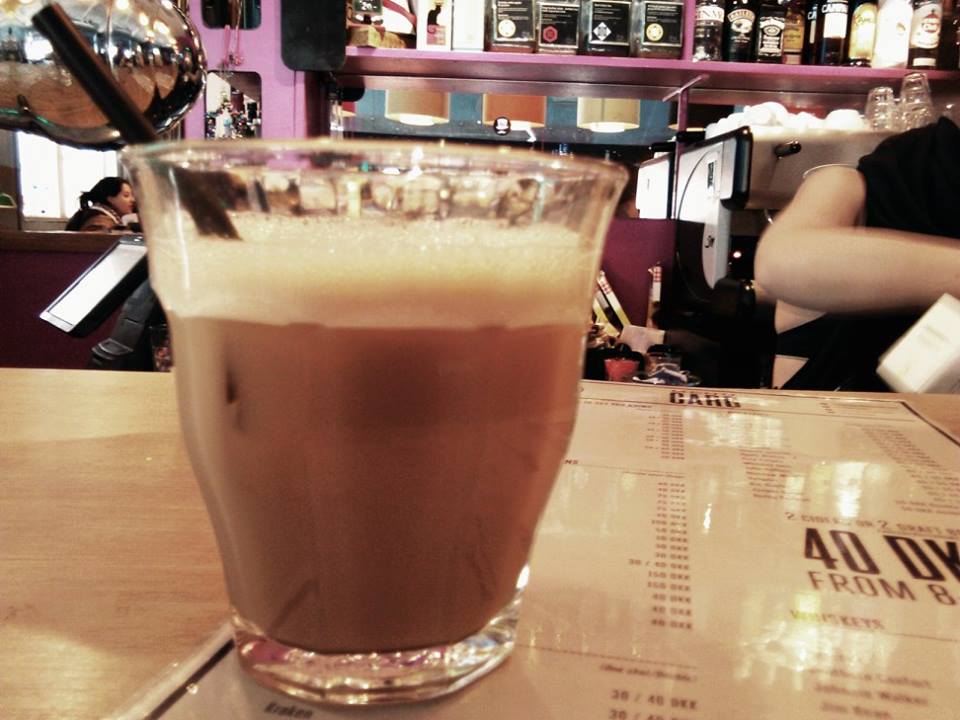
The nearby Swedish city of Malmo over the border I find to be a snore, a vacant square of near-empty bars, adjacent streets deserted – the highlight was the train journey in. An hour there was enough. I wonder why the ghost town exists, and feel sorry for the Swedes that they have to put up with it. Cursing our foolish endeavour, we indulge in White Russians back at the hostel, first from the bottle and then from the bar. The evening is a blur, but happy faces feature in the photographs.

We depart the next day downtrodden. There is also the sense that more of the city could have been seen, but then compulsory evening boozing usually cuts out the number of ticked attractions. The only irritating Dane I find is at the airport. The security bloke confiscates my can of tuna chunks. Presumably this is a dangerous weapon. The mind boggles. Anyway, I’ll be
back, Copenhagen. You’re a cracker.
48 hours in Geneva.
Switzerland. The cliches abound – Toblerone bars, watches, cuckoo clocks, neutrality, and Nazi gold. I recall that film The Bourne Identity (2001) in which Matt Damon’s Jason Bourne tracks down a safety deposit box in Zurich, unearthing a black bag full of cash, passports, and a gun. I always wanted to open one of those and leave a Freddo bar inside merely for my own subversive amusement.
The reality of a trip there was much different. A building – save the local Lidl – was not set foot in. Geneva was a cracking sojourn; I’ve seldom wandered the streets of such a peacefully serene metropolis. There was no semblance of crime. In the United Kingdom we have a species called ‘Chavs’ – tracksuit-clad reprobates without a talent for public silence or the ability to spell. No such creatures reside in Geneva. This is impressive. So, too, is the free transport. Is this what a rich country consistently hitting top spot on the HDI guarantees? I contrast this with Budapest, where one is confronted by revolting ticket inspectors upon every metro visit. In Geneva there’s not a mutant in sight.
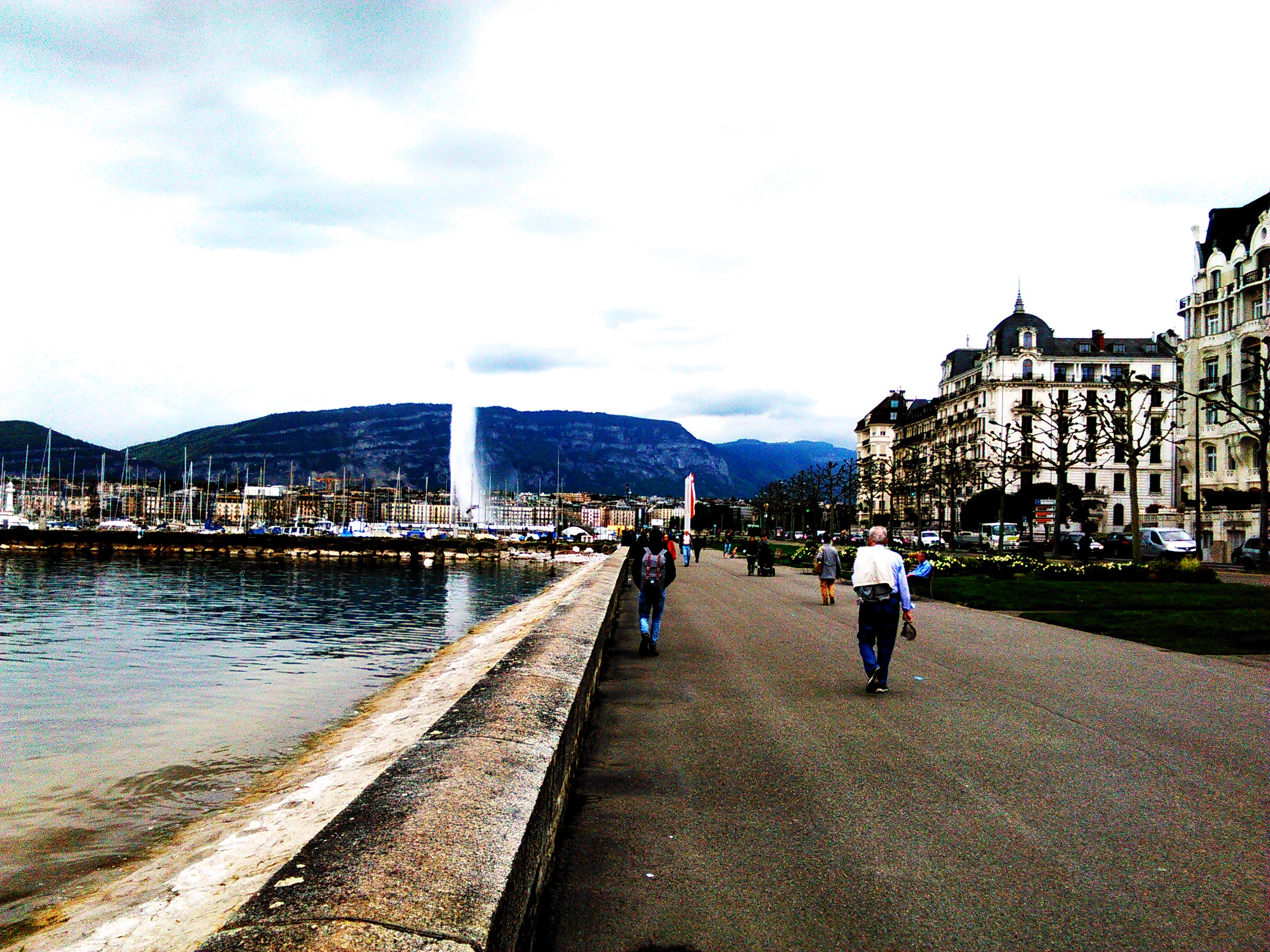
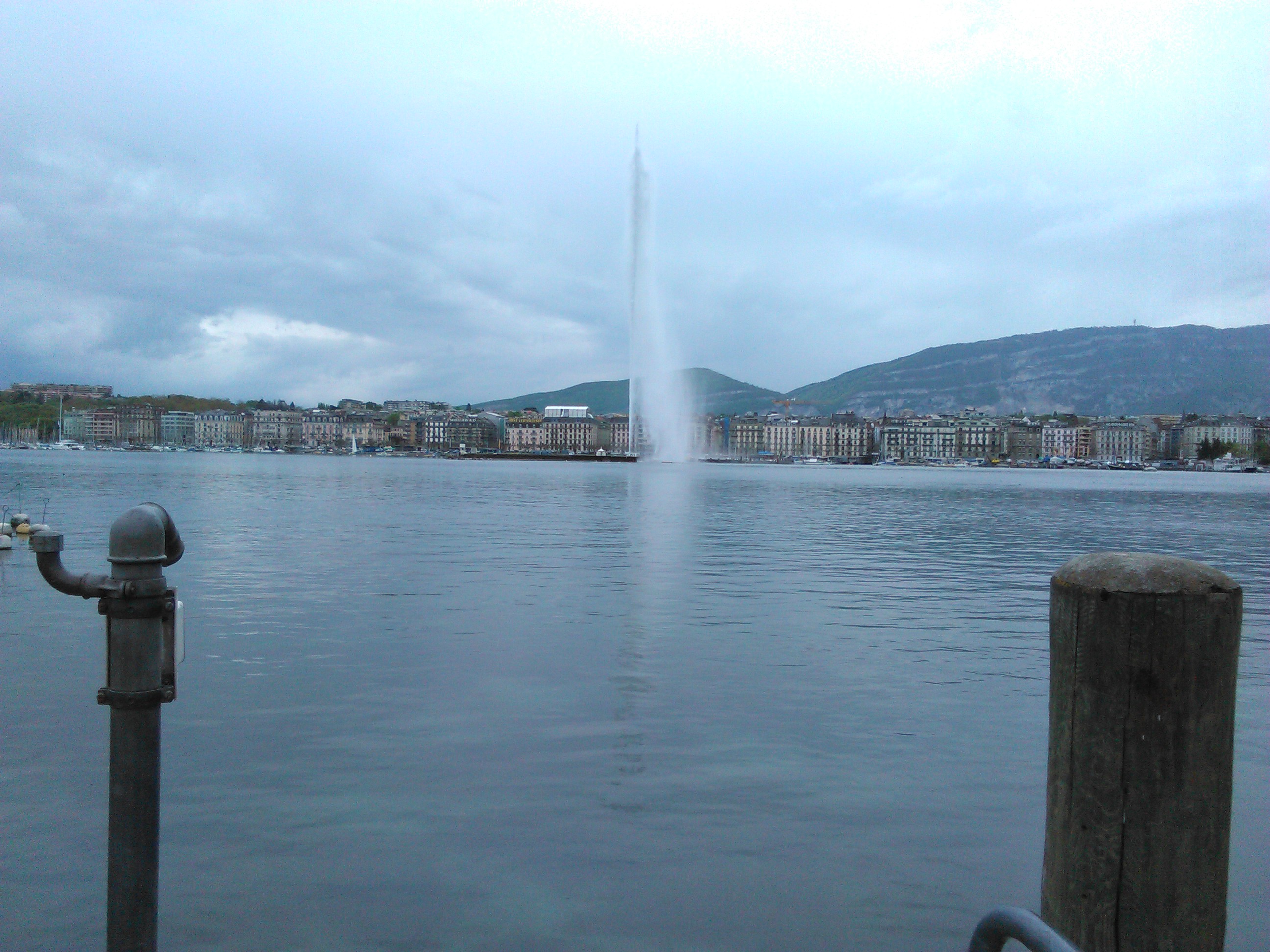
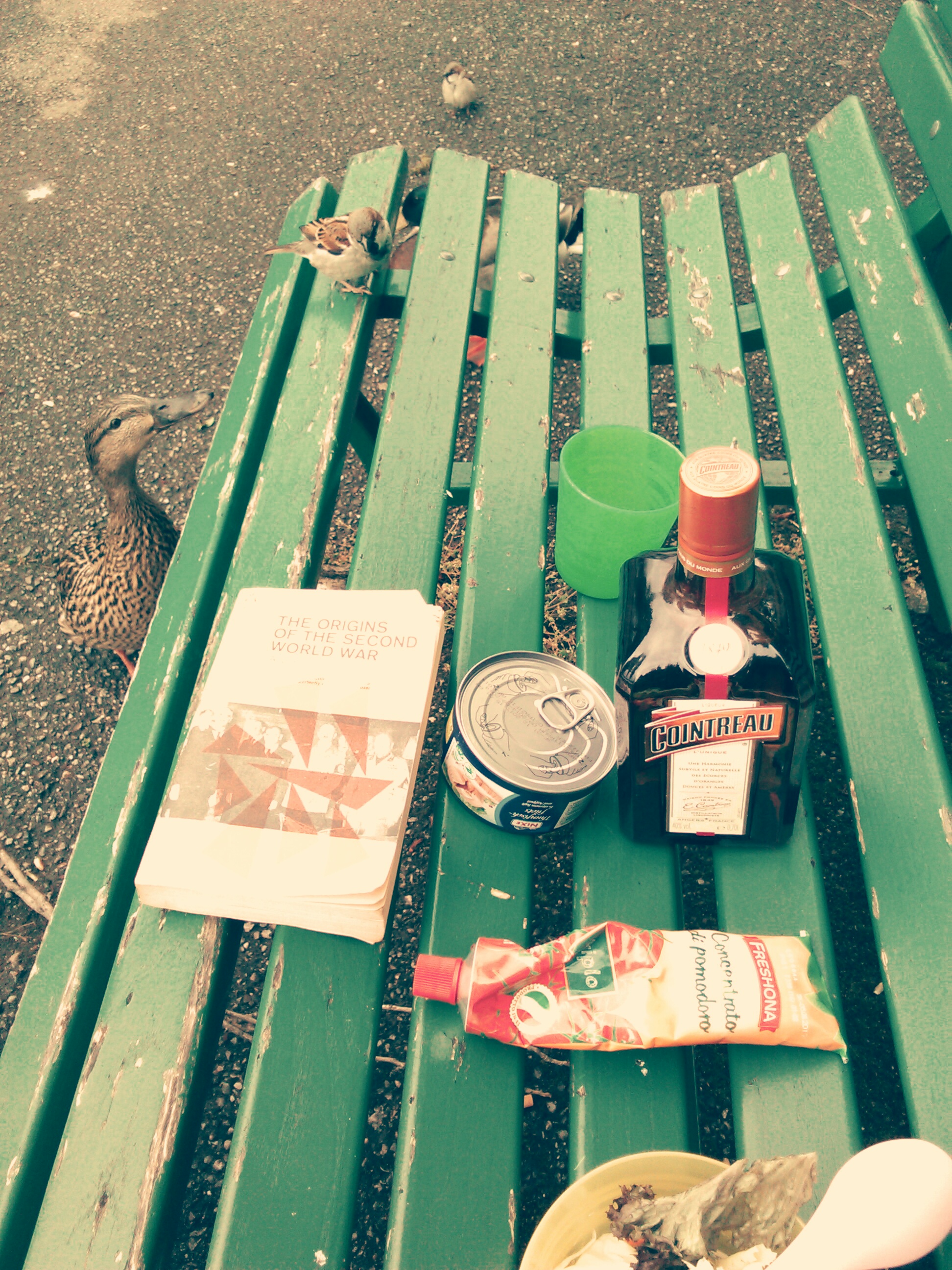
I loved the gargantuan public ejaculation that is the Jet d’Eau fountain. I have no idea why it’s there or how it works, but it is verily amusing, a Wagnerian anomaly amidst the adjacent cafes and kiosks, The climate, too, was conducive to thoughts of grandeur. I sat on a bench by the shore reading A.J.P. Taylor’s The Origins of the Second World War whilst guzzling on Cointreau, a posse of ducks getting involved for remnants of my Lidl-purchased tuna chunks. I considered this productive, for thoughts of conquest swirled around me.
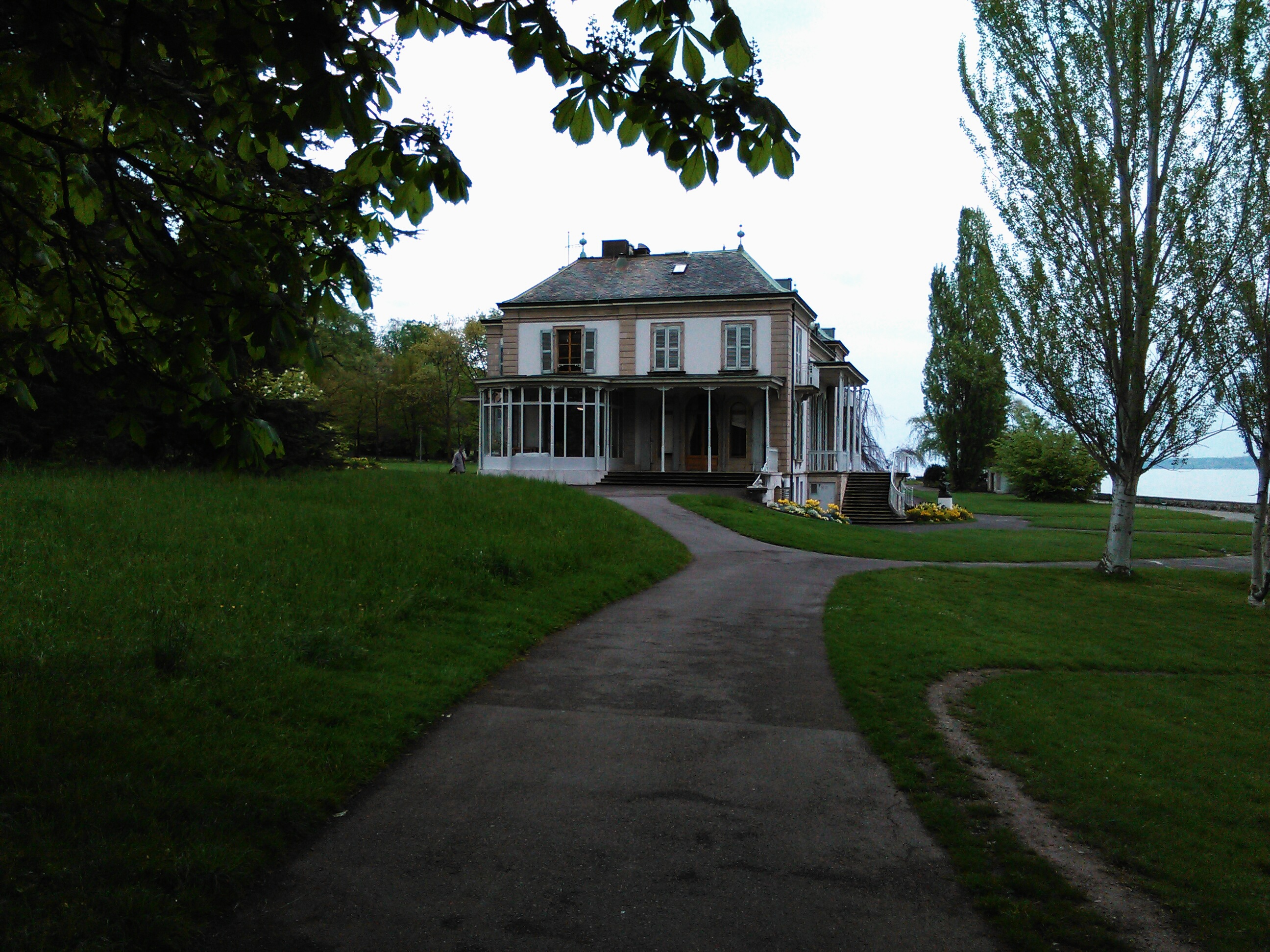
The bars were a triumph, pricey but, dare I say it, gnarly. There’s a repetitive theme, and it’s an addictive dogmatic naturalness of the leisurely – pints are poured like they’re milk, no one is screaming, shouting is non existent, drunkards play chess instead of brawling.
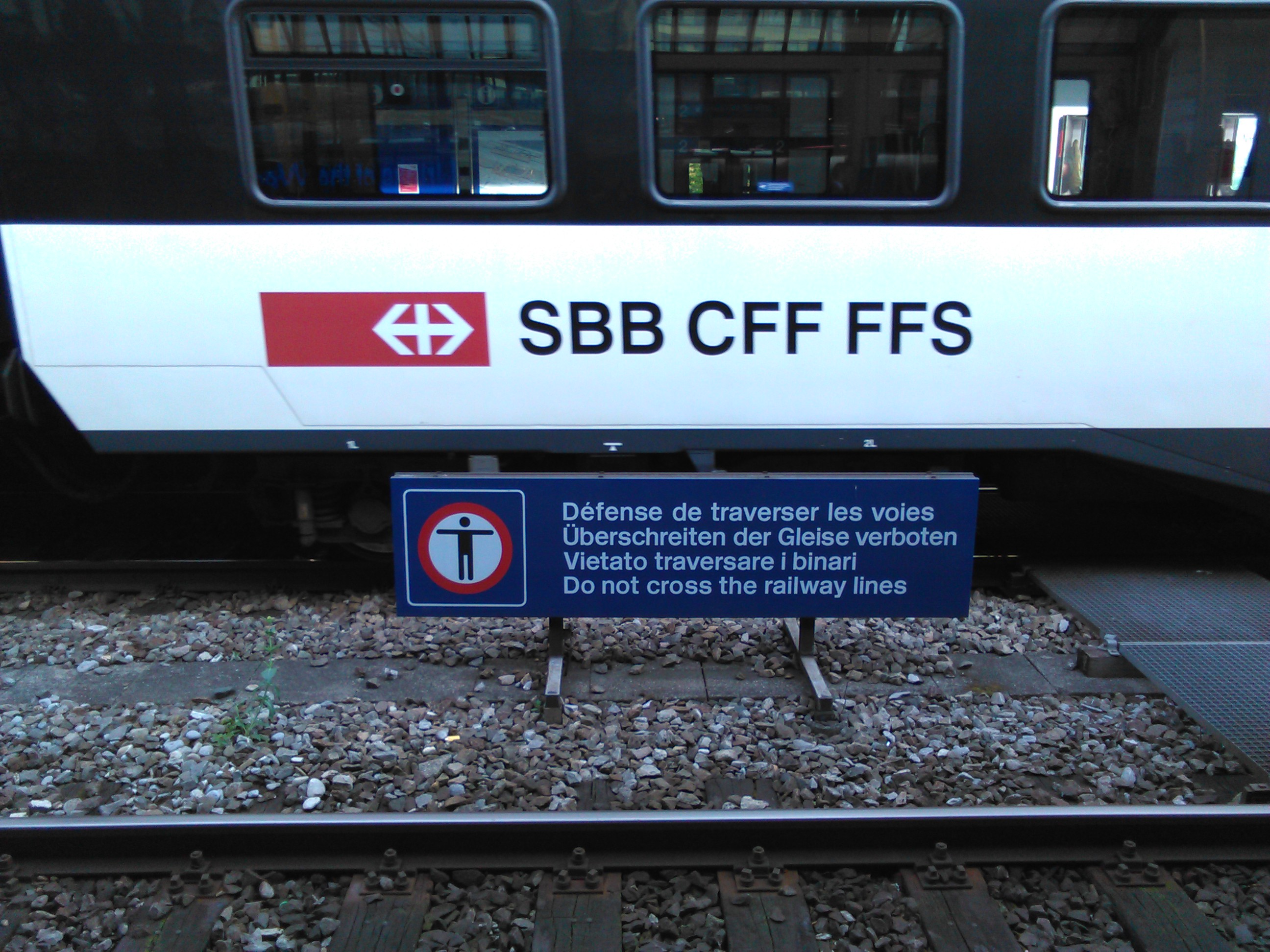
N.B. I neglected to visit the watch museum. This is mainly because I have no interest in watches, or the history of watches, or a museum dedicated to watches. If one day I become a zealous watch obsessive, I shall venture in there. But no, I cannot envisage this outcome.
In summation, Geneva is a belter of a trip. And I’m going back in the summer. I miss that booze-and-book bench already.
Malta, apropos of nothing.
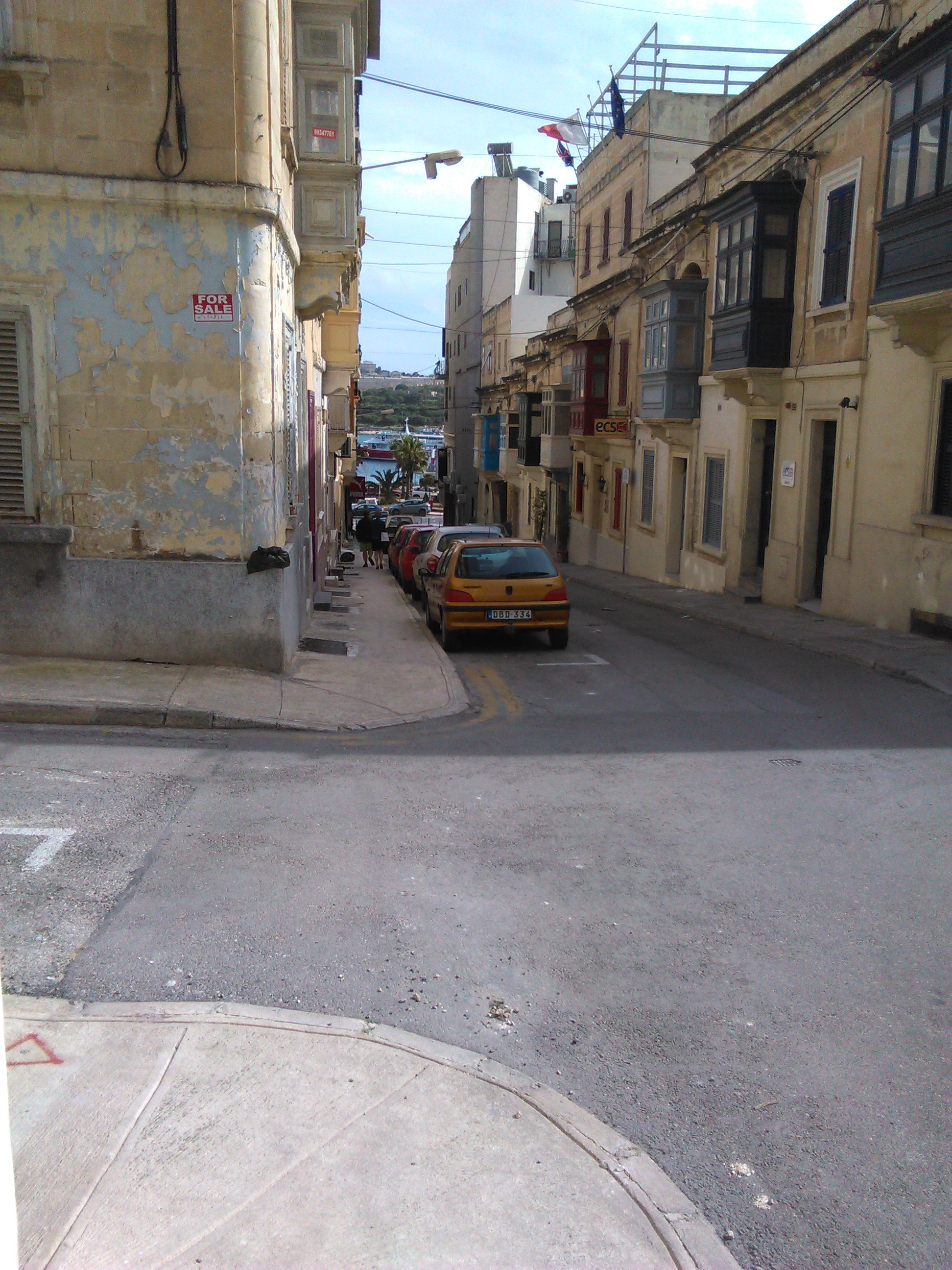
My trip to Malta is verily the most unproductive of my pitifully frivolous quest to be bequeathed the ‘World’s Worst Tourist’. Perhaps it was the stupor-inducing sun, the leisurely pace to everyday proceedings, or the wicked temptations and pernicious effects of bargain booze. Or maybe it’s that the dingy pub interior and human chat has always been more arresting to me than landmarks. The slobbishly adopted modus operandi of dying in bed until 3:00 p.m. probably doesn’t help; seeing the Eiffel Tower for the second time in 1999 as a drowsy 13-year-old on a Havana cigar set the tone. Deducing that the nearest pub was more aesthetically pleasing than an 1889-established structure was an opinion I was entirely comfortable with.
Sometimes the hostelling experience offers too much, the cracking hard-to-believe stories from strikingly peculiar strangers enough to make me pronounce: “Sack the sights, I’m just here for the craic.”

A 20-minute bus ride from Sliema to Valletta and back for a restaurant meal was the most geographically adventurous achievement in five days of decadence. Additionally, I thought I
glanced a shark fin in the Sliema sea en route to that chicken breast in Valletta. This was a rare exotic highlight. As it turns out, there was no shark, but then I was no Quint.
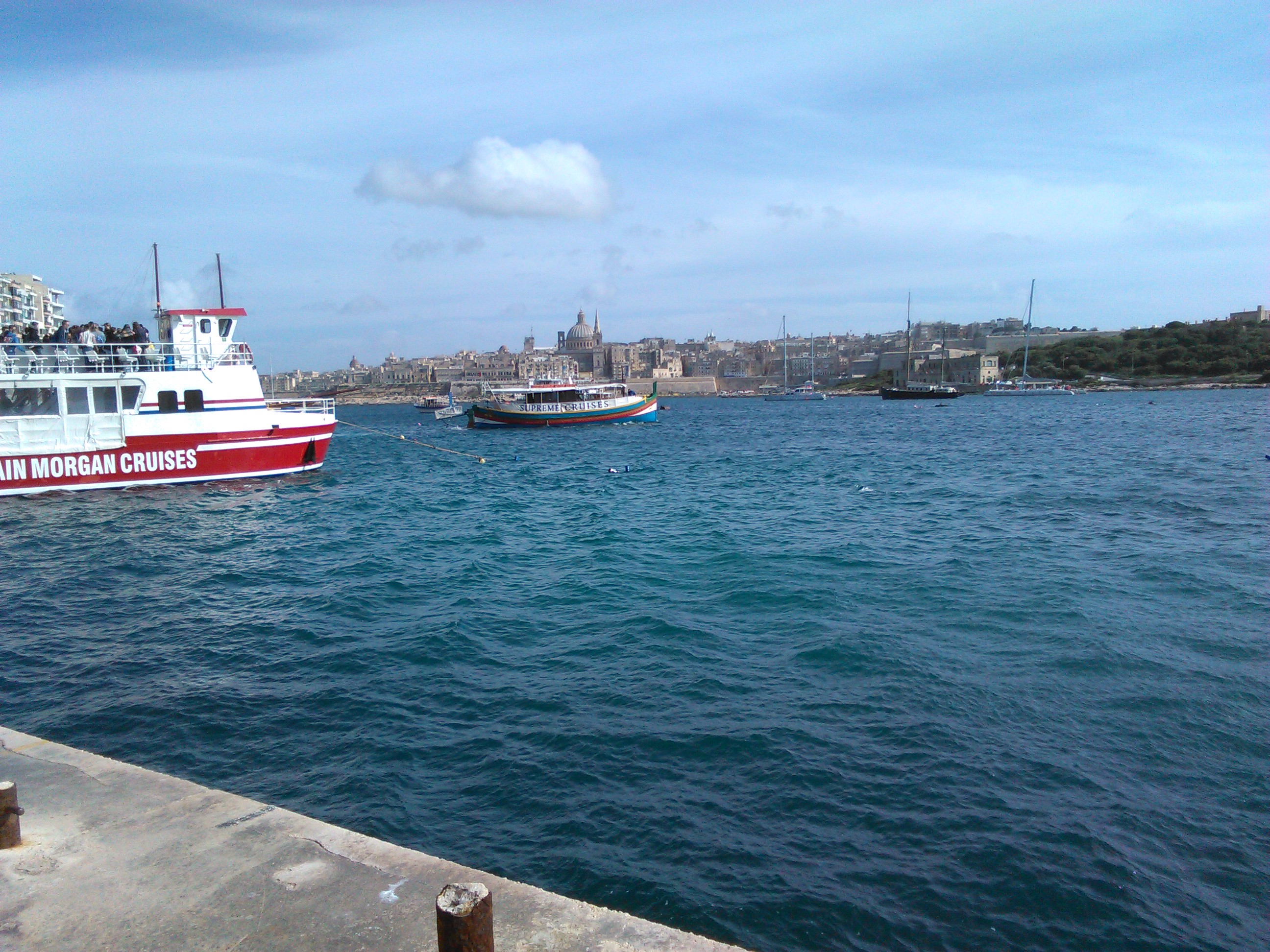
The travel script was well established after day one: a brief stroll around the seafront, a hunt for sustenance (compulsory can of tuna), the acquisition of spirits, a saunter back to the hostel, drinks, an exit at darkness to the local bars. And repeat. To be a walking cliche is not something to which I aspire, but I did it anyway. I can express with conviction, though, that the bars were lovely, and the people warm and welcoming.

And in summation, what did I do and what did I see? There was a car crash (not mine), a seagull taking a shit on a drunk woman (not my fault), a blocked bar toilet (not my fault), and a bloke outside a newsagent reciting Phil Collins’ ‘Sussudio’ (excellent choice, pal).
And to the charming Helena Bonham Carter doppelgänger who refused to let me pay for the damages of four dropped bottles of beer on your off-licence floor, you’re awesome.
In the lifted words of Douglas MacArthur: “I shall return.” Only this time I’ll pay my respects more and at least invade the Popeye Village with a hip flask.
Anyway, time for a nap.
Return to Oslo.
Being back in Oslo was like returning to the office late at night because you’ve left your house keys on the desk – it’s a veritable grind. And then upon exiting for the car park you find you’ve been billed for the trouble.
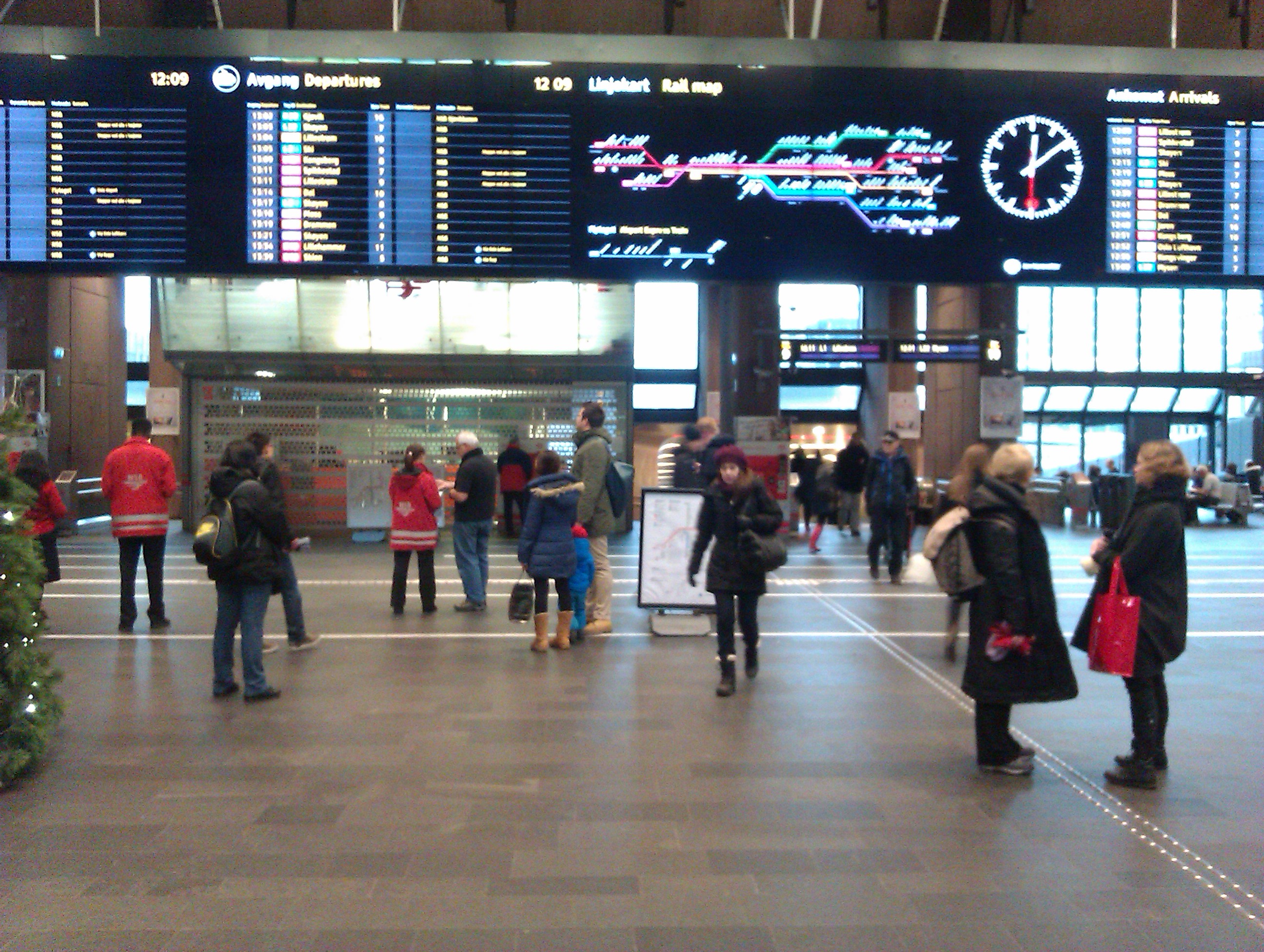
Extortionate prices and a prosaic air characterise proceedings. I’ve seldom so struggled to pick out positives amidst the nausea; the capital has the delightful charm of a dilapidated skip. Boring, lifeless, and rather without purpose, I think I’d rather run around an Edinburgh B&Q for half a week in my underwear than go back for a third time.

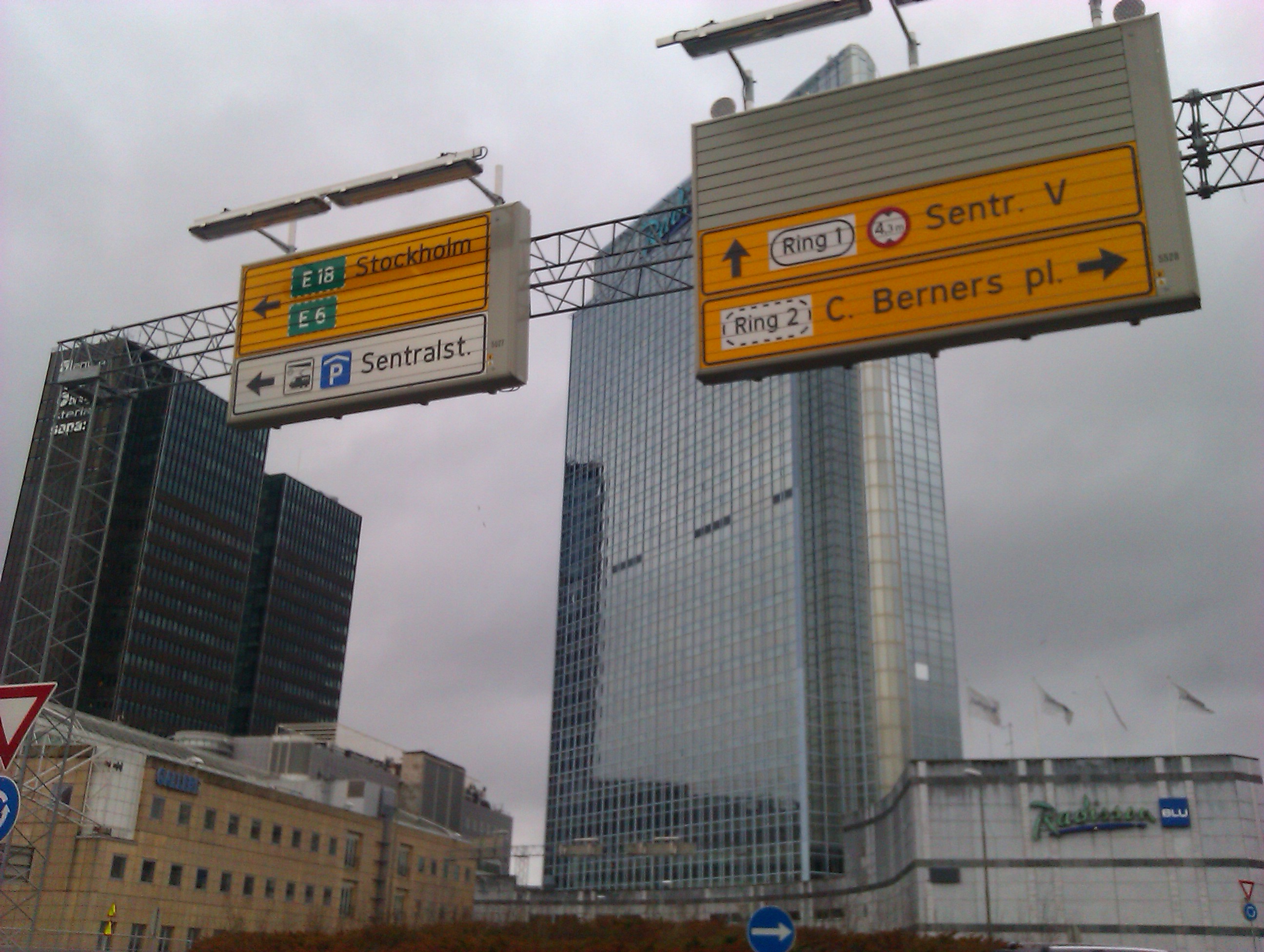

Nevertheless, there remain some highlights from my four-day bimble:
1. The company was cracking, Duty-Free purchased alcohol further amplifying the extended soirée.
2. The hostel Wi-Fi was decent.
3. I stumbled across a seagull the size of an albatross. This amused me.
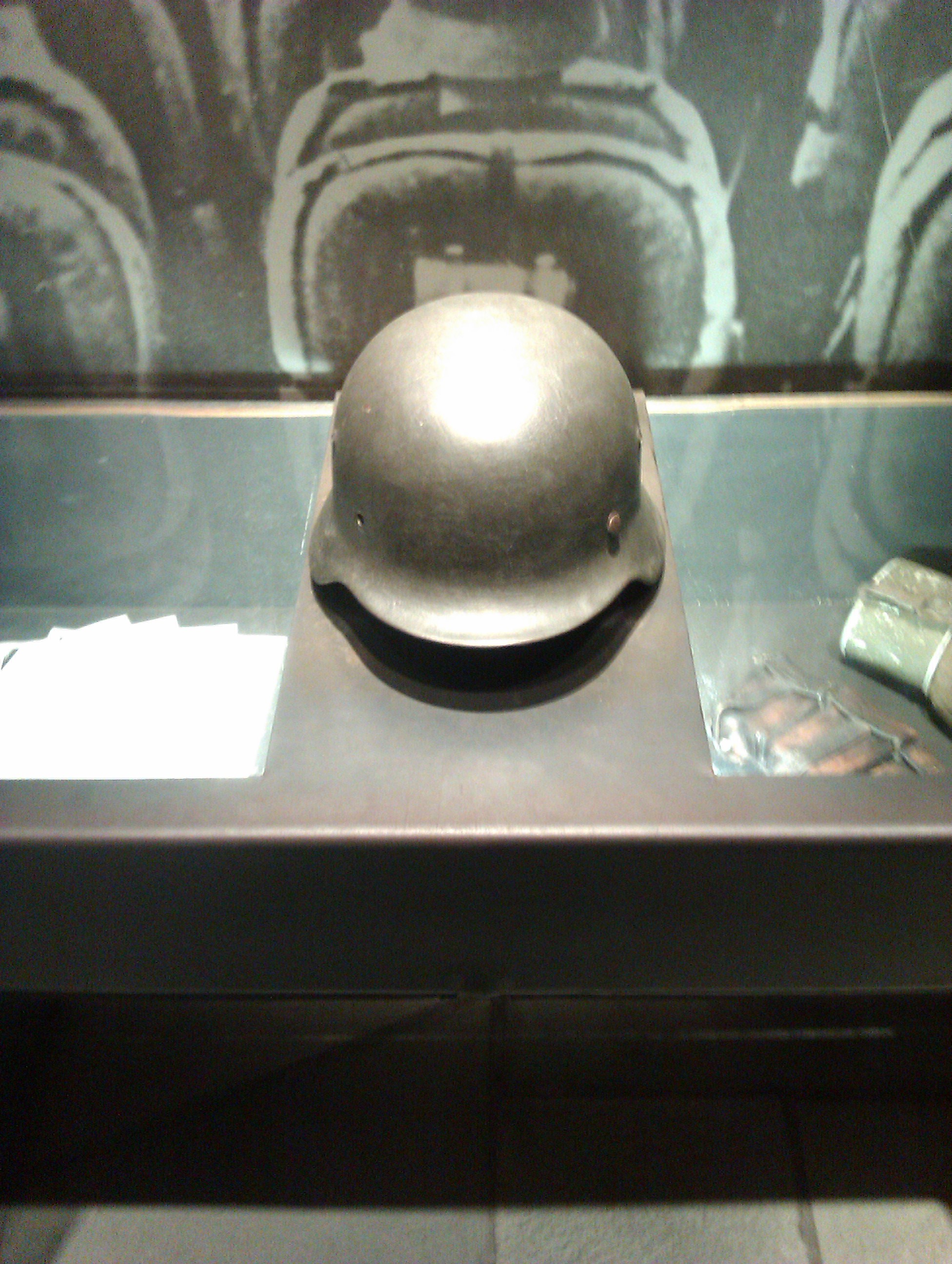
4. Norway’s Resistance Museum enlightened, and displayed an impressive array of period pieces.


I am told that the ugly tedium of the city in no way reflects provincial Norway, nor the country’s incredible wilderness. I shall investigate and report back.
Warsaw, Gdańsk, and vodka by night (mostly).
Stalin’s Gift.
Here I’m speedily jettisoned off the No. 210 bus – 33 Zloty and 35 km from Warsaw Modlin Airport. The Ryanair cheapie from Edinburgh was booked well in advance for a cheeky £20. As is tradition, I insouciantly drop-kicked my one carry-on bag into the measurement apparatus to the aghast look of the boarding attendant. I’m very proud of that.
What a welcome Plac Defilad is. Stood in its epicentre is the Warsaw Palace of Culture and Science, an art deco building designed by Lev Rudnev in the socialist realist style. Only later am I told that it’s wholly despised, sixty years after its completion. Passers-by tut and scowl as I take photos. I see it now – it’s a highly contentious structure, an immovable reminder of Soviet oppression and Cold War stagnation. With no plans to demolish it, the adjacent buildings all compete for prestige. Poland’s very own Tour Montparnasse, I rather like the nonchalant anachronism of it all.
I find Warsaw a citadel of cubistic form, a Jackson Pollock-splattered architectural morass. This style, that era – any vine sprouts on the city grid. This haphazard approach to urban planning I appropriate as an inspirational theme for my trip. I discard any notion of consulting the Rough Guide and opt to instead ‘go with the flow’ – which essentially comes down to wandering in all directions, apropos of nothing. It’s also piercingly cold, but I have a hat, scarf, and gloves.

Vodka.
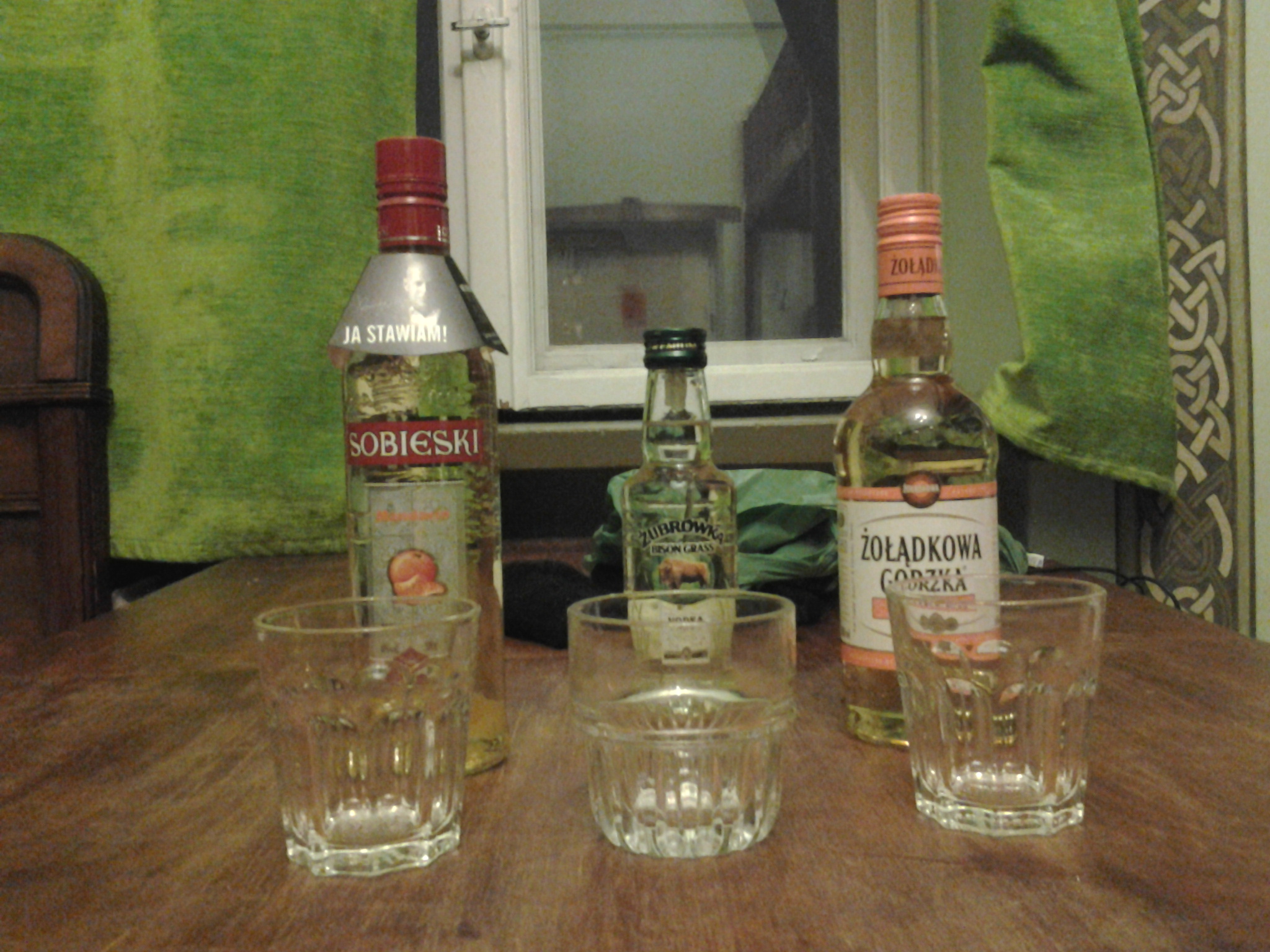
A pub crawl kicks off from my hostel abode, and what a ubiquitous tipple vodka appears to be, the hostel bar, local supermarket, and all drinking dens on the decadent trail hosting archipelagos of ‘wódka’. It’s verboten in the streets and this bamboozles me for it’s the national drink, omniscient in its consumption. I can’t handle the stuff straight up, opting for Żubrówka with apple juice every time. I ask a buxom barmaid why the locals don’t seem to sip their treasured ethanol, instead preferring to down it. “Why would we burn our mouths many times over, stupid?” is her reply. That’s me told, and amateur that I am, “lightweight” Chupa Chups shots fortify me in subsequent bars.
The exact number of establishments escapes me, and I remember little save that I was borderline freezing and figured alcohol would warm me up. Lost on my return to the homely Oki Doki Hostel on plac Dąbrowskiego, I weave in and out of Warsaw’s high-rises. Barely discernible shouts emanate from up above, disco tunes (I detect La Roux’s ‘Bulletproof’ at one point), and intermittent zany screams. I eventually hail a cab and for a mere 20 Zloty I’m driven back to the hostel. The driver speaks impeccable English. He politely enquires why we all litter Eastern Europe with stag events and associated mayhem. “Because it’s cheap,” I reply. The evening concludes with an absurd 3:00 a.m. jog around the park, a 20-minute sweat session draining a barrel of spirits from my equipoise.
The Warsaw Uprising.
The Warsaw Uprising museum, completed only in 2004, is located in the Wola district. An exhaustive and chaotic topography of 1944, the Uprising’s remnants and accompanying text are seemingly thrown around the interior space at random. I meander through the inferno lost, trying to make narrative sense of the exhibits – a rusty Panzerfaust used in the revolt seems the most apt totem on display. Therapeutic order is found afterwards in the nearby supermarket, where I’m presented with yet more neatly stacked pillars of tatanka possibilities. Security guard: “This one, good (points to vodka on bottom shelf). This one, good (points to vodka on top shelf). This one, very good (points to vodka on middle shelf).” Oh, no ….


Max.
Max never leaves Oki Doki Hostel. When I first arrive at 9:00 p.m. he’s sat in bed; when I leave two days later he’s slumped face down on the table by the window. I spot him in the hostel bar one evening maniacally typing away on his laptop in the corner. Max – who doesn’t drink alcohol – waxes lyrical about Polish post-war history, talks non-stop of the Warsaw Pact, and even the role of Pope John Paul II in smashing the Iron Curtain. I surmise he’s a student of Polish history, such is the passion of his delivery. A bloke in his mid-30s, of medium height and build, with thick Ray-Ban glasses and a shaved head, he’s perpetually decked out in a white t-shirt and green khaki shorts. There’s not a moment for reflection in his staccato monologues, never a comma or full stop. Heralding from Krakow, he’s easily the oddest, dare I say it, most interesting hostel character I’ve met in quite some time. All the best, Max, wherever you may be … in the hostel.
To Gdańsk on the Polski Bus.
The bus station adjoins Mlociny Metro station, the most northerly stop on the single north-south line. I hop on board and find a seat. A woman pushes in front of me and I sigh; she reciprocates with a prolonged grimace. The website and the bus conductor proudly proclaim the existence of plug sockets. I can’t find them; after a nine-minute scour I am nonplussed. And the free Wi-Fi is rubbish. Is last night’s vodka compromising my cognitive abilities? I’m crestfallen. But at 32 Zloty it’s a bargain ride, and the seat is comfortable. We depart at 12:30 p.m. for Gdańsk. The sights – cars and fields – are unremarkable. What did I expect? I take a few snaps, count the number of salted peanuts dropped on the floor by the guy opposite, and then nap for five hours. I have an amusing dream but quickly forget it.
Happy Seven Hostel.
This hostel is situated on Grodzka Street a 20-minute walk east from the central bus station. It is a delight, with every dorm-room elaborately themed; I’m staying in a room called ‘Construction’ chock-full of rusty building-site materials hammered to the walls. The receptionist, Agnieszka, bestows upon me a token for the bar next door called Degustatornia. I nip over with the intention of savouring a few local delicacies and end up sampling a surfeit of Polish beers – the Dojlidy Porter, Okocim Palone, and Zywiec Krakus linger the most.
Captain Phillips (2013) is showing on the Widescreen TV when I arrive back. Another Tom Hanks vehicle. The bloke is forever restricted to the ’90s for me; I’d like to keep him there. I find the movie an utter snore, and see I’m not alone as a few guests are napping on the sofas. We travel and we watch films; the act is somehow made more exotic because it’s done abroad. I’m duly invited back to Degustatornia by Agnieszka, who introduces me to a hazelnut-flavoured vodka shot. All plans for a civilised late-night trek around the city cancelled, I spend the next several hours in the bar discussing World Cup 2014 and the popularity of alcopops in Britain with a group of native students drinking Tyskie. Upon exiting, an elderly lady with a pet ferret informs me that Poland possesses more coal reserves than most of Europe combined. I don’t know if this is true, but she says it with conviction. My head aches, my cheeks are perpetually flushed, my legs are stiff. I fear I’m beginning to physically decompose.
Gdańsk Port.
I wake up – still shattered – at magic hour, and the first thing that strikes me about the port of Gdansk is that the seagulls there aren’t afraid of me. My run along Motlawa river produces no frenzied reactions – only indifferent squawking. This sounds extremely trivial, but seagulls typically scurry off when I approach. Anyway, regarding the make-up of the port itself, I see cargo and cranes, trucks and vessels. I’m immediately reminded of The Wire season 2. Is that silly?
Jogging into the dense crowds, I contemplate the city’s former reverence as the free port of Danzig, the subsequent WWII ruination, and its extensive rebuilding by the Soviets. There is indeed an odd medieval feel to the place, as if a strict architectural style has been stipulated by committee. The only snaps I can muster are from my Android; they are terrible, blurry, scream the amateurish. I’m quite crafty with a camera, but not on a hungover ramble.
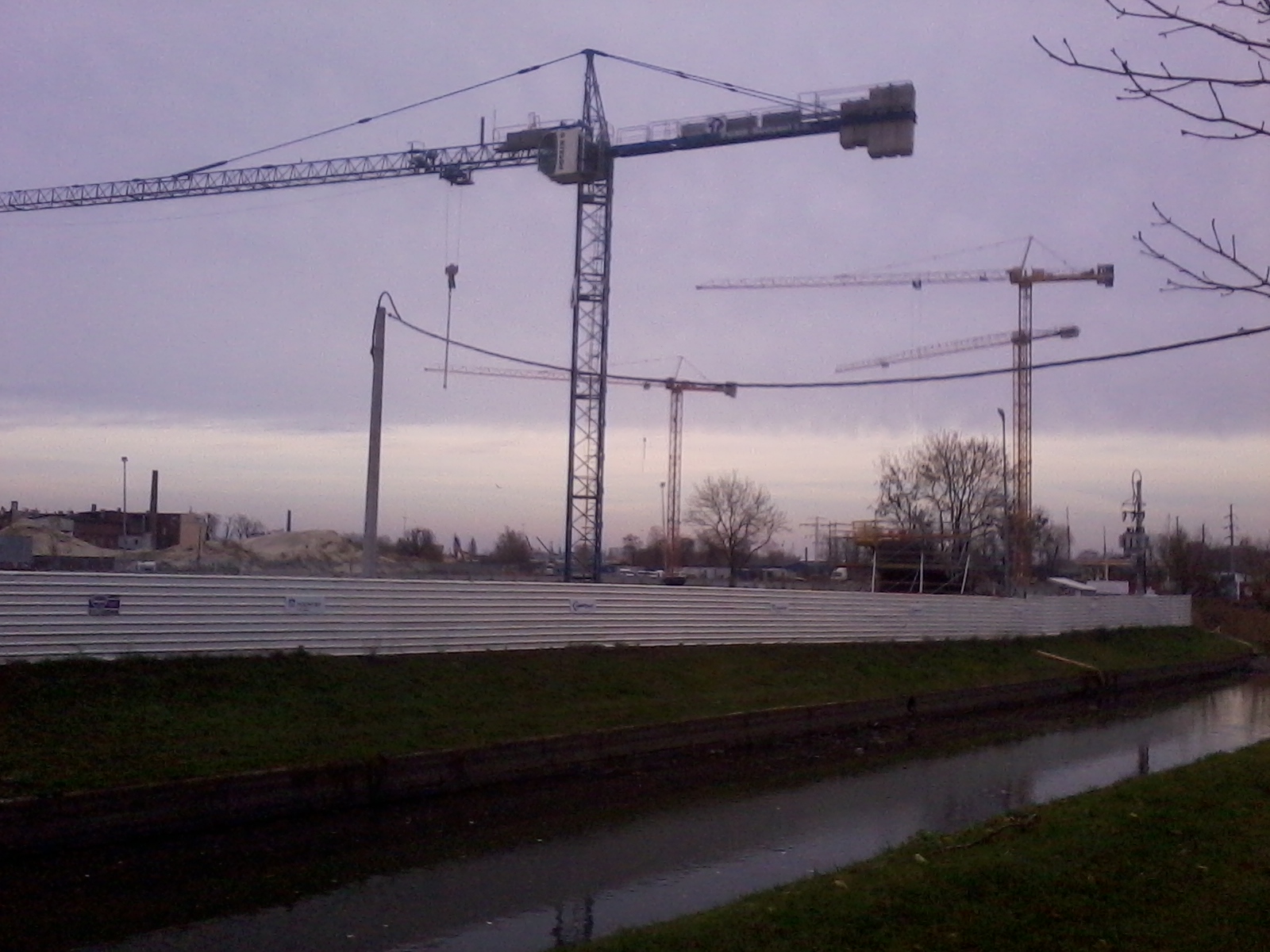
Darkness descends, and I’m the most kinetic human within a two-mile radius. I think this is essentially Gdańsk – relaxed, understated. Though heavy-eyed and very groggy, I am happily content to explore its quarters and take in the Baltic air. I pass shops, restaurants, pubs, a few churches. I reflect on nothing; no profundity of thought arises. I am concrete, being-in-itself. Sometimes it just happens.
Sopot.
A train from Gdańsk Glowny to Sopot sets me back 4 Zloty and takes 15 minutes. I wander through small forest enclaves and plush detached houses to the nightclub area, where I’m greeted with a sparse array of modern light-techno establishments. Most are empty. The milieu is deserted. Consulting Sopot on Google images, I see a charmingly art nouveau seaside town. Perhaps I should have arrived earlier. After a four-hour reconnoiter and a 45-minute chat in a nightclub smoking area with two locals about Breaking Bad, I depart in darkness, as I arrived, from the train station. Drifting off into wanted dreams, I consider a life of travel and wonder if I’m capable – if I can push myself, ride the shattered moments and pursue the serene. I don’t know. The inspector wakes me up at Gdańsk Glowny and I crawl like an inebriated snail up the street back to my bunk.
Gdańsk Airport.
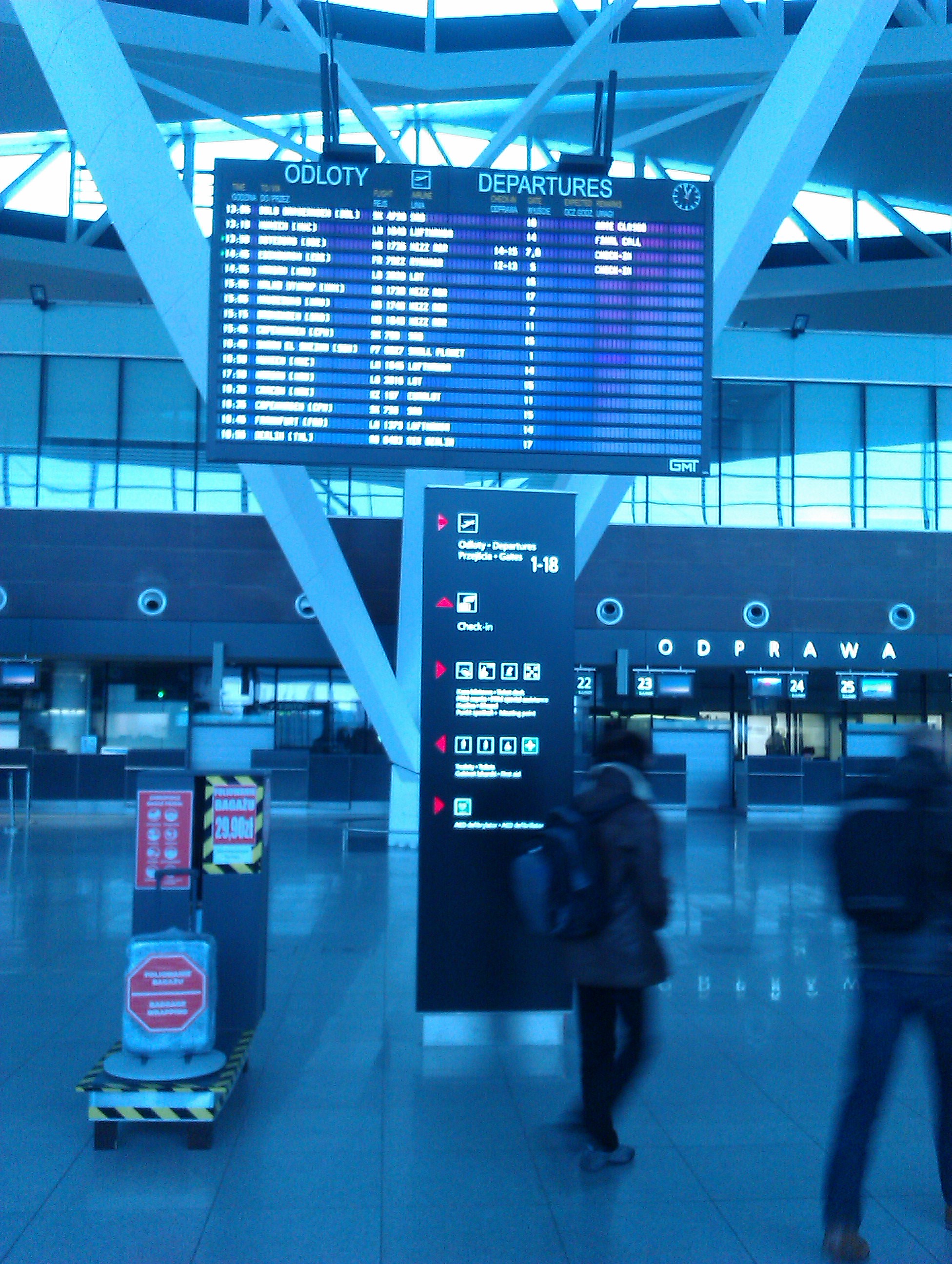
The No. 210 bus from Gdańsk Glowny to the airport is a mere 4 Zloty. It’s a witheringly long journey (30 mins) after yet another evening of vodka. I spend the ride gormlessly staring out of the window for my first sighting of a Lidl; in almost every city on the continent I’ve spotted one. I pass only anonymous buildings, though, and more bus stops. Disappointing. At the airport I grapple with my credit card in Duty Free. Żubrówka dominates the store. Deep breaths, an emerging pool of sweat by my feet. I compose myself and repeat: “No more alcohol. Enough.” It’s Ryanair so the usual scramble ensues, my priority-boarding envy kicking in once again. I reach my seat, put in my headphones, and plonk my head against the window as some soothing Enya speeds up my slumber. I certainly overdid it on the vodka, but it felt like the right decision at the time. Farewell, Poland. You’ve been nice to me. I may return one day, and behold your treats in daylight.
Kraków – Jan 2015.
A city awash with historical hang-ups and replete with stunning architecture, cheap bars, cheaper hangovers, rude, grimacing supermarket staff, chatty hobos in the park, blizzards, and omniscient Żubrówka. I came, I saw, I drank vodka, and then I left more than satisfied.


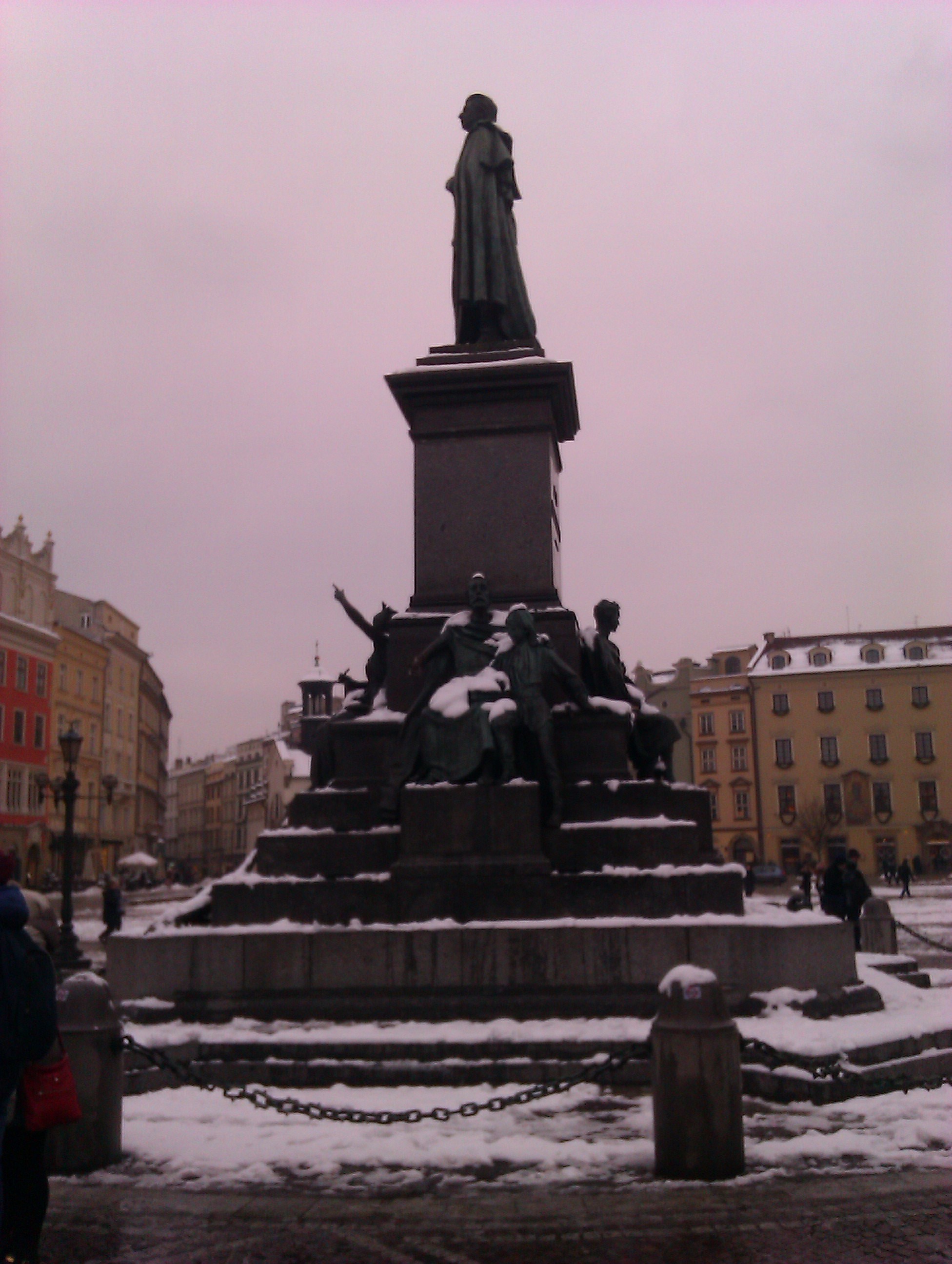


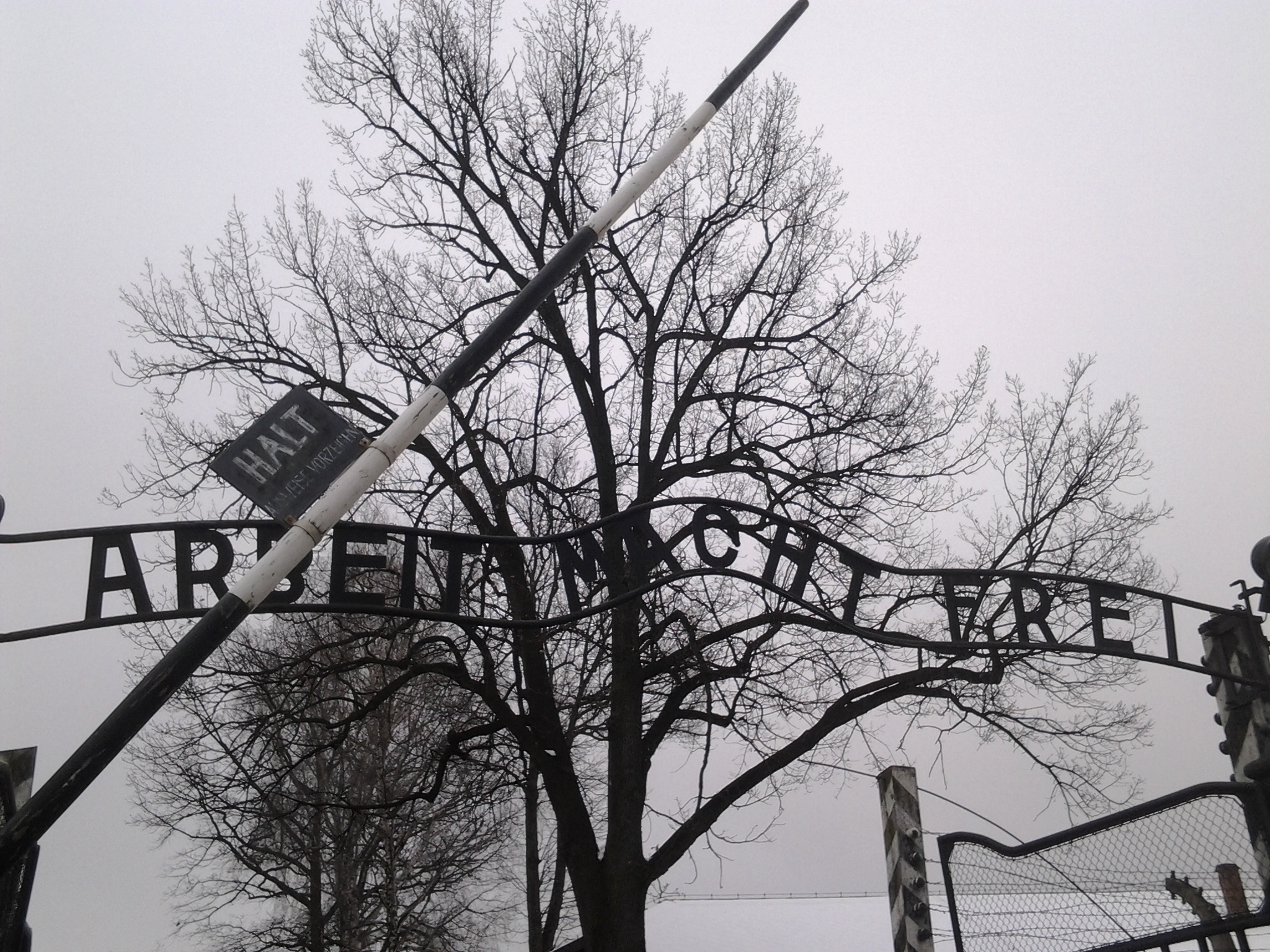
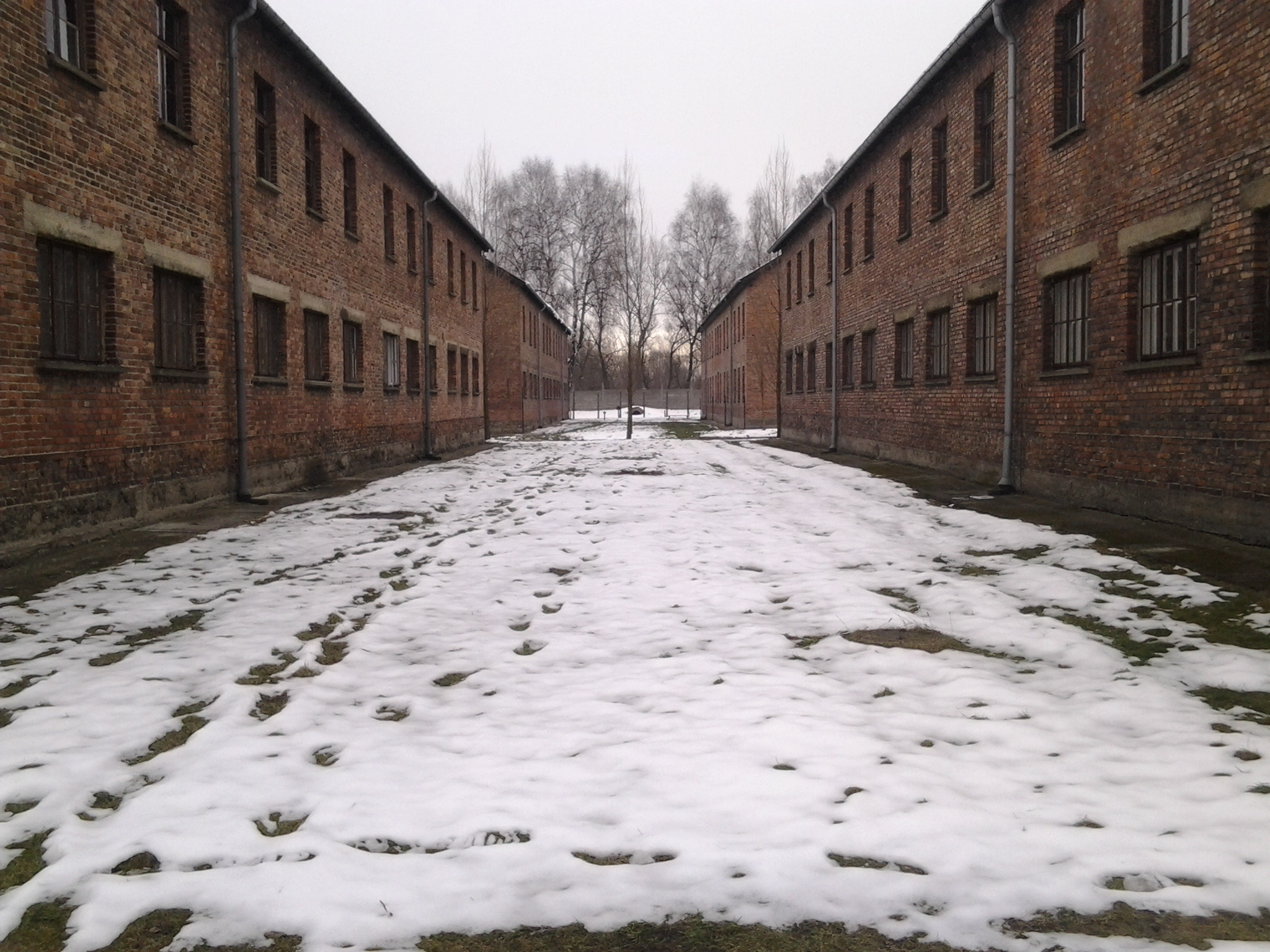
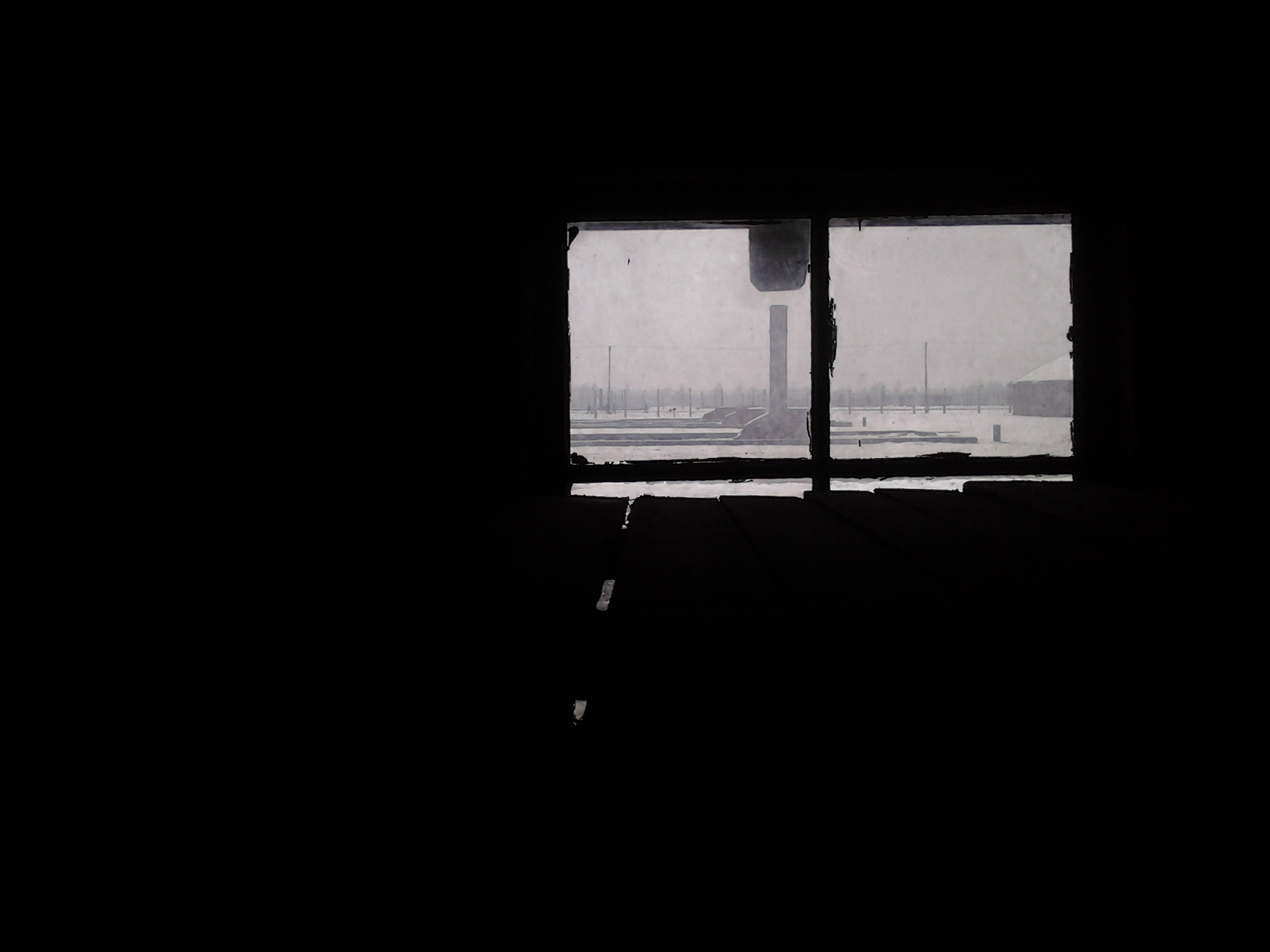
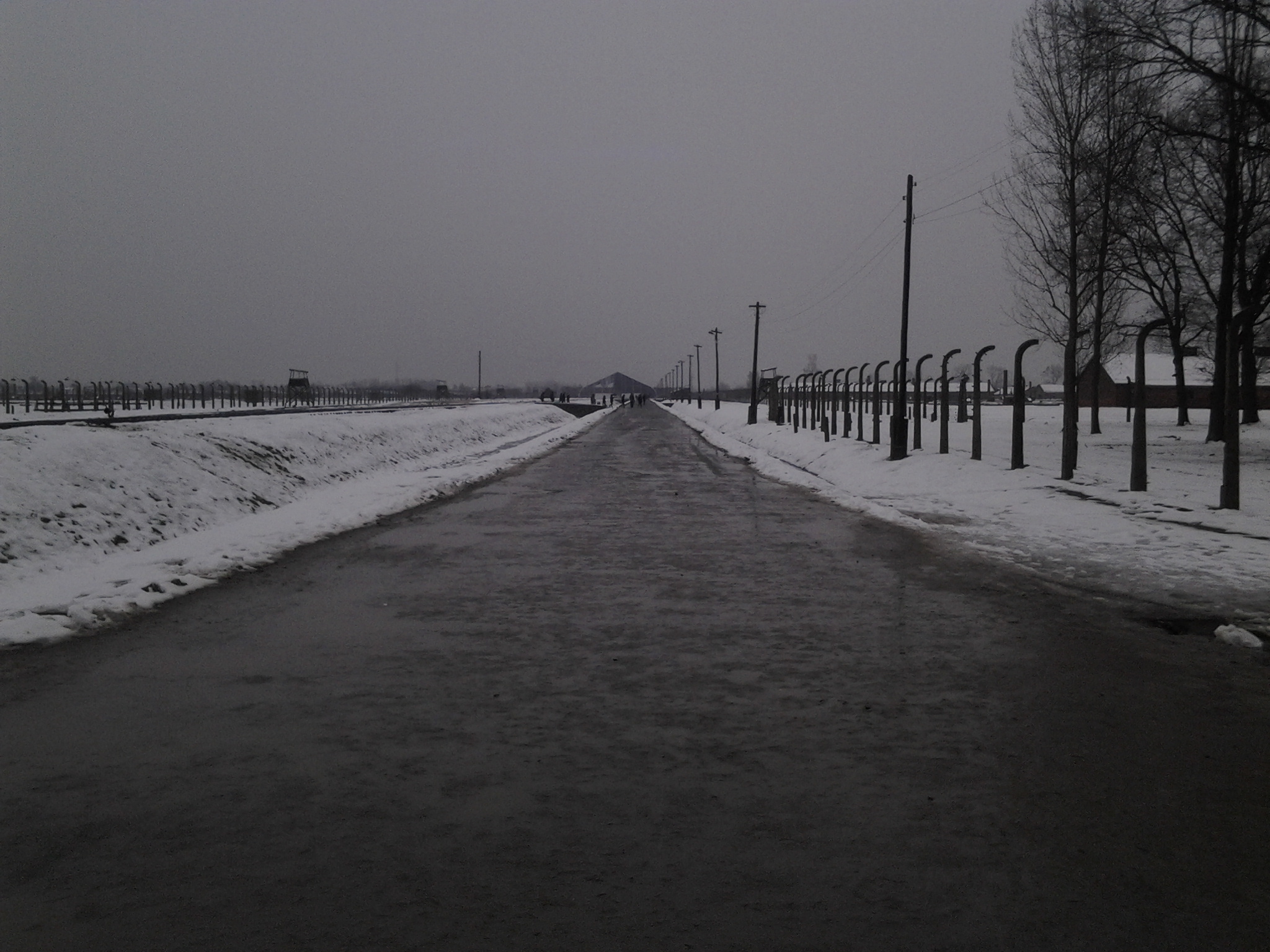
Auschwitz – January 2015.
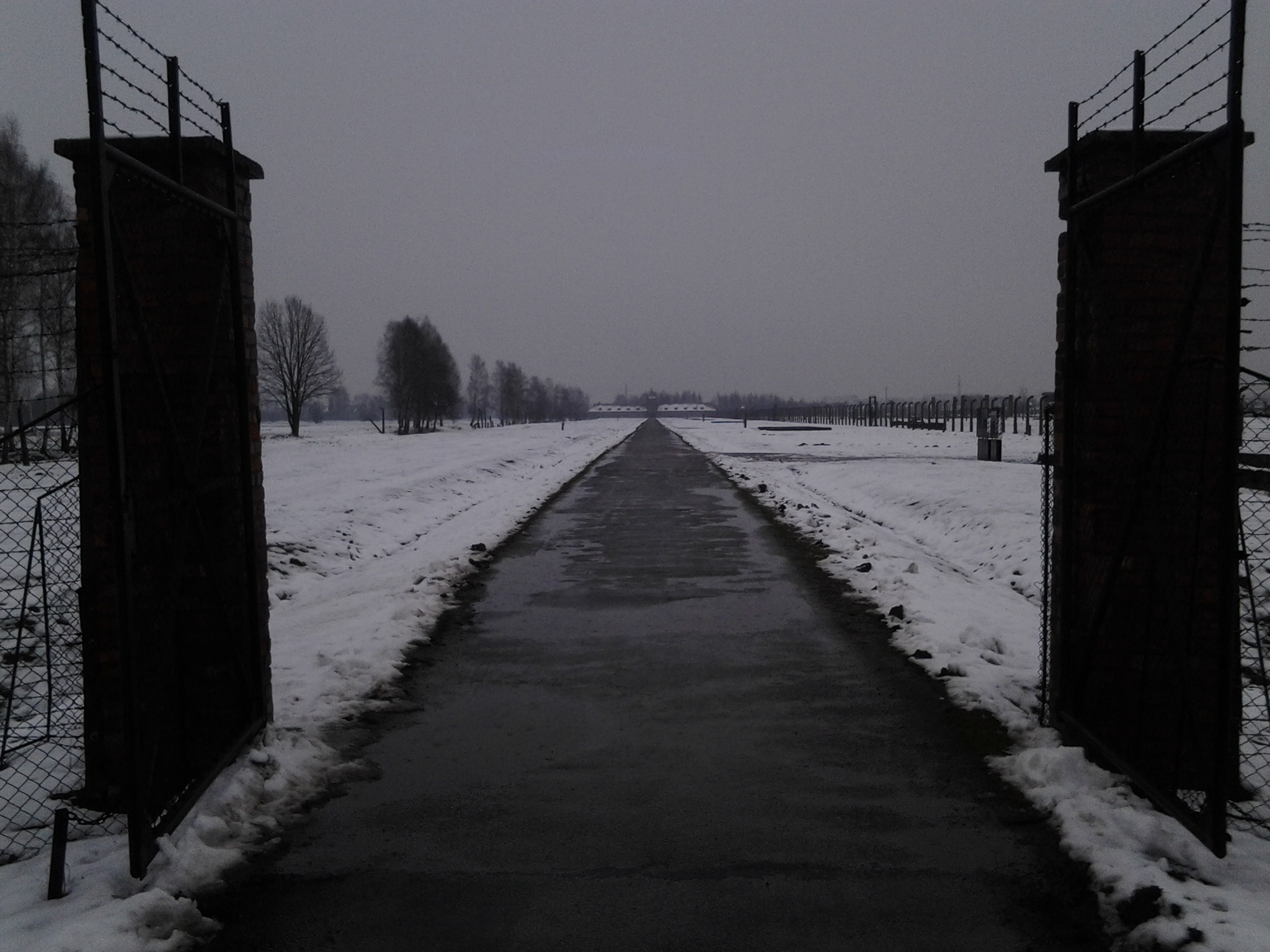
I arrive in Auschwitz the day after the 70th anniversary of the camp’s liberation by the Red Army. I ramble around in a miserable blizzard, apropos of nothing. I find it difficult to connect myself to the suffering; it’s an alien place to me. An unspeakable crime, I struggle to put myself in that moment in time. Is this what human beings are capable of? It seems so. I depart in a foul mood, which is merely compounded by a flick through the news headlines later that day – murder, bloodshed, war, carnage. Welcome to Earth, I guess. I arrive back in Kraków and immediately hit the beers and vodka. Horrible history.






Kaunas and Riga – impromptu frolics in the Baltics.
I’d been to Tallinn, Estonia, back in 2011, fully aware of its reputation as a riotous enclave chock-full of boozed-up Brits on stag events. There was a bit of that, but the city and its outskirts revealed so much more than a mere drinking hive. When three friends told me of their plans to visit Lithuania and Latvia on a Ryanair cheapie, I jumped right on board. A single carry-on bag with three changes of clothes and I was set.
A 6:40 a.m. flight out of Edinburgh Airport into Kaunas and we’re greeted by a mild breeze, not this ‘Baltic freeze’ I dismiss as propaganda. A €2.40 bus ride (No. 29) to our hostel on the corner of Kestucio Street – passing through Soviet-style ’80s suburbs on the way – and we head to a nearby restaurant, Berneliu Smukle, on the recommendation of the receptionist after briefly checking in.
Its interior is an indelible sight, a kind of hunting lodge theme with a taxidermist’s yearly output adorning the walls. Large stag antlers overlook our table, and we deduce that it’s definitely not a vegetarian hang-out – there are even guns plonked on shelves. I’m immediately struck by the delightful purchasing power of the Lithuanian lita. They say it’s always the Brits who compare countries based on the price of a pint. On such a basis, I’m instantly high-fiving Lithuania. I personally devour a Manhattan, a piña colada, and two local beers for the equivalent of €12.
Around the corner at the east end of Laisves aleja (Liberty Boulevard) sits the Church of St. Michael the Archangel, a Neo-Byzantine style church constructed between 1891-1895. Across the road outside the Mykolas Zilinskas Art Museum bizarrely sits a large statue of a naked man performing a ‘Come at me, bro!’ pose. When Kaunas was under the Soviet yoke, something tells me this wouldn’t be permitted.
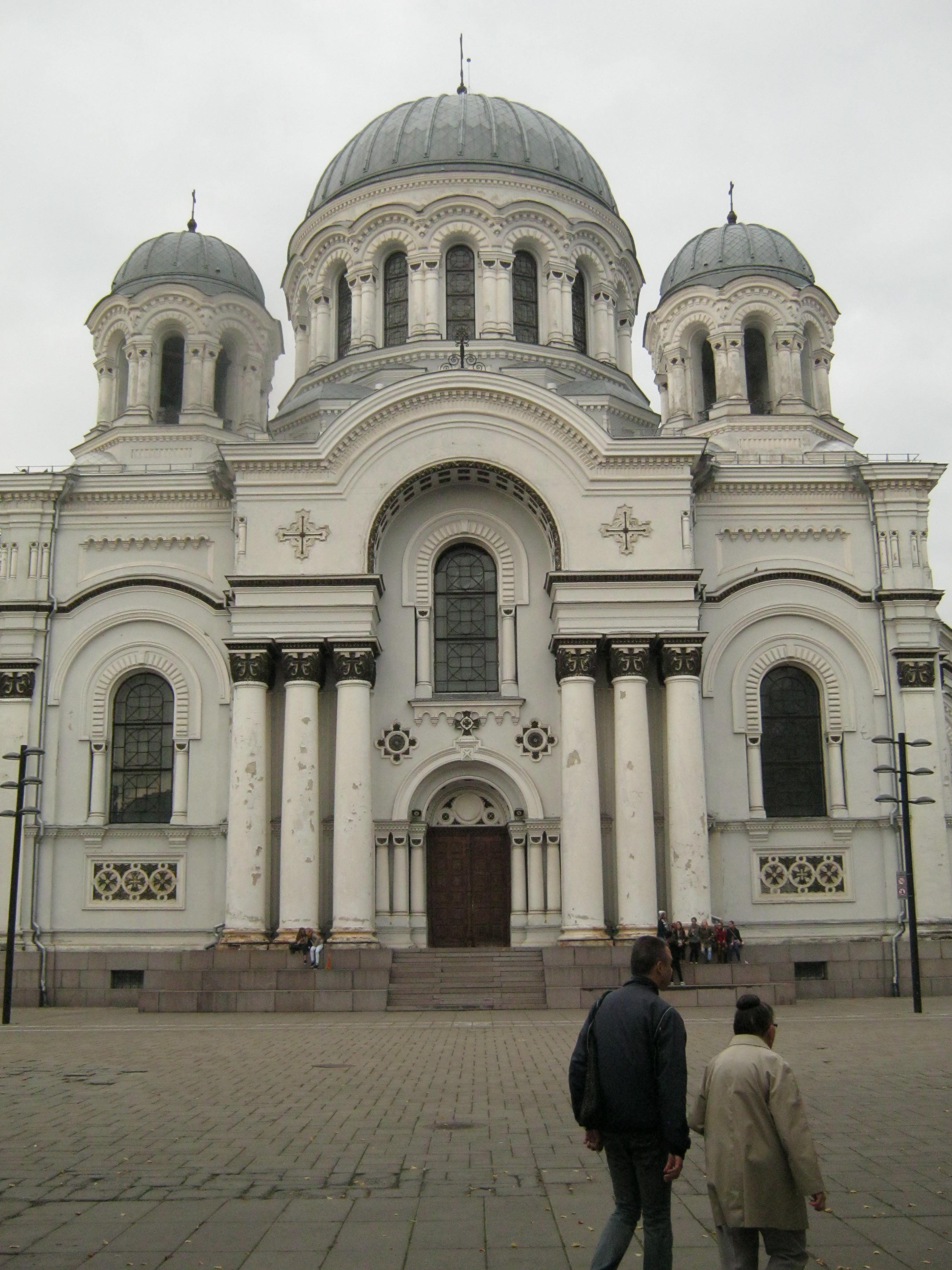
Russian Orthodox Church.
Liberty Boulevard shouts Parisian, an exceptionally long pedestrian walkway of fountains, upmarket restaurants, cafes, and clothes stores, which segues into the Old Town, characterised by more traditional pubs and eateries. We spend the evening roaming around here from bar to bar, savouring the local beers and cocktails, arriving back at R Hostel (a splendid little hostel, with a comfy common room and secluded rooftop hideaway) for a belated sleep.
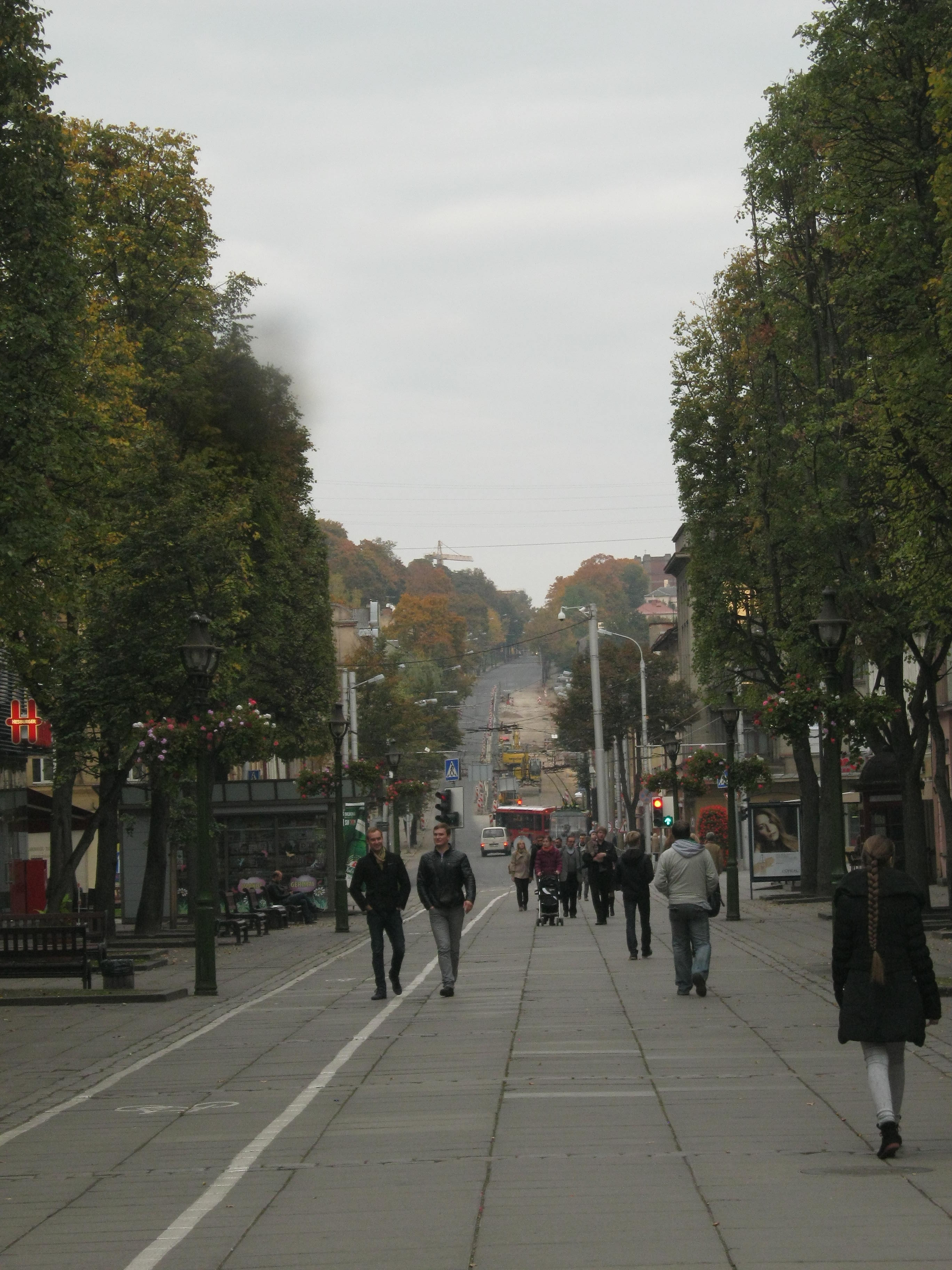
Liberty Boulevard.
The next day and we explore the city with a lengthy afternoon bike ride, the traffic light and terrain flat. The exception is Ninth Fort, a defensive structure built between 1902–1913. Now containing a museum (which we unfortunately don’t have time to visit), it was the scene of many atrocities during the German occupation in WWII. Kaunas has a lot of this: dark events from the past, things we shouldn’t as tourists bring up in conversation with residents, especially the contentious topic of Russia.
I am informed that though Russian is spoken by the majority of the populations in both Lithuania and Latvia, it is wise in the absence of English to attempt to communicate basic phrases in the native languages. Anti-Russian sentiment can be high, especially among younger people. I recall the trip I did to Tallinn, and the advice I was given there was to never utter a word of it.
To brighter discoveries, and I am impressed by the plethora of churches and castles huddled around the city – standout highlights are the Pazaislis Monastery (complete with a garden and restaurant), and the Cathedral of St. Peter and St. Paul, with its opulent interior of expressive sculptures. We draw our cycle to a close with an excursion into Akropolis shopping centre for supermarket supplies. Magic hour approaching, the remainder of the evening is spent on the hostel roof, drinking brandy and taking photographs as the sun sets over the Church of St. Michael the Archangel, just visible through the trees.
Riga awaits.
An Ecolines bus to Riga will set you back a mere €18, and we set off at 3:20 p.m. the next day from the bus station (Autobusa stotis) on Vytauto Avenue. We pass over the Latvian border as the light dims, arriving into Riga International Coach Terminal (Rīgas Starptautiskā autoosta) at 6:50 p.m., our hostel Friendly Fun Franks a mere 5-minute walk away.
A hostel that greets you with a free beer upon check-in is something I’ve never experienced before. The laid-back atmosphere extends to the city centre, now dark, as we take a stroll around town and venture into a couple of bars, conforming to tourist cliché by sampling some Riga Black Balsam. Let’s rule on this right now, Balsam, a liqueur concoction of 24 different herbs, is utterly revolting. A single shot can be enough to send you darting for the nearest cubicle. It’s Riga’s emblematic drink, an ethanol cough medicine cooked up in Hell’s Kitchen. We call it a night after this.
The Neo Sky Bar-Restaurant located on the 8th, 9th and 10th floors of the central clock tower is not exceptionally high, but it is an excellent spot for a bit of photography, offering elevated landscape views as you sit down for a meal. We arrive around 11:00 a.m. the next day for a light brunch and a couple of beers, the interior a cocktail lounge decor with chill-out music dominating the soundtrack. The alternate option here is the Radisson Blu Hotel Skyline Bar. Located at a higher vantage point on the hotel’s 26th floor, but with a €3 price of admission, the vistas are meant to be impressive.
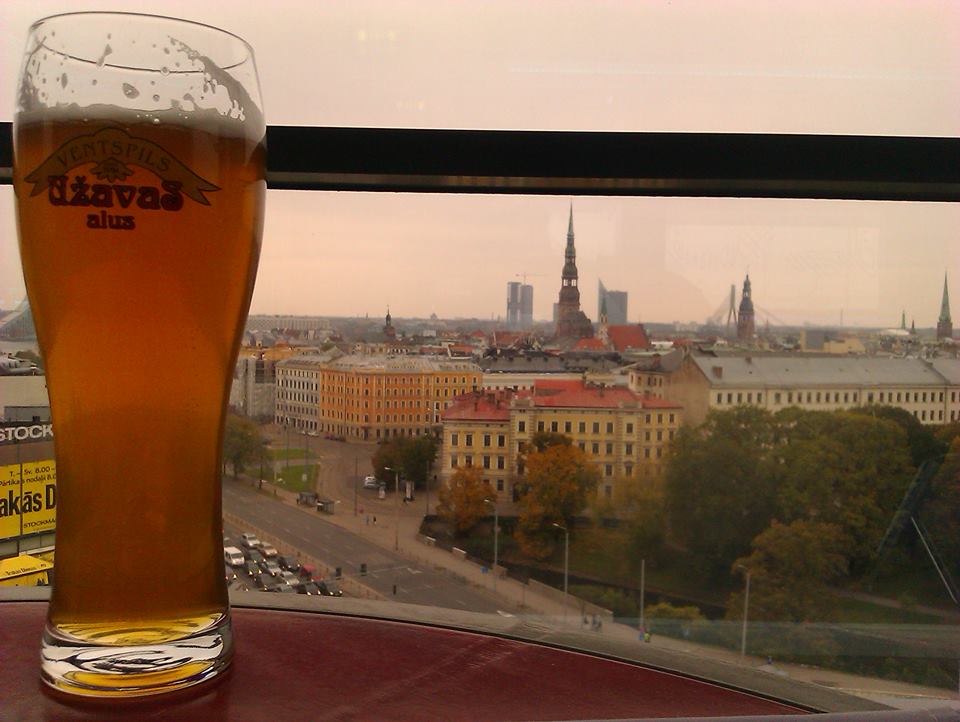
Indulging in a cheeky pint in Neo Sky Bar.
On our wanderings, the most striking building we find is that of the futuristic-like National Library of Latvia sitting on the west bank of the Daugava River. A three-dimensional triangle-shaped construction, it conspicuously stands out amidst the city’s Art Nouveau gems. Background information regarding the intention behind the building’s somewhat anachronistic appearance can be found here: http://www.lnb.lv/en/nll-new-building/gunars-birkerts-national-library-latvia-idea-project
That evening we partake in a few Zelta beers and Somersby ciders in the hostel before proceeding to Funny Fox Bar for an embarrassing session of karaoke. It’s a small, jam-packed, dimly lit establishment serving a reasonably priced selection of drinks, with an encyclopedia-sized list of music choices for those willing to act the prat on stage with a microphone. What happens in … Riga stays in Riga.
It appears that hangovers don’t befall me in these parts. What I crave upon waking up each morning is not the placebo effect of a strong coffee but the atmosphere of an unscripted saunter – the cool air and soft light, the artisanal stores tucked away on side streets, and the dirtier shops lurking behind the city’s banks and malls. As a tourist I can enjoy the aesthetic contrasts, blithely ignoring the reality of what is a difficult life for many of Riga’s inhabitants.
Through the hostel we arrange a tour of the city by a local university student, who tells us about Latvia’s history, particularly the transition to democracy after gaining independence from the Soviet Union in 1991. She discusses the impact of the euro, and expresses deep concerns over neighbouring Lithuania’s future in light of the current eurozone crisis. I am told that austerity measures have hit Latvia hard, and that despite subsequent growth and a reduced deficit, the unemployment rate remains high. A lot of young people have as a result emigrated in search of work and better career opportunities. Though I’ve only restricted myself to the capital, I get the impression of a country somehow wavering between the old and new, unsure of itself and wary of economic travails lying ahead.
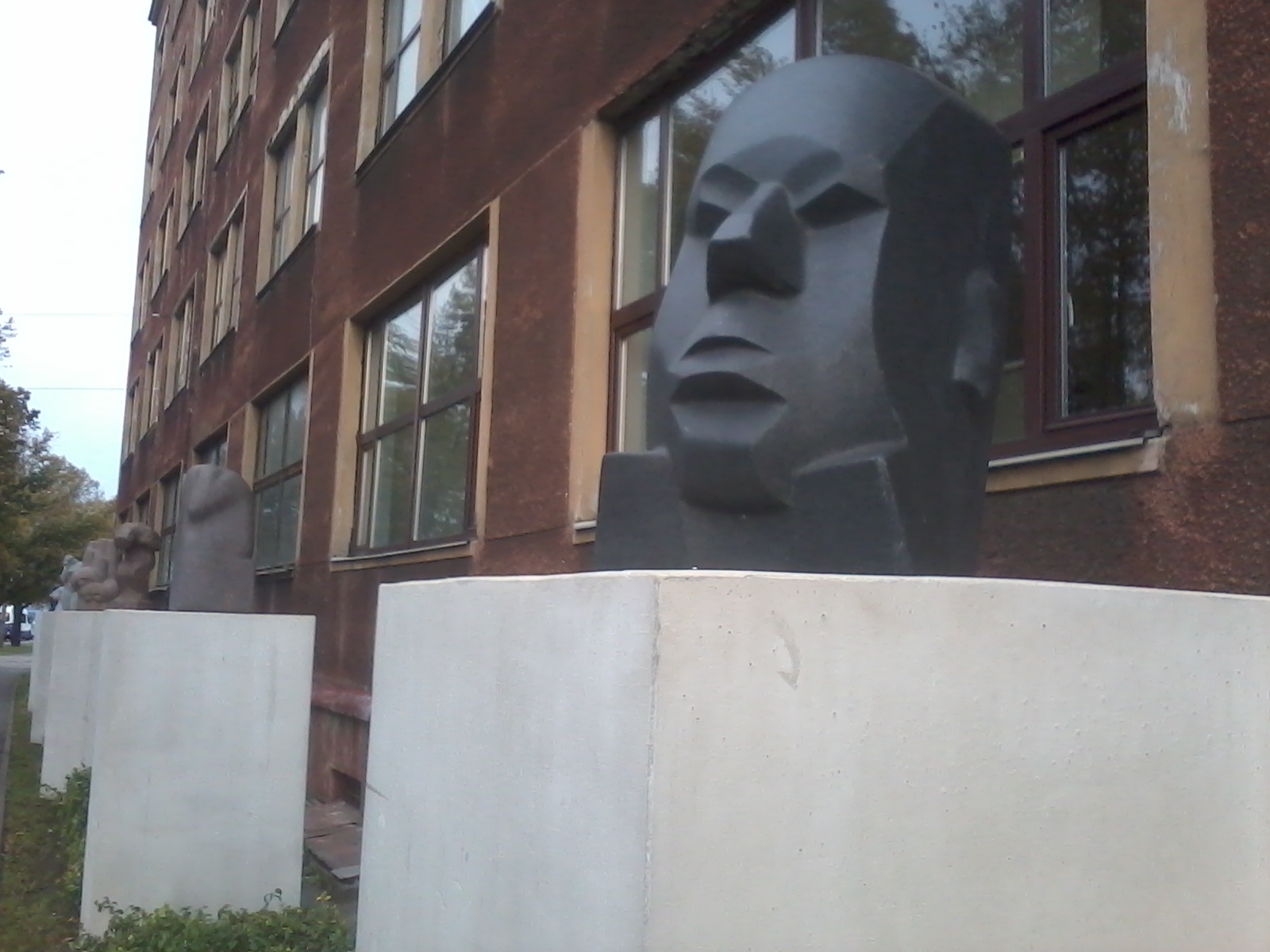
Riga street sculptures.
Of the tour’s highlights, Freedom Monument I find to be particularly affecting. It’s a 42-metre high memorial on Freedom Boulevard commemorating soldiers killed in the Latvian War of Independence (1920). The elegantly designed National Opera House sits in a park just south of the monument. You can find the current programme here: http://www.opera.lv/en/all-repertoire/
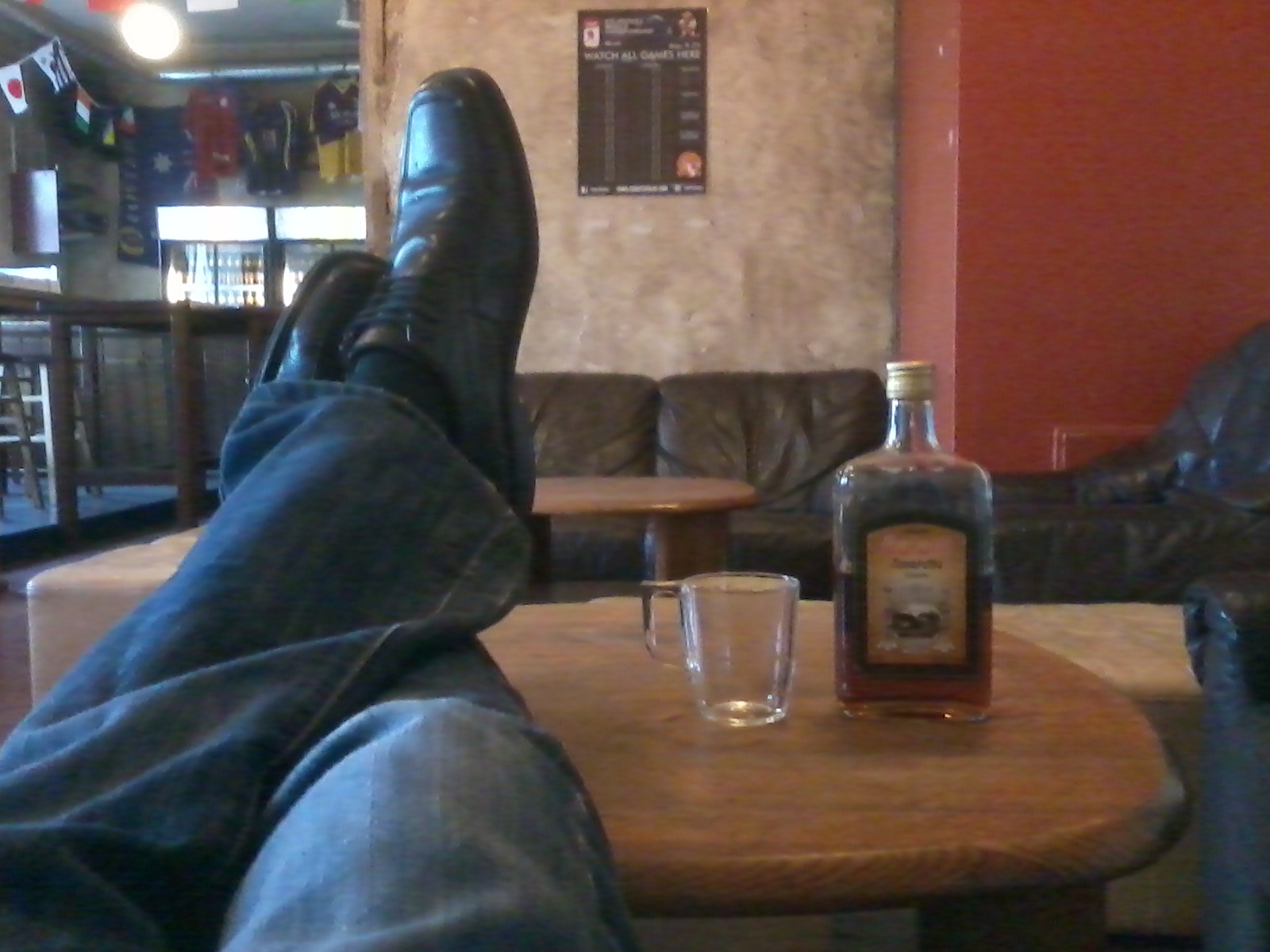
Amaretto in Friendly Fun Franks hostel.
Our tour culminates in a visit to Riga Central Market. Meat, grains, and vegetable stalls span the interiors of five pavilions constructed from old German Zeppelin hangars. If ever there was a more appropriate place for a spot of shopping. Goods are sold based on weight (per kilo), bargains to be found aplenty. I emerge with a hamper of goodies to take back to Scotland – chorizo, black bread, and local cheeses.
We seem to have settled into routine now, and it’s another evening of food and drinks in the hostel. We heartily gorge in the kitchen as slightly jarring pop hits blare out of a vintage Soviet-era wireless. A trek to a local bar called Pulkvedim Neviens Neraksta ensues, and we are bade farewell on our exit a few hours later by the bizarre appearance of two intoxicated Latvian sailors granting us free shots of whiskey and unlimited puffs on a bubblegum-flavoured e-cigarette. They are swiftly escorted home by a more sober companion.
I have a cheeky King Edward cigar in the smoking room back at the hostel and look out over the Daugava River at night. It’s been a superb mini-adventure – the quietness and solitude of Kaunas complemented by the relative rambunctiousness and, dare I say it, decadence of Riga’s nightlife. I came only with modest expectations of quaint pubs and leisurely strolls, but I am thoroughly delighted with what I have seen on my trip – from the variety and peculiarity of Baltic eateries and bars, to the colourful playfulness of the architecture, and the richness of the cultures on display.
The next day I atone with a morning jog by the river, shuffling over the Vanšu Bridge and back like an asthmatic hippo. I manage to complete about 11 minutes of running before collapsing in a heap by a bus stop. The locals are puzzled. One of them sighs despairingly. Travelling can take the will out of your body. After breakfast we hop on the No. 22 bus to the airport for our flight to Glasgow Prestick. We vow to return, and on this future occasion equipped with at least a small understanding of the gripping historical narratives that underpin the Lithuanian and Latvian experience.

