
Author Archives: Ben Gould
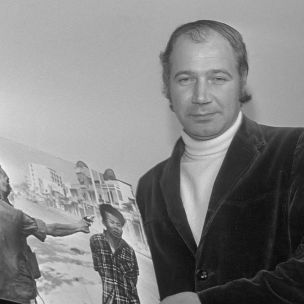
Loan and Lém. Saigon, 1968.
If ever a war produced a ‘Decisive Moment’ it’s this Eddie Adams Pulitzer-winning shot straight from the vanguard of photojournalism.

South Vietnamese General Nguyen Ngoc Loan, chief of the National Police, fires his pistol into the head of Viet Cong officer Nguyen Van Lém. Saigon, Feb. 1, 1968.
The image has always stayed with me. It spoke of brutality and a stark disregard for human life; it’s one pretty good encapsulation of death, pardon the oxymoron. I always assumed it was an indiscriminate execution until I read an Eddie Adams obituary article a few years ago.
Lém, the photograph’s victim, had just killed South Vietnamese Lieutenant Colonel Nguyen Tuan, his wife, their six children, and his 80-year-old mother. Loan was a personal friend of Tuan and his family.
Given this informational context, I view the photograph differently. However perverse this may be, I see Loan as the victim and Lém as the perpetrator. Alternatively, I see the photograph as a tabula rasa.
Loan fled South Vietnam during the fall of Saigon, and subsequently moved to the United States, opening a pizza restaurant in Burke, Virginia. He retired in 1991 after his identity was disclosed.
Adams later apologised to General Nguyen and his family for the effect the photograph had on his life.
Further viewing: https://m.youtube.com/watch?v=bst9mjjiBBo
Rogue Movie.

Rogue One: A Star Wars Story (2016) is the much-belated Death Star movie that has blown my mind. I waited 19 years for this film. I first saw the original trilogy as an 11-year-old in Berkeley, California, during an Xmas retreat at a family friend’s homely crib. I knew nothing about the movies but within the hour I was breathless, and convinced I had it in me to construct my own Scottish version of a lightsaber from a bottle of Curaçao triple sec insouciantly sourced from the adults’ cupboard. Then the prequels came along. They were a horror show. Then The Force Awakens (2015) pummelled me into paralysis with its written-by-committee lip-service narrative, snorefest tropes, and dull characters. It was essentially a self-referential tribute act, and boring as fuck.
Rogue One is something else. It both contextualises and expands upon the original trilogy in an exciting way; it’s a masterpiece of pacing and economy of action. Even the political infighting within the upper echelons of the Imperial command system was thrilling (and consequential). There are so many memorable shots in this picture, mise en scène not seen since The Gipper was scratching his balls half-way through his first term in office. It had moments of actual visual transcendence, meaningful and imposing.
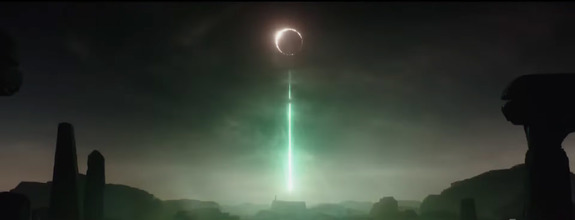
Rather than rehashing familiar places to appease the fanboy contingent, we are introduced to hitherto unseen worlds, and existing ones are given new dimensions. There’s a scene on the desert moon of Jedha involving the Empire and the Rebels (now imbued with layers of real moral complexity) that’s Straight Outta the Second Battle of Fallujah (2004), such are the connotations on display. The film became almost a metanarrative here, cinematic allusions and contemporary reality synced to spectacular effect.

This movie is a belter.
Loved it.
Colonel Bogey in Kanchanaburi.
Rocked up to this masterpiece – the Bridge over the River Kwai – in Kanchanaburi three years ago, whistling the Colonel Bogey March with hallucinogenic images of Alec Guinness emerging from the jungle. I was plastered at the time, decked out in Khakis and looking like I’d emerged from the inferno. Transcendental moments.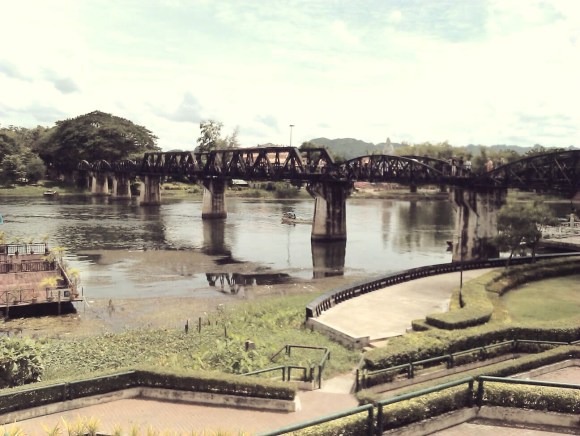
Idling away in Achiltibuie.
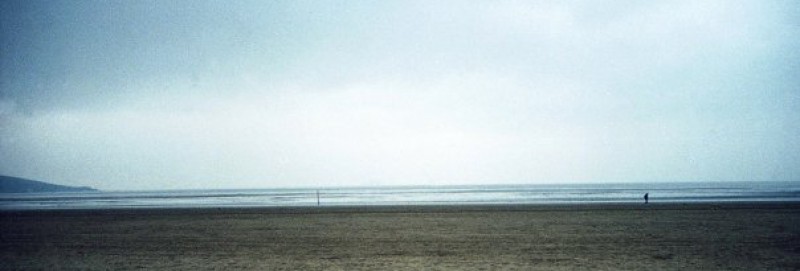
I became so enamoured with the enchanting isolation of Achiltibuie that any innocent impingement upon the solitude was an infection of my harmonious narrative. The mere sight of a stranger (a local) on the horizon had me hiding unceremoniously in a shrub until he exited the vicinity. It was like my own private garden had been badgered. This aside, the stay in the village was an uninterrupted mash-up of aimless rambles, a surfeit of Scotch, and episodic gazing from a minimalist lodge at the terrain … wondering ‘what it’s all about’. Scotland is relaxing.

Mandatory.
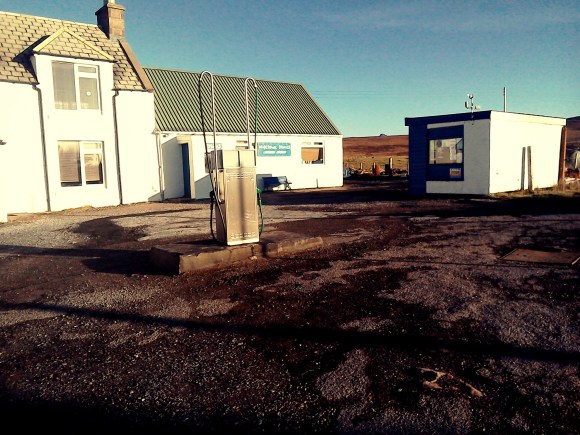
Achiltibuie stores.
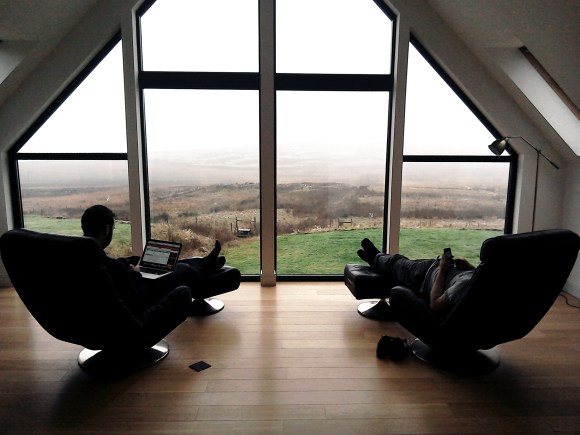
Locholly Lodge.
München, Salzburg, Berchtesgaden, Alkohol.
Guten Morgen.
Arriving in Munich, we wander around the Hauptbahnhof before our 17:54 Salzburg departure, stumbling into an assortment of ghetto eateries (for the booze). What is it about train stations and their surrounding streets that attracts the oddballs and the riff-raff? I’ve never felt entirely safe sparking up a ciggy near a railway. One is invariably sniffed by the local hyenas wishing to devour their carcass of tobacco. We escape a verbose gentleman in green dungarees and find our seats on the train. When I finally conduct my Trans-Siberian Express jaunt, I wish it to be just like this, but with several suitcases filled to the brim with liquor.


Salzburg.
The delights of Salzburg. They have some cracking pubs – notably Alchimiste Belge – and a fag machine. And a SPAR selling Bacardi Breezers. What more could one want in a city? Oh, and a born-again Christian outside a nightclub gave me a book about God and things. I endowed it to the hotel for a lucky person to devour.
The wee Sunday market left the most memorable impression. Tiptoeing from stall to stall with a beer in each pocket, I got the sense that I was somehow intruding upon this idyllic community gathering. They all appeared so happy and thoughtful, like this was the day to take stock of the week’s events and indulge in a little R&R. There’s an ersatz ‘German Market’ back home in Edinburgh – it mostly consists of teenagers in tracksuits being very loud. No comparison, really.


Morning entertainment.
A spot of Apocalypse: The Second World War (2009) and a Jägermeister chaser performed their noble role as Room 304’s pre-eminent hangover cure. The hotel were showing The Sound of Music (1965) on a loop, but it’s just not graphic enough for my sensibilities. Julie Andrews doesn’t do it for me; I need proper carnage.

To Obersalzberg.
Driving to Hitler’s notorious crib above Berchtesgaden and peering up awestruck at its twin delights of the Berghof and the Eagle’s Nest and all the tumultuous, tragic history that was made here, left me with a sense of being quite insignificant. The overwhelming splendour of the milieu merely magnified the feeling that I was an ant ripe for a trampling.


Munich (again).
By the time we reach Munich and go our separate ways after a few more drinky-poos, I’m content to conk out on my bed as Richard Wagner emanates from a tacky Bluetooth speaker. I wake up in darkness and feel my way around the room, realising I’m in Munich and not a lucid dream three minutes into this escapade. I crawl to the shower, then luxuriate in another cheeky nap, and depart at the first sound of a cleaning lady (I presume) patrolling the corridor. In the railway station I get visions of an anthropomorphic dog in a leg-cast playing Daft Punk’s “Da Funk” from a boombox. I don’t know why.

Jpeg

Jpeg

Who owns the Moon?
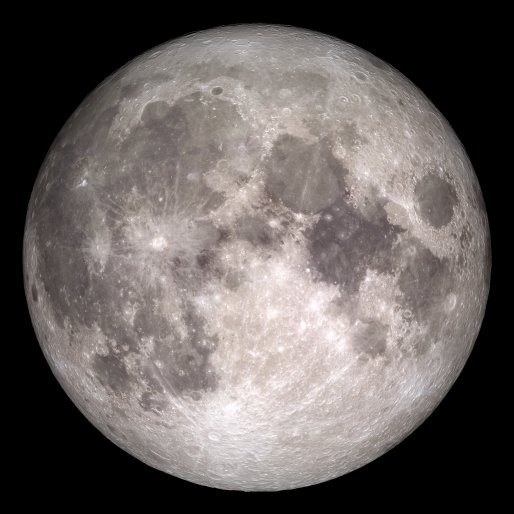
No one owns this bad boy. I didn’t know this until today. I thought it was a first-come, first-served kinda deal, the US flag planting their sovereignty over the rock.
http://www.space.com/33440-space-law.html
‘Space is free for all nations to explore, and sovereign claims cannot be made. Space activities must be for the benefit of all nations and humans. (So, nobody owns the moon.)’
It all seems very noble and righteous, a communal bit of cheese orbiting the Earth. In our surely destructive future, though, I envisage a battle for space’s resources, the moon a weaponised base for storage and procreation. Something like that.
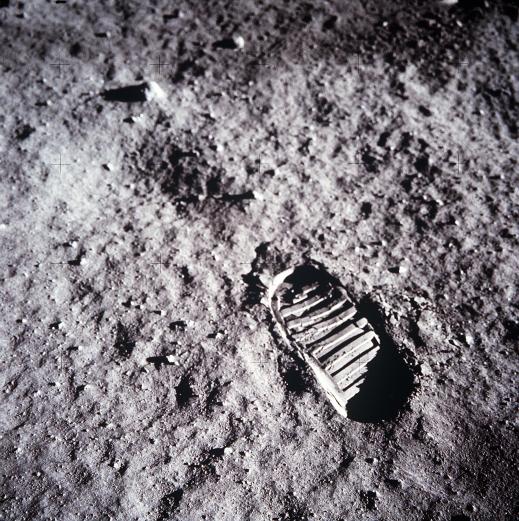
Further reading: https://www.theguardian.com/science/blog/2014/oct/17/who-owns-moon-land
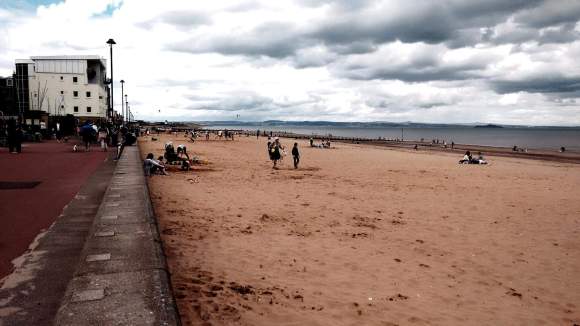
New York – Twin Cities.
The Big Apple is venerated as the most filmed city in movies, a hustle-bustle urban jungle of possibilities, both magical and harrowing.
It seems there aren’t films made *about* New York City very much anymore; they merely take place there, the protagonists unaffected by the milieu. Perhaps it’s a post 9/11 reluctance to confront the contentious ‘symbolism’ that the city continues to offer. Only Spike Lee’s 25th Hour (2002) confronts NYC in its role as ‘snapshot city’, and attempts to deconstruct its myths and contradictions.

My first trip to New York in 1997.

Taken in 2000 on a $10 camera.
New York is represented in two modes of cinema – it’s a decrepit urban hell or a serene cloud to naval gaze on – guzzle down coffees, discuss Dialectical Materialism, be ‘arty’. The dichotomy is illustrated in two films made three years apart, Taxi Driver (1976) and Manhattan (1979).
Taxi Driver (1976).
If ever the topography of a city mirrored a protagonist’s crumbling psyche it’s Taxi Driver (1976). Travis Bickle here represents purgatory, New York a steaming cesspool of ‘animals’ and ‘filth’. The city is an ill-thought-out maze, a cruel, shallow, uncaring conurbation from gutter to canopy. An utter dump, it’s where people lose their minds.
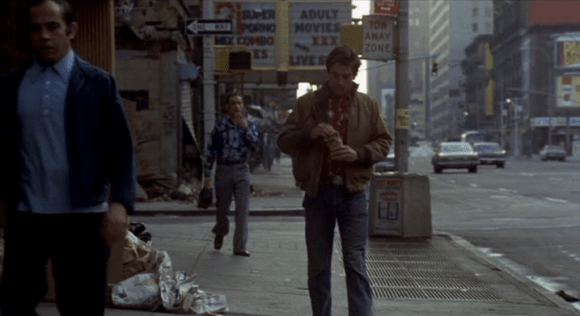
Manhattan (1979).
This movie is paradise. I’d love to live like one of these characters. A bloke in it willingly quits his job because he can. He doesn’t worry over council tax or credit card debt or rent or any of that trivial shite – he just spends the remainder of the movie see-sawing between a neurotic journalist and a 17-year-old high school student. The city here black and white, lit up in fireworks and George Gershwin. There is no crime, there are no social problems. There are only parties and conversations. NYC is a lucid dream.

A film-maker from different backgrounds and experiences will of course develop his own vision of metropolis as distinct from another’s, but this city is ridiculous in its contrasting representations to the extent that one wonders if it’s the same place subjected to the camera. The theme goes beyond a depiction of class divide – its wholly disparate districts captured on celluloid – and channels two states of mind. New York is *the* kaleidoscopic dwelling.
Trans-Siberian Railway – bucket list.
5,772 miles of line connecting Moscow to Vladivostok, traversing seven time zones, and now 100 years old this year, spanning the Tsarist, Soviet, and … Putin eras of Russian history, the Trans-Siberian Railway remains the bucket list journey.
 In an age where a return flight from London to Tokyo will set you back £500, and with the soaring volume of airline bargains out there – I managed to nab a Bangkok to Oslo flight for £162 – it says a lot about the lure of antiquated travel that the Trans-Siberian and other such lengthy train journeys are as popular as ever, holidaymakers forking out big money for the ‘comforts’ of the railway.

There is indeed something romantic about this epic quest across Eurasia – the getting from A to B a jaunt to experience in itself. Perhaps in our age of hyper-terrorism it’s a safety thing, or a longing for the charm and simplicities of the past amidst the grotesque tedium of air travel, the fuselage the preserve of martinets in tacky uniforms and lunatics with imaginary friends.
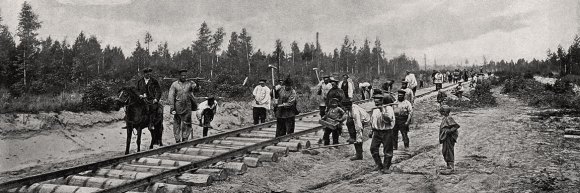
Construction of the track. Siberia, 1899. Photograph by I.R. Tomaskiewicz.
Further reading:
 Wanderings and ... wonderings.